

























Total Lunar Eclipse Blood Moon March 2026: Full Moon Worm Moon Turns Red on March 3

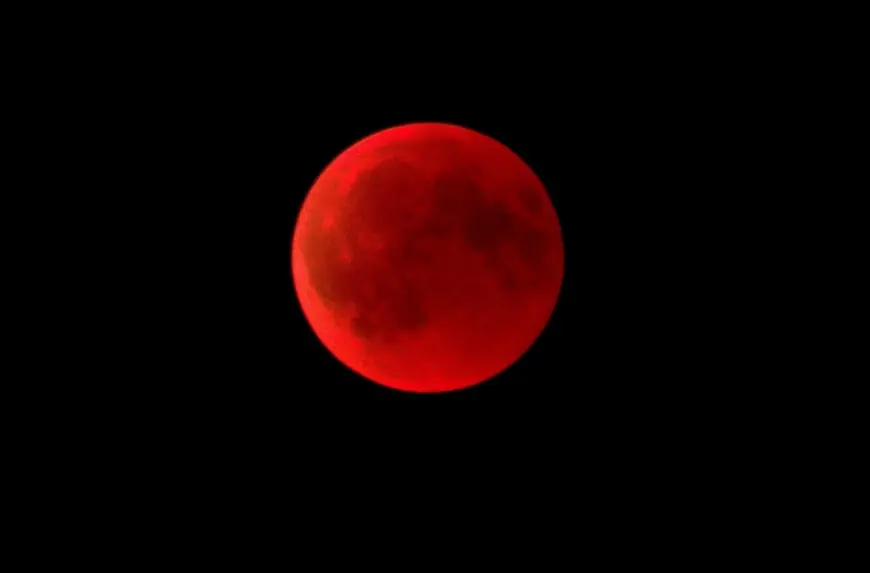
The most spectacular astronomical event of the year arrives in just two days. A total lunar eclipse — the Blood Moon — will transform the full moon into a deep reddish-orange on Tuesday, March 3, 2026 ET, and it is the last total lunar eclipse anywhere on Earth until New Year's Eve 2028. If you miss this one, you wait nearly three years for another.
Total Lunar Eclipse March 2026: What Is a Blood Moon and Why Does It Turn Red
A total lunar eclipse occurs when Earth passes directly between the Sun and the Moon, casting a gigantic shadow across the lunar surface. When the Moon enters Earth's umbra — the darkest part of the shadow — the full moon takes on a reddish-orange hue because sunlight filtering through Earth's atmosphere bends and scatters, letting red wavelengths reach the lunar surface.
It is as if all of the world's sunrises and sunsets are projected simultaneously onto the Moon's surface. The atmosphere acts like a filter, scattering blue light — which is why the sky is blue during the day — while allowing red and orange wavelengths to bend around the planet and illuminate the lunar surface during totality.
Because the March 2026 full moon is also known as the Worm Moon, you will likely hear this event referred to as the Blood Worm Moon. The 2025 Worm Moon was also a total lunar eclipse, but that event was visible in Europe and Africa — this 2026 blood moon will not be visible from those regions at all.
Full Moon March 2026 Eclipse Times: Complete ET Schedule for East Coast Viewers
NASA's full timeline for the March 3, 2026 total lunar eclipse in Eastern Time is as follows. The penumbral eclipse begins at 3:44 a.m. ET, when the Moon enters Earth's outer shadow and begins to dim subtly. The partial eclipse begins at 4:50 a.m. ET, when Earth's umbra starts visibly covering the Moon. Totality begins at 6:04 a.m. ET, when the Moon is fully inside Earth's umbra and turns blood red. Totality ends at 7:03 a.m. ET. The full eclipse concludes around 9:23 a.m. ET when the Moon exits the penumbra entirely.
The Moon turns fully red during totality from 11:04 to 12:03 UTC, with maximum eclipse at 11:33 UTC — translating to 6:04 a.m. to 7:03 a.m. ET, with peak at 6:33 a.m. ET. Totality lasts 58 minutes, giving East Coast viewers a meaningful window to observe the blood moon before sunrise.
Where to See the Blood Moon Total Lunar Eclipse 2026
The best views of the March 2026 total lunar eclipse will be from western North America, Australia, New Zealand, East Asia, and the Pacific. Only about 2% of the world's population — 176 million people — will see all phases of the eclipse from start to finish. However, nearly 31% of the global population — approximately 2.5 billion people — will see the full totality blood moon phase.
Viewing conditions will favor northwest Mexico, the southwest United States, and inland Australia, which statistically offer the best odds of clear skies. The eclipse is not visible from Europe or Africa.
For the East Coast, a clear view of the western horizon before and around sunrise on March 3 will give viewers the best chance to see totality as the Moon sets. Skywatchers should position themselves somewhere with an unobstructed western horizon — a hilltop, open park, or rooftop — before 6:00 a.m. ET.
Blood Moon 2026 Rare Bonus: See Sunrise and the Blood Moon at the Same Time
On March 3, some skywatchers along the East Coast may witness a rare atmospheric phenomenon called a selenelion — when the rising sun and an eclipsed blood moon briefly share the sky simultaneously. Though technically impossible by strict geometry, Earth's atmosphere refracts light enough to make both objects briefly visible above the horizon at the same moment.
During the eclipse, the Moon will also occult — pass directly in front of — the galaxy NGC 3423, as seen from North America. Deep-sky objects are rarely occulted during a total lunar eclipse from any given location, making this a genuinely unusual astronomical double event.
Last Total Lunar Eclipse Until 2028: Do Not Miss It
The March 3 event is the first total lunar eclipse anywhere in the world since September 7–8, 2025, and the last total lunar eclipse until December 31, 2028, to January 1, 2029, when a blood moon will occur on New Year's Eve. There are no total lunar eclipses anywhere on Earth in 2027.
No special equipment is needed to observe the blood moon total lunar eclipse. All you need is a clear line of sight to the Moon — binoculars or a small telescope will enhance the experience, but the blood moon is one of the most dramatic naked-eye events in all of astronomy. Set your alarm, find your western horizon, and look up.