

























Strait of Hormuz Closed by IRGC: Oil Prices Set to Surge, Gas Prices and Global Inflation at Risk

The Islamic Revolutionary Guard Corps has declared the Strait of Hormuz effectively closed to maritime traffic following the joint US-Israel military campaign against Iran, sending shockwaves through global energy markets before they even opened for the week. Oil futures, crude oil prices, and gas prices are all bracing for a historic shock when Asian markets open late Sunday, March 1, 2026 ET.
IRGC Declares Strait of Hormuz Closed: What Happened
The IRGC warned various vessels that due to the insecure conditions around the strait resulting from US and Israeli military aggression and Iran's responses, passage through the strait is currently unsafe. A semiofficial Iranian media outlet described the strait as effectively shut, and ships in the region reported hearing marine radio broadcasts purporting to come from the Iranian navy announcing that transit was banned.
A European Union naval mission official confirmed to Reuters that vessels in the region are receiving IRGC radio warnings instructing ships not to pass through the Strait of Hormuz. In response, several major oil companies and trading firms have already paused shipments of crude oil and fuel through the waterway.

Iran has repeatedly threatened to close the strait in the event of a US attack but never acted on those statements until now. The US Maritime Administration, an agency under the Department of Transportation, has warned all commercial ships to avoid the oil-rich Gulf region entirely.
Oil Prices Today: Brent at $73 Before the Storm, $100+ Feared Monday
Brent crude settled near $73 per barrel on Friday, February 28, 2026, before the Strait of Hormuz closure was confirmed. Analysts now warn prices could surge $5 to $10 above that baseline when markets reopen — with some forecasting a jump of $20 per barrel or more if there are no signs of de-escalation through Sunday.
Lombard Odier estimates a temporary spike in oil prices to $100 per barrel or beyond is entirely plausible if Iran moves to block the strait for any meaningful duration. Global LNG prices would be hit simultaneously, given that about 20% of the world's liquid natural gas exports also flow through the same chokepoint — mostly from Qatar.
The world's spare oil capacity sits entirely within Gulf states and would be unable to reach markets through the closed strait, effectively sealing it off. Saudi Arabia and the UAE raised their oil output in advance of the strike, but analysts warn that only a small fraction of displaced crude could realistically be redirected via alternative pipelines.
Gas Prices at the Pump: $3 Per Gallon Could Fall by Monday
The national average for gas prices stood at $2.98 per gallon as of Saturday, March 1, 2026, according to AAA — meaning the psychological $3.00 threshold could be breached at the pump as early as Monday morning once crude oil futures absorb the full impact of the IRGC's Strait of Hormuz closure declaration.
Trump administration officials are already discussing tapping the Strategic Petroleum Reserve if oil prices spike significantly. OPEC+ is anticipated to approve a modest production hike of 137,000 barrels per day at its next meeting, but the bloc may lean toward a much sharper increase to offset supply losses from Iran and the disrupted shipping lane.
Strait of Hormuz Shipping Facts: Why This Chokepoint Can Break the Global Economy
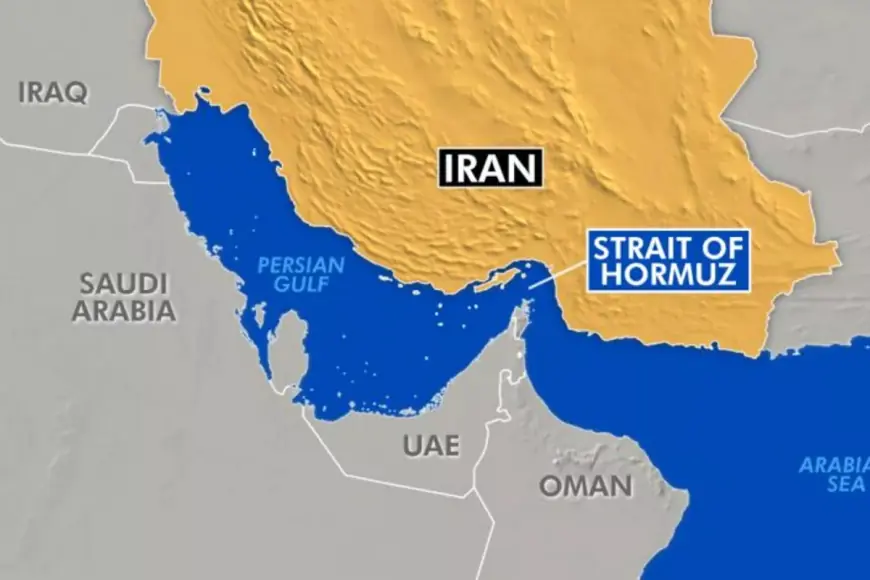
The Strait of Hormuz is approximately 50 kilometers wide at its entrance and narrows to about 33 kilometers at its tightest point — forming the only maritime link between the Persian Gulf and the Arabian Sea. About 20 million barrels of crude oil transited through the strait each day in 2024, equivalent to nearly $500 billion in annual energy trade. About 3,000 vessels transit the strait each month.
More than 14 million barrels per day flowed through the Strait in 2025 — roughly a third of the world's total seaborne crude exports. About three-quarters of those barrels went to China, India, Japan, and South Korea. China receives half of its crude imports through the Strait of Hormuz alone, while nearly half of India's crude oil imports and about 60% of its natural gas supplies move through the same corridor.
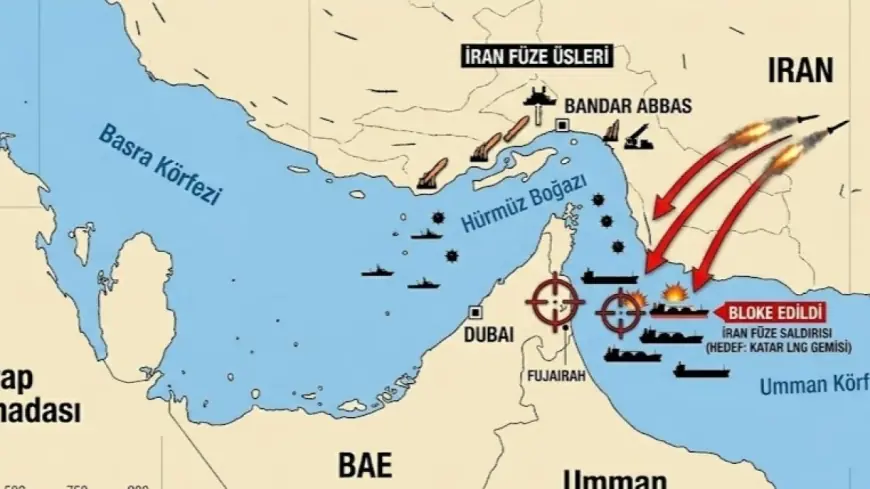
Iran's most effective tactics for disrupting the strait include deploying naval mines using fast attack boats and submarines. Tehran's fleet includes fast boats equipped with antiship missiles, surface vessels, semisubmersible craft, and submarines all designed for asymmetric warfare. Iran's parliament had already approved a motion to close the strait.
Crude Oil Price Forecast and Inflation Warning
A prolonged closure of the Strait of Hormuz is a guaranteed global recession, according to Robert McNally, a senior energy analyst. Oil prices would have to rise high enough to trigger an economic downturn that forcibly reduces demand to balance the market — because there simply is not enough discretionary or elastic demand for oil to absorb the shock any other way.
Higher crude oil prices would raise production expenses across global supply chains, with companies passing those costs directly to consumers. Any major disruption to oil flows through the Middle East could add 15% to 20% to crude oil prices as a war premium on top of current levels.
Saudi Arabia and the UAE maintain pipeline infrastructure capable of rerouting approximately 2.6 million barrels per day of crude oil to Red Sea ports and the Gulf of Oman, bypassing the Strait of Hormuz — but that represents only a fraction of the 20 million barrels per day that currently flow through the chokepoint daily.