

























Uae hubs leave hundreds of thousands stranded as flights cancelled after US-Israeli strikes

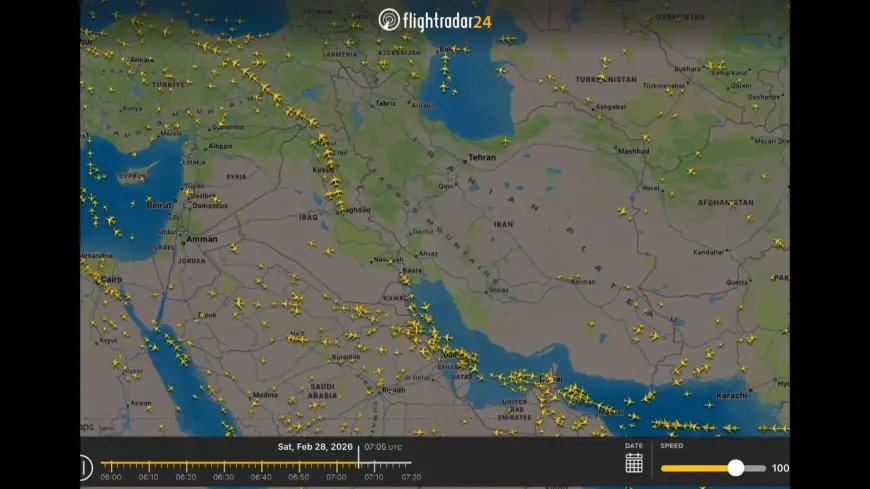
Hundreds of thousands of travellers have been directly affected by cascading airport and airspace closures across the Middle East, with hubs in the ua e region bearing the brunt. Transit passengers, long‑haul connections and airport staff are facing cancellations, diversions and on‑ground delays while airlines and authorities sort competing notices and changing timelines.
Uae hubs and passenger disruptions: who feels it first
Here’s the part that matters: Dubai, Abu Dhabi and Doha are primary transit nodes linking Europe, Africa and the West with Asia, so their suspension hits connecting passengers most — many are stranded, diverted or forced to rebook. Emirates, Etihad and the region’s other major carriers have halted operations to and from those hubs, leaving round‑the‑world itineraries broken and knock‑on delays across long‑haul networks.
Airspace closures and where flights halted
Flights were cancelled or diverted after the US and Israel launched strikes against Iran. Multiple countries closed or restricted their airspace on the same days, creating gaps across regional routes: Iran, Iraq, Kuwait, Israel, Bahrain, Qatar and the United Arab Emirates were among spaces reported closed or virtually empty. Saudi Arabia had a partial closure, while Jordanian and Lebanese airspace remained open but with limited activity.
Airline suspensions, cancellations and timing discrepancies
Airlines announced widespread suspensions but the reported end times differ across available coverage. One set of notices described Emirates suspending all operations in and out of Dubai until 15: 00 local time (13: 00 GMT) on Sunday and Etihad suspending flights out of Abu Dhabi until 14: 00 local time. Other updates cited a longer pause: Emirates operations to and from Dubai suspended until 3pm UAE time on Monday, and Etihad flights to and from Abu Dhabi suspended until 2am UAE time on Monday. Qatar’s carrier said it would resume only when Qatari aviation authorities declare airspace safe and planned to provide an update by 9am Doha time on Monday. These timing discrepancies are unclear in the provided context and remain developing.
Scale of disruption: cancellations, passenger volumes and reroutes
- More than 1, 000 flights by major Middle Eastern airlines were cancelled in initial tallies; another assessment put cancellations across seven main regional airports at over 3, 400 on a single day.
- An aviation analytics estimate notes the three major carriers operating those hubs typically handle about 90, 000 passengers a day through the airports affected, so daily throughput losses are substantial.
- Of roughly 4, 218 flights scheduled to land in Middle Eastern countries on a recent Saturday, about 966 (23%) were cancelled, a figure that rises above 1, 800 when outbound flights are included.
- Flight tracking data showed many Europe–Asia services rerouting Saudi Arabia or the Caucasus to avoid the closed corridors.
Passenger stories, safety notices and local damage
Airports sustained damage and there were casualties. One person was killed and 11 others injured at airports in Dubai and Abu Dhabi; four of those injured were members of staff at Dubai International. Coverage also described damage to Dubai’s international airport and the Burj Al Arab hotel and said four people were injured there. An airport post about an incident at Zayed International in Abu Dhabi noted one death and seven injuries before that post was deleted. The UK Foreign Office urged British nationals to shelter in place, and Heathrow urged travellers to check with their airline before setting out.
Personal accounts illustrate the disruption: Sarah Short described boarding a flight in Dubai bound for Heathrow and then being told they would not depart, sitting on the tarmac for more than three hours. Emma Belcher and her husband Vic found a planned connection from the Maldives Dubai cancelled at short notice.
It’s easy to overlook, but the patchwork of different closure notices and deleted posts has amplified uncertainty for both passengers and operators.
- Flights to and from Riyadh were suspended by a major carrier on Sunday after earlier cancellations to Dubai over the weekend; some services to destinations such as India, Saudi Arabia and the Maldives were warned may take longer because of reroutes.
One item of the available coverage stated that Iran confirms killing of Ayatollah Khamenei; this remains a developing claim and is unclear in the provided context.
- Hundreds of thousands of travellers were described as stranded or diverted after multiple states closed airspace.
- Key transit hubs in the region stopped operations, multiplying the impact on connecting itineraries.
- Passengers should expect delays or cancellations for the next few days while military and aviation notices evolve.
- Airport damage and casualties were reported at Dubai and Abu Dhabi airports, increasing the complexity of reopening efforts.
The real question now is how quickly coordinated notices will restore consistent, region‑wide corridors. A micro timeline in the available material shows: strikes occurred, multiple states closed airspace and major Gulf hubs suspended operations across the same weekend; new closure notices extended into early next week for some jurisdictions. The timing and sequence remain uneven and subject to further updates in the available coverage.
Smaller operational note: schedule updates and suspended flights referenced specific local times that differ across accounts, so travellers and planners should treat reopening times as provisional.
Editor’s aside: the bigger signal here is how concentrated network risk becomes when a few transit hubs are taken offline at once — that’s what produced the scale of cancellations and cross‑continent reroutes seen in the available material.