

























“Total Lunar Eclipse: When Tuesday’s ‘Blood Moon’ Will Turn Red”

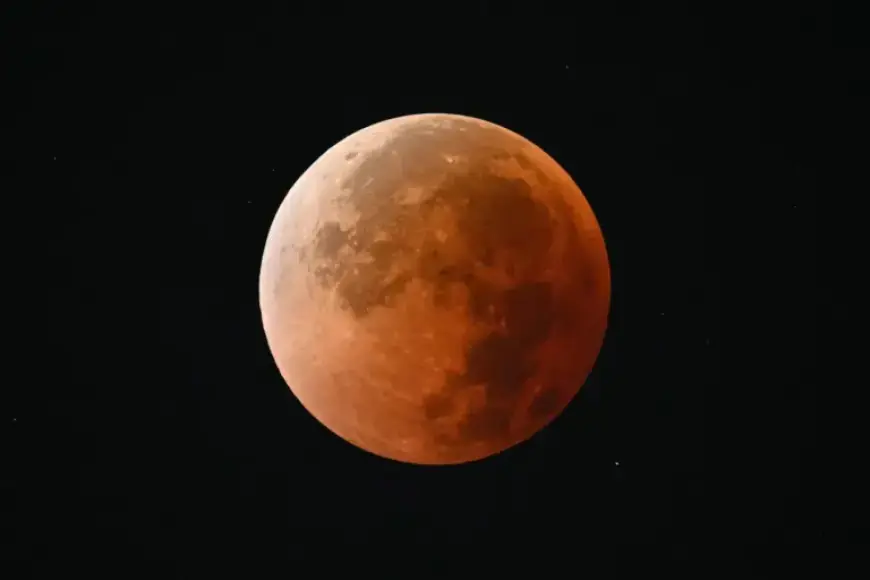
The upcoming total lunar eclipse, often referred to as a “blood moon,” is set for March 2-3, 2026. This astronomical event will be particularly notable as it will be the last total lunar eclipse visible worldwide until late 2028.
Details of the Eclipse
The total eclipse will occur overnight on March 2-3, 2026 when the Moon passes completely through Earth’s shadow. This will create a striking copper-red appearance. The event will be best observed in North America, with optimal viewing conditions expected in the western states.
Timing and Visibility
The total lunar eclipse will last for approximately 58 minutes. Here are the exact U.S. times for the phase of totality:
- Eastern Time (EST): 6:04-7:02 a.m.
- Central Time (CST): 5:04-6:02 a.m.
- Mountain Time (MST): 4:04-5:02 a.m.
- Pacific Time (PST): 3:04-4:02 a.m.
- Alaska Time (AKST): 2:04-3:02 a.m.
- Hawaii Standard Time (HST): 1:04-2:02 a.m.
The Worm Moon
This eclipse coincides with the full “worm moon,” the last full moon of winter in the Northern Hemisphere. The term refers to the thawing earth and the return of earthworms as spring approaches. It will rise on the evening of March 2, providing stunning views during dusk.
Viewing Opportunities
Observers across North America will have a chance to witness varying phases of the eclipse. The best time to view the worm moon rise is on the evening of March 2. Here’s a brief overview of the moonrise timings in major U.S. cities:
- New York City: Sunset at 5:48 p.m. EST; Moonrise at 6:13 p.m. EST.
- Los Angeles: Sunset at 5:49 p.m. PST; Moonrise at 6:34 p.m. PST.
How to Observe the Eclipse
Watching a total lunar eclipse is completely safe. There’s no need for glasses or special equipment, unlike solar eclipses. Binoculars or a small telescope can enhance the viewing experience, but the event is visible to the naked eye under clear skies.
Global Viewing Times
While the eclipse will be best viewed in North America, it will also be observable across Australia, New Zealand, and East Asia. Below are the local times for totality:
- Auckland, New Zealand: 12:04-1:02 a.m., March 4.
- Sydney, Australia: 10:04-11:02 p.m., March 3.
- Tokyo, Japan: 8:04-9:02 p.m., March 3.
- Beijing, China: 7:04-8:02 p.m., March 3.
Future Lunar Events
The next total lunar eclipse in North America will not occur until June 26, 2029. However, a partial lunar eclipse will follow this total event on August 27-28, 2026.
As the skies darken on the night of March 2-3, 2026, prepare for a spectacular celestial show. This rare total lunar eclipse promises to be a memorable sight for skywatchers everywhere.