

























Daniel Serafini Sentenced to Life Without Parole in Lake Tahoe In-Law Shooting

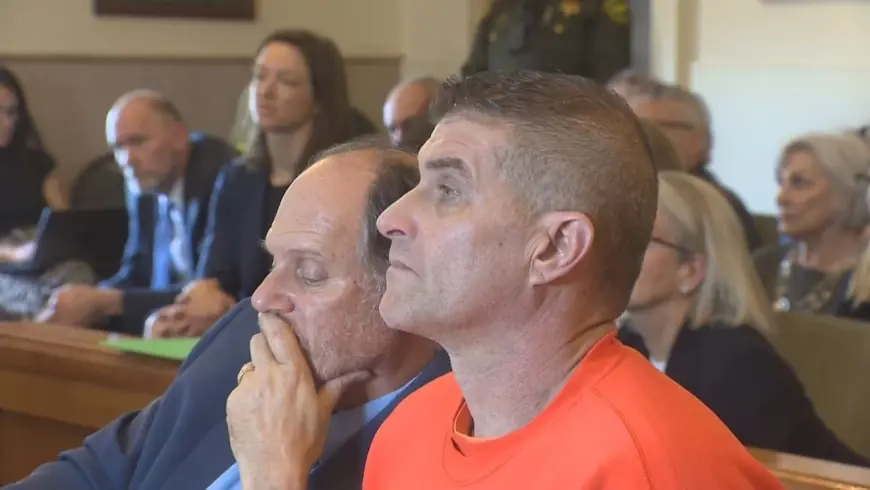
Former Major League Baseball pitcher daniel serafini was sentenced Friday in Placer County to life in prison without the possibility of parole for the 2021 shooting that killed his father-in-law and gravely wounded his mother-in-law at their Lake Tahoe-area home. The case has drawn attention for its mix of criminal convictions, allegations of financial motive and testimony about a June 2021 break-in at the Homewood residence.
Placer County courtroom and the 193-day interval
The sentence was imposed Friday, coming 193 days after a jury found Serafini guilty on multiple counts. Jurors in July convicted him of first-degree murder, lying in wait and first-degree burglary in the death of 70-year-old Robert Gary Spohr, and of attempted murder in the shooting of 68-year-old Wendy Wood, who survived the attack but later died by suicide a year after being wounded.
Homewood residence break-in in June 2021
Prosecutors say Serafini broke into the Homewood residence in June 2021 and waited for the couple to return from a boating outing before opening fire. The Placer County District Attorney’s Office posted on Facebook that over the course of the six-week trial jurors heard about heated disputes over financial obligations and communications leading up to the murder.
Victims Robert Gary Spohr and Wendy Wood
The attack left 70-year-old Robert Gary Spohr dead and 68-year-old Wendy Wood gravely injured; Wood later died by suicide a year after the shooting. Victim impact statements in court described the crime as fueled by “pure hate, ” saying it rocked the community and ruined a family. The judge called the case a tragedy for everyone involved and for the broader community.
Adrienne Spohr's statements and financial allegations
Adrienne Spohr, the sister-in-law of the victims, asked for the maximum sentence and suggested a period of solitary confinement, saying she feared Serafini might conspire with other prisoners to murder her. She described a pattern she said involved millions of dollars taken from her parents over the years, including more than $1 million for a horse estate and smaller sums for nanny services and credit-card payments. She asserted that Serafini and her sister continued to seek money from their mother after the attempted murder and said he cashed a $200, 000 check made out to him from a victim’s account just weeks after the shooting.
Daniel Serafini's trial, convictions and baseball background
daniel serafini was found guilty after a six-week trial in which prosecutors argued his actions were deliberate and premeditated and that he targeted his in-laws to access a multimillion-dollar inheritance. He was convicted in July of waiting inside the home with a gun before fatally shooting Spohr and gravely injuring Wood. Serafini and Samantha Scott were arrested two years after the incident; Scott later testified she had given Serafini a ride the day of the shooting believing it was a drug deal, and that Serafini later admitted he had shot his in-laws.
Serafini spent seven years in Major League Baseball as a first-round draft pick, playing at various points with the Minnesota Twins, Chicago Cubs, Pittsburgh Pirates, Cincinnati Reds, San Diego Padres and Colorado Rockies. The trial record notes his busiest season was with the Twins in 1998, when he went 7-4 with a 6. 48 ERA, and that he also pitched professionally in Japan, Taiwan and Mexico.
Sentencing hearing: defenses, judge's findings and reaction
At Friday’s hearing Serafini maintained his innocence, calling the trial a “popularity contest, ” offering condolences to the “victims of this heinous crime, ” and telling the court he had been out partying with his wife the night of the shooting. He described himself as a “broken, imperfect man that makes mistakes” but did not accept responsibility for the killings. The judge rejected Serafini’s claims that he was denied due process, saying he had due process “before, during and after the trial” and received “vigorous advocacy throughout the whole process. ”
The court addressed Serafini’s argument that poor legal advice not to testify deprived him of an adequate defense, concluding the decision not to testify did not amount to ineffective assistance of counsel. The judge said Serafini came across as a “shot caller” and “key holder, ” criticized his remarks at sentencing and told him his time in prison should be used for reflection and personal growth, encouraging him to continue helping others while incarcerated. “What I heard today was not reflection, it was deflection, ” the judge said, noting a lack of expressed remorse for the victims.
Adrienne Spohr told the court, “He is a monster that knows no moral boundaries and has zero reservations about taking lives to benefit himself, ” and urged that Serafini never see the outside of a prison again. Isabel Yip is a news associate for NBC News.
Serafini will spend the remainder of his life in prison without the possibility of parole.