
























Tatum Paxley Credits Alexa Bliss for Pushing Her Out of Retail and Into WWE NXT

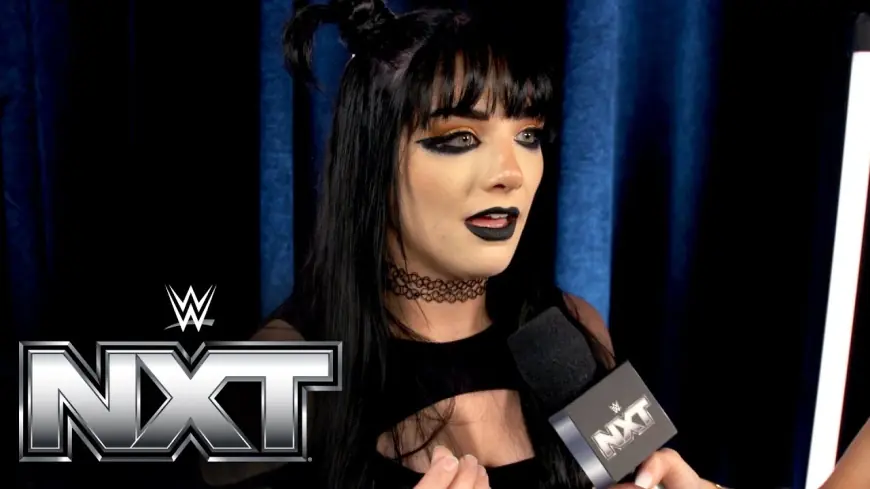
Tatum Paxley says Alexa Bliss changed the course of her life. The WWE NXT performer told a podcast audience that watching Bliss’ emotional, character-driven work on YouTube helped her move from managing a supplement store and competing in powerlifting to pursuing professional wrestling full time.
Tatum Paxley on Alexa Bliss and the Turn from Retail
Paxley described a period when ‘‘retail was just killing me, ’’ saying her job managing a supplement store had left her feeling disconnected from the performative side of herself that cheerleading once satisfied. For roughly two years before signing with WWE, she spent free time watching women’s matches online and found a model for what wrestling could be in Alexa Bliss.
She credited Bliss for opening her eyes to storytelling inside the ring, noting how Bliss used facial expression and character work to convey narrative quickly and clearly. That realization supplied a missing element Paxley felt powerlifting could not provide: emotional performance coupled with athletic competition. The result was a clear cause-and-effect trajectory—disillusionment with retail and a search for creative outlet led to exposure to pro wrestling, and that exposure, centered on Bliss’ work, precipitated a career change that ended in a WWE signing and placement on NXT.
WWE NXT Matchups and Early Ring Experience
Paxley’s move into the company has already put her in high-profile spots on WWE’s developmental brand. Last year she teamed with Izzi Dame in a shot at the Women’s Tag Team Titles against Charlotte Flair and Alexa Bliss; the pairing did not win the titles. She has also discussed other recent in-ring moments, including a Casket Match with Wendy Choo, as part of the character work she is developing on NXT.
Bliss later acknowledged Paxley’s public remarks on X, thanking her—an exchange Paxley has said validated the influence Bliss had on her decision to pursue wrestling. Paxley has also spoken in a sit-down interview with Denise Salcedo and on the Going Ringside podcast about how the combination of performance and athleticism in wrestling gave her clarity about what she wanted to do next.
What makes this notable is how quickly exposure to a single performer’s approach to character and storytelling can reshape a career trajectory: Paxley shifted from managing retail, where she felt she was losing herself, to signing with WWE after roughly two years of studying matches online and embracing the performance side of the sport.
Now on NXT, Paxley says she is channeling past frustrations and competitive experience into her in-ring persona, attempting to blend the physicality of powerlifting with the emotional beats she admired in Bliss’ performances. The sequence of events—retail work leading to online viewing, which led to inspiration and then to a WWE signing—offers a compact example of cause and effect in a modern wrestling pathway.
Paxley has framed her trajectory as unlikely but deliberate: a friend from the supplement industry introduced her to pro wrestling, a curiosity became a two-year period of study and YouTube viewing, and that led directly to her entry into WWE’s developmental system. She continues to develop her craft on NXT, where her early matches and character experiments are being tested in front of live audiences and alongside established names in the women’s division.
The exchange between Paxley and Alexa Bliss—Paxley naming Bliss as ‘‘the reason I got started, ’’ and Bliss offering public acknowledgment—underscores the real-world impact performers can have on aspiring talent. As Paxley builds her résumé in NXT, her story highlights how performance style and narrative clarity can serve as both inspiration and practical blueprint for a new generation of wrestlers.