























Bahrain Named Among Gulf States Intercepting Missiles as Doha Resident Describes Hours of Strikes

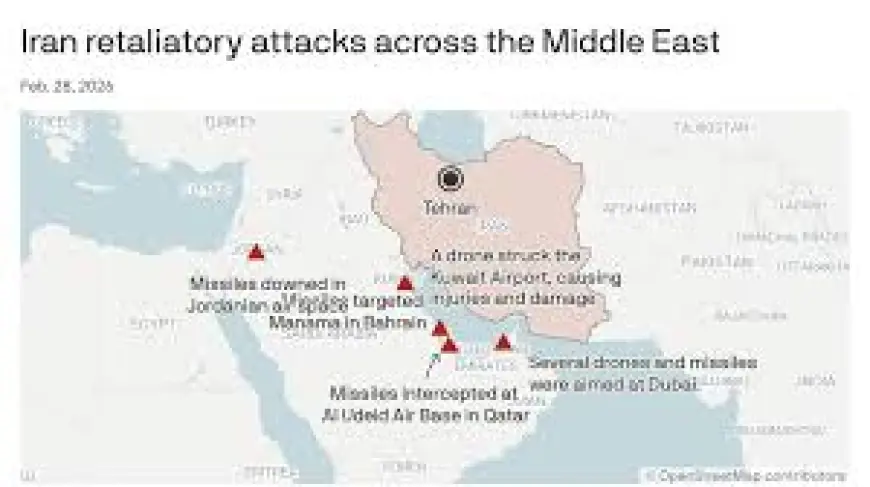
Missiles launched from Iran toward neighbouring countries that host American military bases have sparked air-defence operations and travel disruptions across the Gulf, with bahrain among the states intercepting incoming rounds. A British schoolteacher in Doha said doors were shaking and sirens sounded as interceptors engaged targets over the capital, forcing residents into shelter for hours.
Katie Evans in Doha
Katie Evans, originally from Liverpool, has been working as a school teacher in Doha for six months. She was leaving a morning gym class when Qatari authorities issued a warning to take shelter; she walked to a friend's home because it was the nearest safe location and found the unfolding news there. She described hearing missiles overhead and feeling the doors shake, and said employers were contacting staff to check on them and urge them to stay safe.
Qatar's defence ministry statement
Qatar's defence ministry said it successfully countered a number of attacks targeting the country's territory. Sirens were heard nearby during the incidents, and there have been concerns about falling debris after explosions. Evans said she could see and hear missiles being shot down and that the confrontations were "going on for hours. " She remains with four friends—three British and one Kenyan—while they wait for the shelter directive to be lifted.
Bahrain among states intercepting missiles
The list of countries intercepting missiles fired from Iran at US military bases on their territory includes Qatar, the United Arab Emirates, Kuwait, bahrain and Jordan. The strikes followed a series of attacks by the US and Israel across Iran; Tehran then launched retaliatory strikes across the region that prompted defensive responses in neighbouring states hosting American forces.
Qatar Airways cancellations and travel impact
Qatar Airways is among the major carriers that have cancelled flights to the Middle East as the situation unfolded. US officials described the airline cancellations as a "precautionary measure. " The cancellations compounded a day in which residents were ordered into shelter and public concern rose about the possibility of falling debris from intercepted or downed munitions.
US officials and political context
US officials framed some of the immediate responses, including flight cancellations, as precautionary. The developments come as Donald Trump weighs whether to take action against Iran, a calculation that US policymakers are reportedly considering in the wake of strikes and counter-strikes. The sequence — US and Israeli strikes on Iran followed by Iranian missile launches at neighbouring states hosting US bases — has produced a chain of defensive actions and public-safety directives across the Gulf.
What makes this notable is the simultaneous effect on civilians and international logistics: within hours, residents like Evans were sheltering in private homes, air defences were active over multiple capitals, and major airlines curtailed services. Evans said Doha remains "just lovely" and that she has a long affinity for the region after five years living in Oman, but added that the day had been frightening for her and those around her.
The immediate cause — strikes across Iran by the US and Israel, followed by Iranian retaliatory launches — produced the effect of heightened military activity, civil-warning directives, and travel disruption across multiple states. Officials and militaries in the Gulf have moved to intercept incoming missiles, while civilians sheltered and airlines adjusted schedules. The broader implication is that operations directed at one state have quickly generated defensive responses and civilian impacts across several neighbouring countries hosting foreign forces.