
























Texas Vs Texas A&m: Lone Star Showdown Leaves Both Teams Scrambling for NCAA Fate

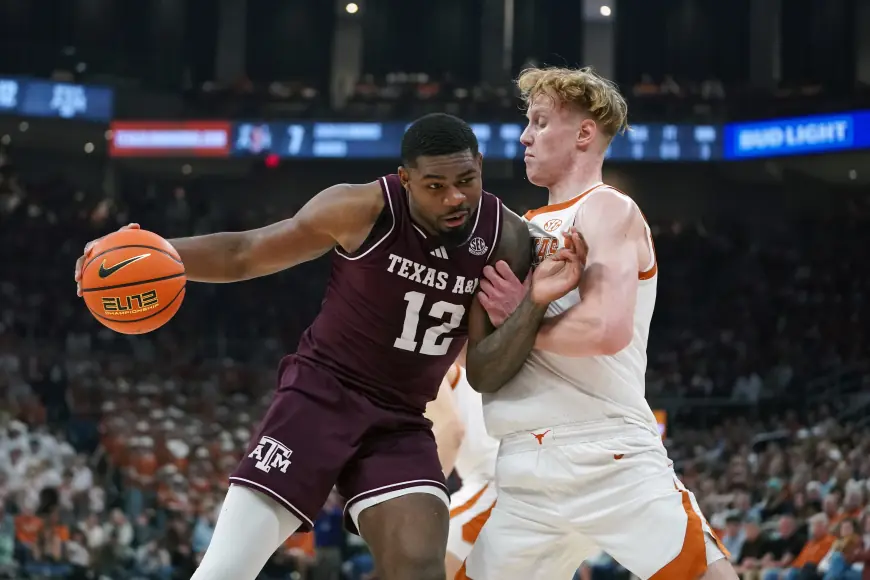
The texas vs texas a&m matchup in College Station has sharpened into a must-win test for both programs with just three regular-season games left. The outcome matters now because each team has floated in and out of NCAA Tournament contention during recent streaks and stumbles, and the result will reshape immediate postseason positioning.
Reed Arena showdown: Texas Vs Texas A& m
Texas A& M returns home with a 19-9 overall mark and a 9-6 Southeastern Conference record, while Texas arrives 17-11 and 8-7 in league play. The Aggies are a 3½-point favorite and will host the Lone Star Showdown on ESPN2, with local radio carriage announced for both Austin and College Station windows.
The first meeting this season went to the Maroon and White, a 74-70 decision in Austin that illustrated how thin the margin is between these rivals. Rylan Griffen produced an efficient 17 points on 6-of-7 shooting in that game, and Rashaun Agee posted a 17-point, 11-rebound double-double. Depth played a decisive role in that earlier contest: A& M used 10 players and outscored Texas’s bench 20-6.
Despite the win earlier in the season, A& M has not been immune to recent struggles. The Aggies suffered a disheartening road loss to No. 20 Arkansas and, by some measures, have appeared fatigued at times against teams that can counter their full-court pressure with length and floor balance. For Texas, the sequence has been inverted: a five-game winning streak that began Jan. 31 revived the Longhorns’ profile, but consecutive losses have reintroduced serious concern about their postseason outlook.
Sean Miller on late-game execution and bracket pressure
Texas head coach Sean Miller has publicly identified late-game defense as a key shortcoming after back-to-back defeats left the program sliding toward the bubble. In one recent contest, the Longhorns led in the second half before failing to score from the field down the stretch and committing five turnovers that opened the door for an opponent’s decisive run. On the same night, the opponent converted an overwhelming share of attempts immediately after a timeout, leaving Miller to highlight the team’s inability to get a key stop in crunch time.
Those late collapses have tangible consequences: bracket projection work from Joe Lunardi places Texas among the last four byes, and it assigned a 32-percent win probability for the Saturday road contest while giving a 21-percent chance for the midweek matchup in Fayetteville that preceded these trends. The timing matters because each remaining game can swing resume-building metrics quickly; with three regular-season games remaining, every possession and result carries magnified impact on seeding and selection hopes.
Matchup factors that will decide the Lone Star Showdown
Several concrete factors point to how the game could unfold. A& M’s press and depth have previously forced Texas into limited bench production—three Texas reserves combined to shoot 1-of-10 for 42 minutes in the first meeting—while A& M has leaned on balanced scoring and efficient finishing from players like Griffen and Agee. Texas, for its part, has shown it can control tempo against the Aggies and limited fast-break points in the earlier loss, but the Longhorns’ recent late-game lapses and rotation wear have exposed them in the final minutes.
What makes this notable is that both teams arrive with clear, addressable weaknesses—A& M’s occasional fatigue and inconsistent execution in SEC play, and Texas’s failure to close games defensively—so coaching adjustments over the next short window could directly alter the postseason trajectory for one or both programs. The immediate effect will be felt in the bracket conversation: a win for the host Aggies would ease pressure on their at-large hopes; a Texas upset would arrest a slide that risks leaving the Longhorns on the outside looking in with only three opportunities left to change that path.
Game-time decisions on rotation and defensive matchups, and the teams’ ability to execute in the final five minutes, will therefore determine more than regional bragging rights—they will steer which roster advances toward the NCAA field and which faces a precarious finish to the regular season.