
























Damian Pinas’ Momentum on the Line in Mexico: How Strike Volume and Takedown Threat Shape a High-Stakes Welterweight Clash

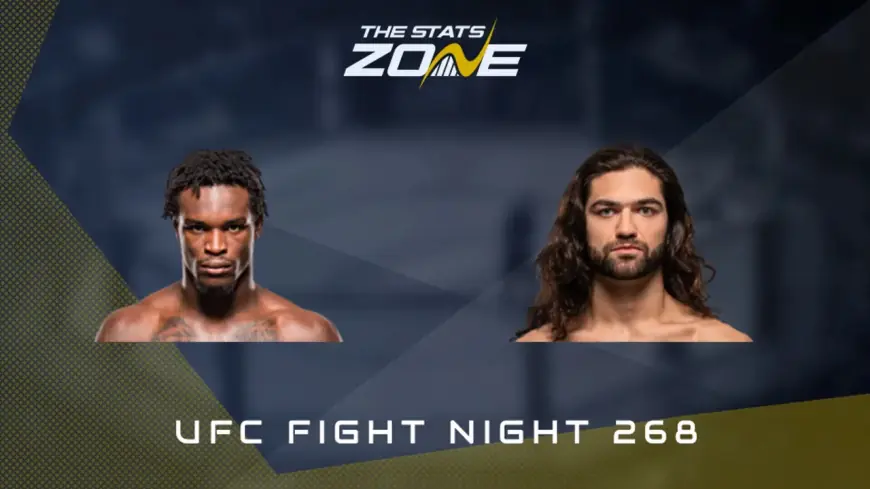
Why this matters now: The matchup pits a 23-year-old knockout specialist against a veteran submission wrestler at a moment when momentum — and betting lines — could tilt a prospect’s trajectory. damian pinas arrives as a heavy favorite on a prelim card that opens the card in Mexico City; the outcome will influence how quickly the promotion treats his upside versus the real upset potential of a grappler who rebuilt his path through the Contender Series.
Damian Pinas’ stock: volume, finishing power and a clear vulnerability
Damian Pinas enters as a striking-forward 8-1 prospect who lands elite volume: 9. 62 significant strikes per minute at 50% accuracy. That output and finishing instinct underlie the market placing him heavily favored on fight night. But the analytical tension in this matchup is straightforward: the same pressure that creates openings for Pinas also leaves him exposed. His recorded striking defense and takedown resistance are weak points on paper, and that creates a binary game-plan scenario for both corners.
Here's the part that matters: sustained pressure from Pinas threatens to deny opponents time to set up wrestling exchanges, yet any successful level change could flip the fight entirely. damian pinas is defined by pace and power; how his team plans to handle takedown attempts will decide whether those tools carry him through or leave him vulnerable to a submission specialist.
Fight details, timing and tactical matchup
The bout opens the preliminary slate of the Mexico City card at Arena CDMX, slated for Feb. 28, 2026 with the preliminary card kickoff at 5: 00 p. m. ET. This is a three-round encounter featuring contrasting formulas: Pinas’s high-volume striking against Wes Schultz’s wrestling and submission game.
- Pinas: 8-1 record, 23 years old, heavy striking output (9. 62 SPM at 50% accuracy).
- Schultz: 8-2 record, 29 years old, strong wrestling numbers (5. 57 takedowns per 15 minutes at 40% accuracy) and a 1. 4 submission average.
- Odds and market context list Pinas as the significant favorite, with Schultz priced as the underdog and carrying clear upside due to his grappling profile.
Strategically, Schultz’s path is clear: convert takedowns early and keep the fight in positions where submission averages matter. Pinas’s path is to maintain distance and volume long enough to create a stoppage window. Neither fighter demonstrates reliable takedown defense on record, so the first successful chain of grappling exchanges likely determines the pace and final outcome.
- Pace advantage: Pinas’s volume pressures opponents to defend constantly.
- Control vector: Schultz’s takedown frequency forces Pinas to scramble and defend from disadvantaged positions.
- Outcome hinge: whoever imposes their preferred phase (standup vs. ground) first has the clearest route to victory.
What’s easy to miss is that Pinas’s offensive ceiling and Schultz’s grappling thresholds both present real finishing opportunities; this isn’t a one-sided stylistic mismatch so much as a contest of who can impose their phase faster.
Micro timeline of Schultz’s route to this pairing:
- Early Contender Series appearance ended in a loss to an opponent now competing on the big stage.
- Just over a year later he returned to the Contender Series and won by a rare suloev stretch submission — the first of its kind in that series and an uncommon finish under the organization’s banner.
- That win set up his UFC debut against damian pinas on the Mexico City prelims.
- Market signal: Heavy favorite status for Pinas reflects strike metrics and finishing upside.
- Immediate implication for Pinas: a win reinforces prospect momentum and betting narratives; a loss exposes the takedown-defense narrative and elevates Schultz’s stock.
- For bettors and fans: Schultz presents legitimate upset value because his takedown volume directly targets Pinas’s documented weakness.
- Event-level note: the prelim timing compresses turnaround for late card movement; watch weigh-ins and last-minute adjustments (schedule subject to change).
The real question now is whether Pinas can convert volume into a quick finish or whether Schultz’s wrestling cadence will neutralize that threat and tilt the fight toward submissions. Expect an early scramble for phase control and a decisive moment once one fighter establishes it.
(Editorial aside) The bigger signal here is how the promotion treats prospect risk: a convincing win for Pinas fast-tracks him; a Schultz upset reshuffles immediate matchup considerations for both camps.