

























Did the US Attack Iran Today? Operation Epic Fury Strikes Ignite Retaliation and Regional Lockdowns

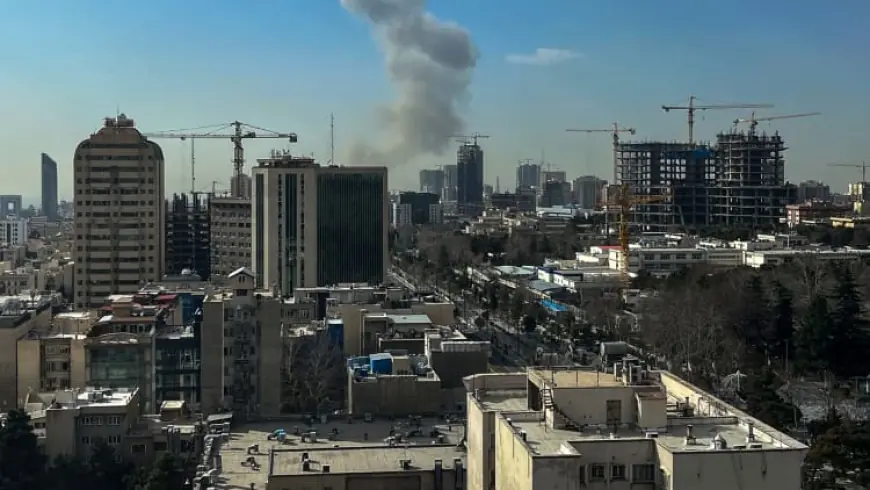
Yes—did the US attack Iran today has a clear answer. The United States launched major strikes inside Iran on Saturday, Feb. 28, 2026 (ET), in a rapid escalation that immediately triggered Iranian retaliation across the Middle East and prompted widespread airspace closures and flight disruption.
The operation, publicly labeled Operation Epic Fury, marks one of the most consequential U.S.-Iran military confrontations in decades, with implications stretching from battlefield dynamics to travel chaos and energy market anxiety.
Did the US Attack Iran Today: What the US Confirmed and When It Began
In public remarks early Saturday (ET), President Donald Trump confirmed the United States had begun “major combat operations” against Iran. The U.S. Defense Department later used the name Operation Epic Fury for the mission, signaling a coordinated campaign rather than a single, isolated strike.
Explosions were reported in and around Tehran and at other locations in Iran as air defenses activated. While detailed battle damage assessments remained limited in the first hours, the scope of activity and the official branding of the operation indicated a substantial, multi-target action.
Operation Epic Fury Targets and Why Washington Says It Acted
U.S. messaging has emphasized that the initial strikes targeted Iranian military capabilities connected to regional threats—especially missile-related systems and naval assets. The focus suggests two immediate goals: reduce Iran’s ability to launch follow-on attacks and constrain Iran’s capacity to pressure shipping and bases across the region.
The broader context includes heightened tension over Iran’s strategic programs and a collapse in de-escalation momentum. With both sides treating the other as an urgent threat, the operational logic became front-loaded: strike hard, disrupt capabilities, and try to seize initiative before Iran could expand the battlefield.
Iran Retaliation: Missiles, Gulf Bases, and the Bahrain Navy Hub
Iran responded within hours with retaliatory launches that targeted Israel and multiple Gulf states that host U.S. forces or support infrastructure. The most politically explosive flashpoint involved Bahrain, where a strike hit a U.S.-linked naval service facility area connected to the Fifth Fleet footprint in Manama’s Juffair district—an important hub for American maritime operations in the region.
The retaliatory pattern underscores why the conflict is being discussed in war terms: once a cycle includes strikes inside Iran and attacks on U.S.-linked facilities abroad, the threshold for further escalation lowers sharply. Gulf states activated air defenses and issued public safety guidance as the threat picture shifted in real time.
Is the US at War With Iran After Today’s Strikes?
“War” can mean two different things at once.
-
In practice: the U.S. and Iran are in active hostilities—U.S. strikes inside Iran, Iranian retaliation aimed at U.S.-linked facilities and allies, and a widening regional military posture.
-
In law: a formal declaration of war would require Congress. Combat operations can occur without a declaration, but sustained fighting raises the political pressure for lawmakers to authorize, limit, or shape the mission.
Whether the conflict becomes a prolonged U.S.-Iran war depends on what happens next: additional Iranian barrages, U.S. casualties, and whether the U.S. expands target sets beyond missiles and naval capabilities.
Flight Disruptions Spread Beyond the Middle East
One of the fastest global impacts has been aviation disruption. Several countries moved to close or restrict airspace Saturday (ET), including Israel, the United Arab Emirates, and Qatar, with additional restrictions affecting parts of the surrounding region. Airlines canceled, diverted, or rerouted flights, including long-haul routes that connect Europe and North America to the Gulf and onward to Asia-Pacific.
For travelers in the U.S., U.K., Canada, and Australia, the effects are immediate: longer routings, missed connections, and rapidly changing schedules as carriers avoid conflict-adjacent corridors. Aviation regulators and security teams are now treating the region as a high-risk overflight zone until the situation stabilizes.
What to Watch in the Next 24–72 Hours
The next phase will be defined by whether strikes remain limited or expand into sustained regional conflict. Here are the key signals that can quickly change the trajectory:
| Signal | What It Could Mean | Why It Matters |
|---|---|---|
| Additional Iranian missile waves | Retaliation becomes sustained | Higher risk to bases and civilians |
| U.S. target expansion | A longer campaign under Operation Epic Fury | Escalation and broader regional spillover |
| Confirmed casualties at U.S.-linked sites | Major escalation threshold | Political pressure and potential widening response |
| Wider airspace shutdowns | Travel disruption intensifies | Global airline reroutes and delays |
| Maritime security alerts | Rising risk to shipping routes | Oil and freight costs could climb |
For now, the central fact remains straightforward: did the US attack Iran today—yes, and the consequences are already unfolding across the region. The immediate question is no longer whether strikes happened, but whether leaders can keep the confrontation contained before retaliation and counter-retaliation lock the Middle East into a longer, broader war cycle.