

























Why Is the U.S. Attacking Iran? Inside the Escalating Military Conflict

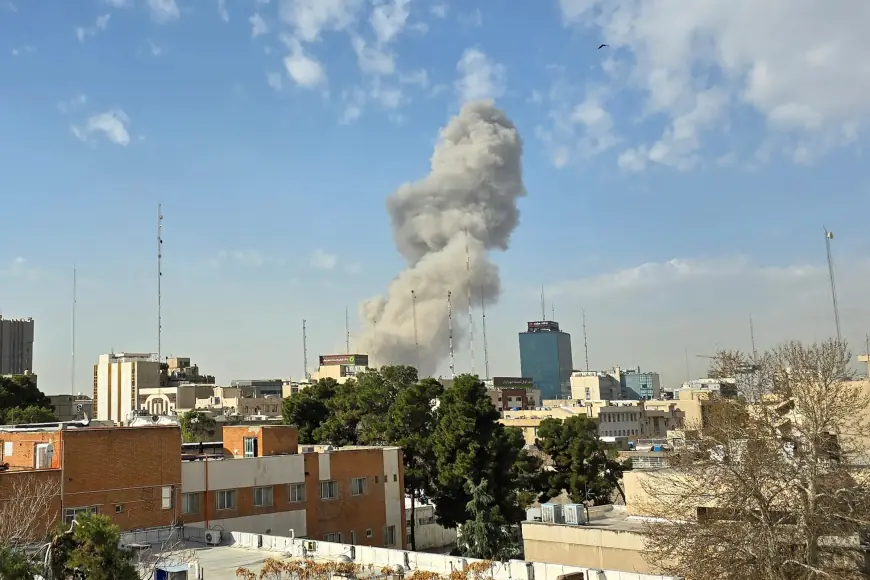
On Saturday, February 28, 2026 (ET), the United States launched major military strikes against Iran in what President Donald Trump described as sustained combat operations targeting Iranian military infrastructure. The escalation marks one of the most significant direct confrontations between Washington and Tehran in years and has already triggered retaliation, raising fears of a broader regional war.
As tensions intensify, the central question dominating global headlines is: Why is the U.S. attacking Iran?
U.S. Says It Is Targeting Military and Missile Capabilities
The Trump administration has framed the strikes as a necessary response to what it describes as growing threats from Iran’s missile systems, naval forces, and regional military posture. According to U.S. officials, the objective is to weaken Iran’s ability to launch attacks against American forces, allies, and commercial shipping routes in the Middle East.
Missile production sites, air defense systems, and naval assets were reportedly among the first targets. Officials argue that degrading these capabilities now is intended to deter future attacks and limit Iran’s strategic reach across the region.
The administration has emphasized that the operation is not symbolic but part of a broader effort to significantly reduce Iran’s military capacity.
Nuclear Program Concerns Remain Central
A second major justification involves Iran’s nuclear ambitions. U.S. leaders have long expressed concern that Tehran is advancing its nuclear program beyond agreed limitations. Recent diplomatic efforts aimed at curbing uranium enrichment and missile development reportedly failed to produce a breakthrough.
Washington now appears to be using military force as leverage, signaling that continued nuclear development will carry direct consequences. The administration maintains that preventing Iran from acquiring nuclear weapons is a top national security priority.
Iran, however, insists its nuclear program is for civilian purposes and has accused the United States of aggression.
Collapse of Diplomacy Preceded Military Action
The strikes come after months of strained diplomacy. Negotiations earlier in 2026 sought to limit Iran’s missile testing and nuclear activities, but talks stalled amid mutual accusations of noncompliance and unrealistic demands.
With diplomacy at an impasse, the White House appears to have concluded that military pressure was the remaining option. This shift from negotiation to force represents a sharp escalation and has prompted debate in Congress and among international allies.
Critics argue that military action without a clearly defined end-state risks drawing the U.S. into a prolonged conflict. Supporters contend that failing to act would embolden Tehran and undermine deterrence.
Coordination With Israel Intensifies Regional Stakes
The U.S. strikes are widely viewed as coordinated with Israel, which has repeatedly described Iran as its primary security threat. Israeli officials have long warned that Iran’s missile network and regional alliances pose an existential danger.
Joint action increases the operational pressure on Iran but also heightens the risk of retaliation across multiple fronts. Iran has already launched missile and drone attacks aimed at U.S. positions in the Gulf region, as well as Israeli-linked targets.
This back-and-forth exchange significantly raises the possibility of wider regional instability involving neighboring countries.
Political Rhetoric and Regime Pressure
Beyond military objectives, President Trump has used strong rhetoric against Iran’s leadership, openly criticizing the ruling government and encouraging political change. While the administration has not formally declared regime change as policy, its messaging suggests a desire to weaken the current power structure in Tehran.
Such rhetoric has intensified domestic and international debate. Some lawmakers argue that military action without congressional authorization sets a dangerous precedent. Others insist that swift executive action was necessary to address imminent threats.
Global Impact and What Comes Next
The escalation has immediate global implications. Energy markets are closely monitoring developments, particularly any threat to oil shipments through the Strait of Hormuz, a vital corridor for global supply. Financial markets in North America, Europe, and Asia have shown volatility amid uncertainty about the conflict’s duration.
Allies in the UK, Canada, and Australia are assessing the situation carefully, weighing diplomatic positioning against alliance commitments.
The next phase of the conflict will likely depend on several factors:
-
The scale and frequency of Iranian retaliation
-
Whether U.S. strikes expand to additional strategic targets
-
Diplomatic efforts by international mediators
-
Congressional and domestic political reactions in Washington
For now, the U.S. is attacking Iran because the administration believes military force is necessary to counter missile threats, halt nuclear advancement, and reassert deterrence after diplomacy failed. Whether the campaign remains limited or expands into a broader war will depend on decisions made in the coming days.
As of February 28, 2026 (ET), the situation remains fluid, with both sides signaling readiness for further action.