
























Why Are We Going to War With Iran After Operation Epic Fury and Iran Retaliation?

Americans are asking “why are we going to war with Iran” after the United States confirmed major strikes on Iranian targets on Saturday, Feb. 28, 2026 (ET) under Operation Epic Fury, followed within hours by Iran retaliation that included missile launches toward Israel and toward Gulf countries that host U.S. forces. The rapid escalation has created a war-like reality even without a formal congressional declaration of war, and it has pushed the Middle East into a volatile phase that is already disrupting flights and lifting fears of higher energy prices.
Operation Epic Fury: The Immediate Trigger for US Strikes
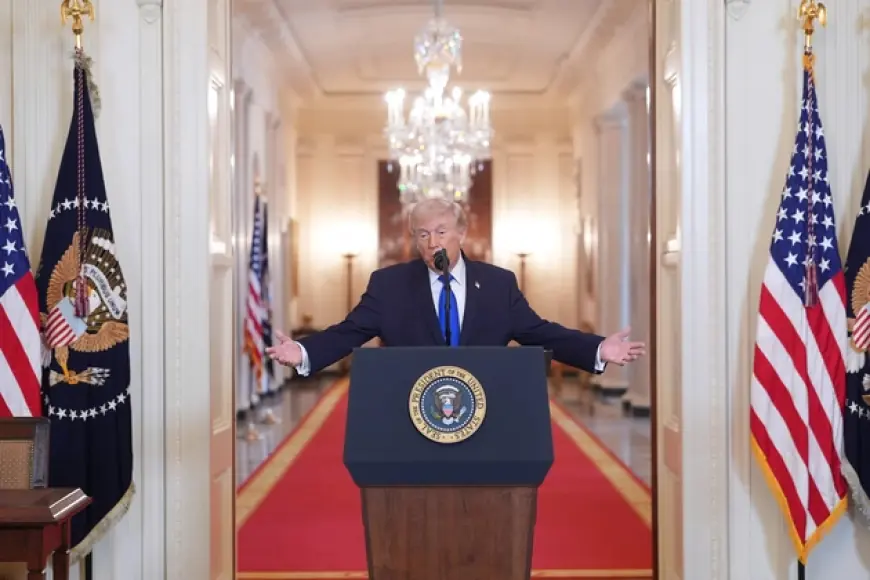
The U.S. action was framed by the White House as a response to urgent threats tied to Iran’s military capabilities. In public remarks early Saturday (ET), President Donald Trump described “major combat operations” and presented the strikes as necessary to protect U.S. forces and allies while pressuring Iran’s leadership.
While military details are still emerging, the strike messaging has emphasized degrading Iran’s ability to launch follow-on attacks—especially missile and related infrastructure—and shifting the strategic balance before Iran could widen the conflict on its own terms. For many observers, the scale and tone suggested a campaign, not a single night of bombing.
The Deeper Drivers: Nuclear Pressure, Missiles, and Deterrence Breakdown
Beyond the immediate trigger, three structural forces have pushed Washington toward direct confrontation:
-
Nuclear acceleration fears
International attention has intensified in recent days around Iran’s highly enriched uranium stockpiles and underground storage activity connected to the Isfahan nuclear complex. That context has amplified arguments in Washington and Jerusalem that the window for diplomacy or containment was narrowing. -
Regional missile threat and proxy pressure
Iran’s missile reach—and the broader network of allied militias and partners in the region—has long been the core U.S. concern. Once decision-makers conclude deterrence is failing, the logic shifts from “contain and respond” to “degrade and pre-empt.” -
Collapse of off-ramps
When negotiations stall and each side believes the other is gaining time or capability, the incentive to strike first rises. That dynamic is especially dangerous because each side can claim defense while still escalating.
Iran Retaliation: Why Bahrain, Iraq, and Gulf Bases Matter
Iran’s response is central to why this feels like “war” to the public. Within hours of the U.S. strikes, missiles targeted multiple Gulf states that host U.S. assets. Bahrain confirmed a hit on a U.S.-linked naval service facility area tied to the Fifth Fleet footprint—symbolically significant because it is a key hub for American maritime operations in the region.
Iraq also sits in the blast radius of any Iran–U.S. cycle. U.S. facilities and logistics routes across Iraq are exposed to missile and drone risk, and political pressure inside Iraq can rise sharply when conflict spills across its airspace or territory.
Did Trump Declare War, and Is the US “At War” Legally?
This is where the question “why are we going to war with Iran” splits into two meanings.
-
Practically: the U.S. is in active hostilities with Iran—strikes inside Iran, retaliation against U.S.-linked facilities, and a widening military posture across the region.
-
Legally: a formal declaration of war requires Congress. As of Saturday (ET), the U.S. posture has been described as combat operations rather than a declared war.
That gap matters because it shapes what happens next in Washington: whether Congress moves to authorize expanded operations, restrict them, or force a timeline and reporting requirements.
What the US, UK, Canada, and Australia Are Watching Right Now
For U.S. allies, the key question is whether the conflict stays contained or expands into a broader regional confrontation that could pull in more countries.
-
United Kingdom: focus on regional basing, maritime security, and protecting nationals as airspace restrictions grow.
-
Canada: heightened concern around citizen safety and travel disruption, plus energy-price sensitivity.
-
Australia: strong attention to global shipping risk, oil-market transmission into inflation, and any widening security commitments among allies.
The global impact is already visible in airline route changes as carriers avoid contested airspace and re-route long-haul flights, causing knock-on delays well beyond the Middle East.
What Happens Next and Why the Situation Could Escalate Further
Whether this becomes a sustained “war on Iran” depends on choices over the next 24–72 hours (ET): target expansion, casualties, and the pace of Iranian launches.
| Escalation Driver | What It Would Look Like | Why It Matters |
|---|---|---|
| Expanded U.S. target set | Strikes beyond missile/naval systems into wider infrastructure | Signals a longer campaign |
| Iranian follow-on waves | Repeated missile/drone attacks on bases and partners | Raises risk of U.S. casualties |
| Conflict spreads via Iraq | Attacks near U.S. positions or routes | Broadens the battlefield |
| Maritime security shock | Alerts or incidents near major shipping routes | Drives oil and freight costs higher |
| Domestic politics harden | War-powers fight and public pressure | Can lock leaders into escalation |
The simplest answer to “why are we going to war with Iran” is that U.S. leaders are claiming imminent threats and a need to break Iran’s ability to strike, while Iran is responding with retaliation that forces the U.S. to either escalate or absorb more attacks. The next moves—more than the label—will determine whether this remains a short, violent exchange or becomes a prolonged conflict.