

























US Bombs Iran Today as Operation Epic Fury Sparks Retaliation and Raises War Fears

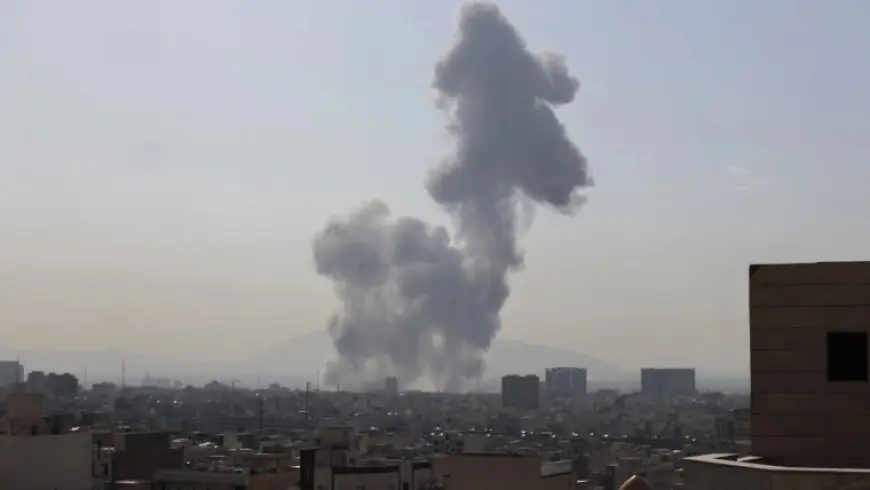
The question “us bombs iran today” surged across searches on Saturday, Feb. 28, 2026 (ET), after the United States confirmed it launched major strikes inside Iran under Operation Epic Fury. The action, coordinated with Israel’s wider assault on Iranian targets, triggered immediate Iran retaliation across the region, including missile launches toward Israel and Gulf states that host U.S. forces. The escalation has rapidly expanded from military targets to air travel disruption and energy-market anxiety, with the U.S., U.K., Canada, and Australia urging citizens in parts of the Middle East to monitor security guidance closely.
US Bombs Iran Today: What the United States Says It Targeted
U.S. officials described the opening phase of Operation Epic Fury as “major combat operations” aimed at degrading Iranian capabilities that threaten U.S. forces and allies. The strike focus was described as Iranian missile systems and naval forces, signaling an attempt to limit Iran’s ability to launch follow-on attacks and to pressure Iran’s regional posture.
Iranian authorities reported explosions in and around Tehran and other areas, with air defenses activated and communications disruptions noted. While full battle damage assessments were not immediately available, the scale and messaging from Washington indicated this was not a one-off strike, but a campaign with the potential to continue if Iran escalates further.
Why Is the US Attacking Iran Now?
Washington framed the strikes as a response to urgent threats tied to Iran’s missile and nuclear trajectory, after diplomatic efforts failed to produce a breakthrough. Israeli leaders have cast their own attacks as pre-emptive. Together, the messaging suggests a shared objective: reduce Iran’s ability to project force and limit the risk of future attacks on Israel and U.S. regional assets.
The timing also reflects a familiar pattern in Middle East crises: when talks stall and deterrence breaks down, leaders shift to military action that is designed to be decisive, fast, and psychologically overwhelming. The risk is that Iran’s response can widen the conflict beyond the initial target set, drawing more countries into a cycle of retaliation.
Iran Retaliation Hits the Gulf, Including a Strike in Bahrain
Iran’s retaliation began within hours, with missiles launched toward Israel and toward multiple Gulf states that host U.S. bases or support facilities. Bahrain confirmed a missile hit a U.S.-linked naval service facility area, putting a key hub for American maritime operations under direct pressure.
The volley also triggered air defense activations and public alerts in several countries. In at least one location, officials reported a fatality linked to the strikes, underscoring how quickly a state-to-state confrontation can spill into civilian harm even when military sites are the intended targets.
Is the U.S. at War With Iran After These Strikes?
In the practical sense, the U.S. is now in active hostilities with Iran; missiles have been exchanged and U.S. facilities have come under attack. In the formal legal sense, a declared war would require congressional action. That gap—between battlefield reality and legal terminology—does not reduce the danger, but it shapes what comes next politically in Washington.
The next 24 to 72 hours will be decisive. If Operation Epic Fury expands to additional target sets, if Iran continues striking U.S. regional positions, or if casualties rise, the situation may solidify into a prolonged conflict rather than a short campaign.
Travel Disruption and Oil Market Jitters Spread Beyond the Region
The immediate global impact has been felt in the skies and in markets. Airlines began canceling or rerouting flights to avoid contested airspace, affecting long-haul schedules that connect through the Middle East. Travelers from the U.S., U.K., Canada, and Australia are seeing knock-on delays, missed connections, and shifting itineraries as carriers adapt in real time.
Energy traders are also reacting to the renewed risk premium. Even without a confirmed disruption to shipping lanes, heightened conflict near critical maritime corridors increases insurance costs and raises fears of supply shocks.
| What Could Move Next | What It Means | Why It Matters |
|---|---|---|
| More Iranian missile waves | Escalation risk rises | Higher threat to bases and civilians |
| Wider U.S. target expansion | Longer campaign | Greater chance of regional spillover |
| Broader airspace closures | Travel chaos intensifies | Delays and cancellations worldwide |
| Maritime security alerts | Shipping risk premium | Pressure on oil and freight costs |
| Diplomatic emergency meetings | Possible de-escalation | Opens path to pauses or limits |
What Happens Next
Saturday’s events confirm that “us bombs iran today” is not simply a headline—it is the start of a new, dangerous phase. The next signals to watch are whether Iran sustains attacks on U.S. regional infrastructure, whether U.S. strikes remain focused on missile and naval capabilities or broaden further, and whether diplomatic channels can slow the momentum before the conflict locks into a longer war cycle.