























CRM Salesforce Earnings: AI Momentum, $50B Buyback, and A Steady Growth Outlook

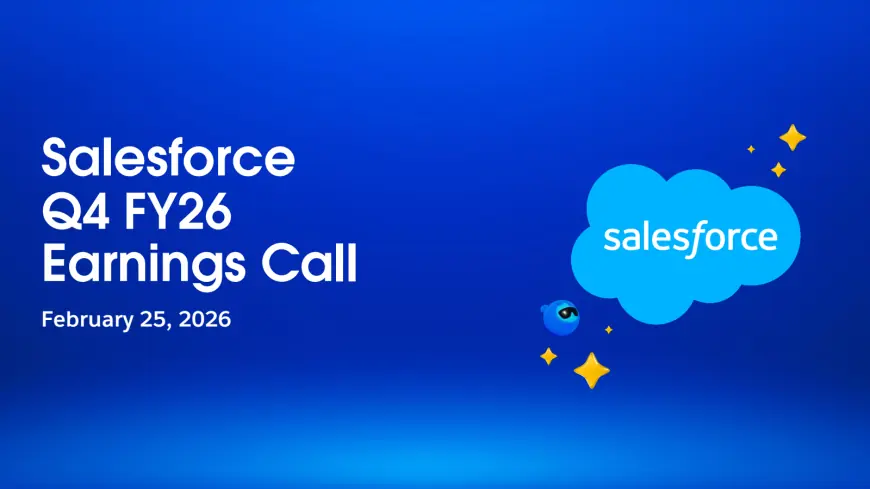
CRM Salesforce earnings are back in focus after the software giant closed out fiscal 2026 with record quarterly results and a renewed push around “agentic” AI products, while pairing the upbeat tone with guidance that suggests growth remains measured rather than explosive. Investors are weighing two competing signals: strengthening performance obligations and cash generation on one side, and a still-choppy demand backdrop in select product areas on the other.
Salesforce released its fourth-quarter and full-year fiscal 2026 results on Wednesday, Feb. 25, 2026 (ET), covering the period ended Jan. 31, 2026, and outlined its fiscal 2027 outlook during its evening earnings call.
CRM Salesforce Earnings Snapshot: The Numbers That Mattered
Salesforce highlighted accelerating AI-related demand and continued margin discipline, alongside a major new authorization to repurchase shares.
| Metric | Reported Result | Year-over-Year Change |
|---|---|---|
| Q4 revenue | $11.2B | +12% |
| Q4 subscription & support revenue | $10.7B | +13% |
| FY26 revenue | $41.5B | +10% |
| Remaining performance obligation (RPO) | $72.4B | +14% |
| Current RPO (cRPO) | $35.1B | +16% |
| FY26 operating cash flow | $15.0B | +15% |
| FY26 free cash flow | $14.4B | +16% |
| Shareholder returns (FY26) | $14.3B | — |
| New share repurchase authorization | $50B | — |
| Quarterly dividend | $0.44/share | +5.8% |
AI Becomes the Lead Story: “Agentic” Work and Data Revenue
A central theme of CRM Salesforce earnings was the company’s effort to position itself as the operating layer where enterprise work happens—blending customer apps, data, and AI agents in one platform. Management emphasized the scale of AI usage and described rapid uptake in products tied to agent-driven automation and data integration.
Salesforce said “Agentforce” annual recurring revenue reached roughly $800 million, and that combined Agentforce and “Data 360” annual recurring revenue exceeded $2.9 billion. The company also introduced a metric it calls “agentic work units,” describing completed tasks performed by AI agents, and pointed to billions delivered to date.
For investors, the relevance is straightforward: Salesforce is trying to convert AI enthusiasm into durable contracted spend, rather than one-off experimentation. The company leaned heavily on deal momentum, noting thousands of AI-related deals and a rising share of larger wins that bundle multiple clouds with data and AI components.
Guidance and Growth: What Salesforce Is Signaling for FY27 and Beyond
Despite a strong finish to fiscal 2026, CRM Salesforce earnings messaging also made clear that the near-term growth outlook is steady rather than hockey-stick.
For fiscal 2027, the company forecast revenue of about $45.8 billion to $46.2 billion, implying roughly 10% to 11% growth. The outlook expects subscription and support revenue growth a little under 12%, with continued strength in AI and core clouds partially offset by softness in parts of marketing, commerce, and certain analytics areas.
Management also reiterated a longer-range ambition of reaching $63 billion in revenue by fiscal 2030, framing AI agents and the data foundation as the engine to reaccelerate organic growth in the back half of fiscal 2027.
The $50 Billion Buyback: Why Capital Returns Became a Headline
Salesforce paired CRM Salesforce earnings with a major shareholder-return move, announcing a $50 billion share repurchase authorization and a dividend increase.
The buyback matters for two reasons:
-
It signals confidence in cash-flow durability, with free cash flow rising and operating cash flow reaching $15.0 billion in fiscal 2026.
-
It provides a buffer for per-share earnings metrics even if topline growth stays in the low-double-digit range.
The company said it returned $14.3 billion to shareholders in fiscal 2026 through repurchases and dividends, reinforcing that capital returns are now a core part of its financial identity.
Market Reaction and What Investors Watch Next
The immediate market response to CRM Salesforce earnings has been mixed in recent sessions, reflecting broader volatility in software stocks and the debate over how AI reshapes enterprise spending. Bulls are focused on growing performance obligations, strong cash flow, and the speed of AI product adoption. Skeptics are watching whether AI demand expands overall budgets or simply shifts dollars within existing contracts.
Next, investors will be watching three markers through spring 2026:
-
Whether cRPO growth remains firm as a forward indicator of revenue
-
Evidence that AI-related products expand into broader enterprise rollouts, not just pilots
-
Any improvement in weaker segments that management flagged as headwinds
For now, CRM Salesforce earnings delivered a clear message: AI is becoming the organizing strategy, profitability remains a priority, and the company is using its cash engine—especially the $50 billion buyback—to sustain shareholder value while it pushes for the next leg of growth.