























Etihad Partnership Signals a Market Shift: How McLaren’s Deal Rewrites F1 Sponsorship and Global Travel Momentum

Why this matters now: The new alliance places etihad at the center of a commercial pivot that blends top-tier motorsport exposure with airline network strategy, changing who travels to races and how teams move around the calendar. For McLaren and aviation partners, the deal shifts momentum from episodic Grand Prix sponsorship to continuous, network-driven activation beginning with the 2026 season.
Etihad’s move resets sponsorship momentum and travel links
What changes first is distribution: the partnership is designed to turn race attendance and travel routing into an ongoing commercial asset. Etihad’s global route map will be used to connect multiple racing hubs — including the UAE, Australia, China, Japan, the United Kingdom, Spain, Italy and the United States — meaning logistics and passenger flows are deliberately being aligned with McLaren’s global racing programme. The arrangement also marks a commercial rival to an existing major airline agreement in F1, underlining a shift in how national carriers pursue year-round brand activation through sport.
Here’s the part that matters for fans and travel planners: the alliance extends beyond logo placement. It strings together flight networks, fan experiences and hospitality capacity in a way that could reallocate where more high-value spectators choose to fly and stay during the season.
Partnership specifics — branding, logistics and fan activation
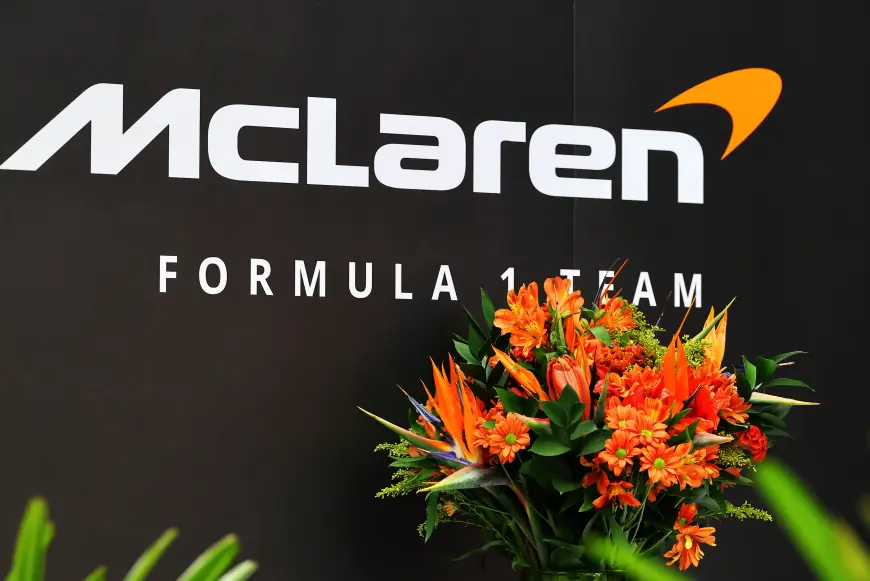
The headline mechanics of the agreement are straightforward and visible. From the 2026 season Etihad will be an official partner of McLaren’s Formula 1 team and its hypercar programme. Trackside branding is a central feature: airline branding will appear on both the F1 car and the WEC hypercar, with placements called out on the MCL40’s rear wing and halo and on race helmets. The deal includes digital and experiential rights that enable coordinated fan engagement throughout the partnership.
Logistics support is part of the package: etihad will provide backing through its route network to link key racing venues across continents, aiming to streamline team and fan movement. The airline will also unveil a McLaren-branded livery on one of its Boeing 787 Dreamliner aircraft later this year, creating a moving billboard across its network. Notably, the airline already serves as title sponsor of the Abu Dhabi Grand Prix, a relationship that predates this new alliance.
- Strategic implications: The deal ties team mobility and fan access to an airline network, creating a year-round commercial platform rather than a single-event sponsorship.
- Stakeholders affected: teams’ operational planning, race hospitality providers, airline marketing, and international fans who choose flights and hotels during the season.
- Commercial signal: placing a branded aircraft livery and prominent car placements increases brand reach beyond the racetrack into travel booking and on-route experiences.
- Activation horizon: visible elements begin in the near term with the aircraft livery and fully roll in with the 2026 racing programme.
What’s easy to miss is how tightly commercial aviation can influence spectator flows when airlines actively align schedules and marketing with a sports calendar. That coupling is the bigger strategic play behind the branding.
If you’re wondering why this keeps coming up in travel and tourism conversations, note that partnerships of this scale reframe single-event tourism into season-long demand management for hotels and local attractions linked to race calendars.
The real question now is how other carriers and hospitality partners respond — whether this encourages more airline-team alliances or broader hospitality packages across key race destinations.
A brief timeline:
- 2009 — The airline began its title role at the Abu Dhabi Grand Prix.
- 2026 season — The partnership with McLaren’s F1 team and hypercar programme takes effect.
- Later this year — A McLaren-branded livery will appear on a Boeing 787 in commercial service.
Signals to watch for confirmation of next commercial moves include new route announcements that mirror the F1 calendar, coordinated hospitality packages linked to specific races, and expanded digital fan experiences tied to both team and airline platforms. Recent updates indicate some elements are already scheduled; details may evolve as the partnership is activated.