























Lauren Boebert image fuels disruption as Bill Clinton testifies over six hours in Epstein probe

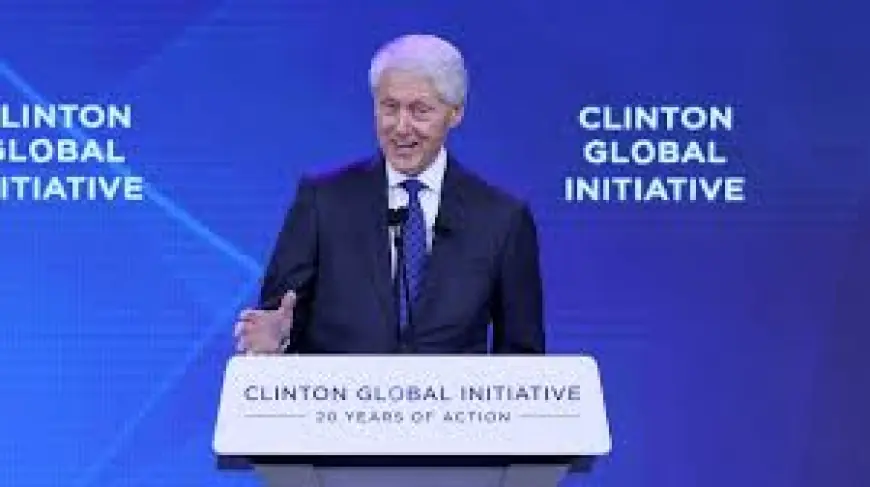
Former President Bill Clinton spent more than six hours testifying before the Republican-led House Oversight Committee about Jeffrey Epstein’s crimes, while a photograph taken by GOP Rep. Lauren Boebert disrupted his wife Hillary Clinton’s earlier deposition. The twin sessions mark a high-profile phase of a sweeping congressional inquiry prompted by allegations about Epstein’s network.
Bill Clinton’s six-hour deposition near Chappaqua, N. Y.
Bill Clinton told investigators he had “no idea” about the scope of Jeffrey Epstein’s crimes and insisted he “saw nothing, and I did nothing wrong. ” His appearance lasted more than six hours before the Republican-led committee and took place near his home in Chappaqua, N. Y. The testimony came a day after Hillary Clinton met with the same panel.
The hearings are part of what the committee describes as a massive investigation into Epstein and the network that allegedly helped facilitate decades of sex trafficking. The committee’s push for testimony was the result of months of exchanges with the Clintons; Republican leaders ultimately forced both to agree to appear by threatening contempt of Congress.
Hillary Clinton’s Thursday deposition and public opening statement
Hillary Clinton delivered a lengthy closed-door deposition on Thursday and released her opening statement publicly that morning. In that statement she said she does not remember meeting Epstein and criticized the committee’s focus as a “fishing expedition” rather than a “serious” investigation. She wrote that she had been compelled to testify despite having no knowledge that would aid the investigation, and framed the compelled testimony as a distraction tied to President Trump’s actions.
After the deposition she told reporters she repeatedly stated she did not know Jeffrey Epstein, and said she never went to his island, his homes or his offices. She added that questioning veered into topics beyond Epstein, saying the session ended with inquiries about UFOs and a series of questions about Pizzagate, the debunked conspiracy that alleged a Democrat-led child sex ring operating in a Washington, D. C., pizza shop basement.
Lauren Boebert image sparks an hourlong disruption
The Thursday deposition featured an hourlong disruption that followed when an image taken by GOP Rep. Lauren Boebert from inside the closed-door proceeding was posted online. The posting of that photograph caused an interruption in the session and drew immediate attention to security and protocol for closed congressional depositions.
James Comer and the House Oversight Committee’s stated aims
Republican Rep. James Comer, chair of the House Oversight Committee, said the American people have “a lot of questions” and that the committee is committed to getting answers. Comer also said, “No one’s accusing, at this moment, the Clintons of any wrongdoing … but we have a lot of questions. ” He added that the point of these hearings was to expand the committee’s knowledge of the se— unclear in the provided context.
Jeffrey Epstein’s criminal history and the probe’s focus
Jeffrey Epstein, described in the testimony as a wealthy financier who spent time with some of the world’s richest and most powerful men, is accused of running a sprawling criminal operation that victimized dozens of underage girls over multiple decades. He was convicted on two counts of soliciting prostitution in 2008 in what is now widely viewed as a sweetheart deal that spared him harsher punishment. He was arrested again in 2019 on federal sex trafficking charges and died by suicide after a little over a month in custody.
The committee’s investigation targets Epstein’s alleged network and its facilitators. Neither Bill nor Hillary Clinton has been accused of participating in Epstein’s alleged crimes, a point Rep. Comer reiterated while pressing for further information. The sequence of events — public statements, closed-door depositions and procedural disputes over testimony security — has intensified scrutiny of how congressional oversight conducts closed interviews and safeguards sensitive proceedings.
What makes this notable is the convergence of high-profile testimony, public statements and a procedural breach inside a closed session: that combination has pushed the probe into the open and raised questions about both the committee’s methods and the evidence it seeks to compile.