

























Exclusive screening set for Midwinter Break as Lesley Manville-led drama opens for preview

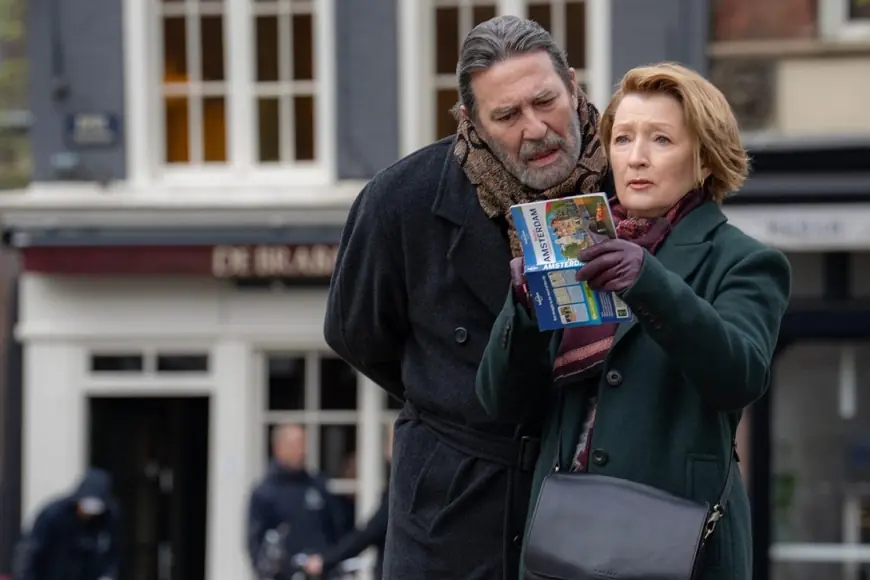
Lesley Manville will headline an exclusive preview screening of Midwinter Break on Tuesday, March 17, as the intimate drama from director Polly Findlay prepares for a limited early showing. The announcement matters because the film’s small, actor-driven scope — and its thematic focus on faith, home and decades-long marriage — positions this screening as a first opportunity for audiences to judge a quietly divisive picture.
Everyman screening on Tuesday, March 17, 2026
The preview screening is scheduled for Tuesday, March 17; doors open at 6pm and the event is for that single night only. Tickets are priced at £5 per person and include a complimentary popcorn; booking fees apply. Attendees are advised to consult the Everyman website for more information and accessibility details. The event notice also carries the company registration details: Registered in England No. 894646, registered office 1 London Bridge Street, SE1 9GF.
Lesley Manville and Ciarán Hinds anchor the central relationship
Lesley Manville plays Stella opposite Ciarán Hinds’s Gerry, a couple whose marriage has spanned decades. The film probes what can happen 40 or 50 years into a union when old resentments and long-held promises begin to surface. Reviewers single out the two leads: their lived-in chemistry convinces that they have been together forever, and Manville in particular is praised for minute expressions and pauses that convey interior life.
Polly Findlay’s first film draws on a theatrical practice
Polly Findlay, an Olivier Award-winning theatre director, directed the picture and this marks her first film. Her background with the National Theatre and the Royal Shakespeare Company informs a staging that often feels like an extended conversation; the movie relies on close actorly work rather than voiceover. That theatrical approach helps make interior growth and struggle visible on screen, though it also produces a deliberately restrained, stage-inflected rhythm.
Bernard MacLaverty and Nick Payne shaped the screenplay and themes
The screenplay is co-written by Bernard MacLaverty, whose novel provides the source material, and Nick Payne. The story traces Stella and Gerry’s shared history — a move to a new country, changing careers and raising a son who now has a family of his own — and exposes tensions that have been papered over for years. Those tensions include Gerry’s drinking and Stella’s devout Catholicism, and the pair do not even share a common definition of "home": for Gerry, home is Edinburgh; for Stella, home is Ireland, specifically Belfast, from which she and her family fled during the Troubles. Those differences and the legacy of violent trauma are presented as underlying causes that propel the couple toward confrontation during a short holiday in Amsterdam.
Amsterdam, the Begijnhof pilgrimage and cinematic choices
The Amsterdam setting functions as the place where concealed wounds rise to the surface. For Stella the trip is also a pilgrimage: she hopes to visit the Begijnhof, once an intentional, semi-monastic community for lay Catholic women, in the hope of feeling at home and honoring a decades-old promise to God — a promise that could require leaving her marriage behind. Critics note that the city is more backdrop than character; the locale rarely attains visual flourish and is described as a missed chance for added spark.
Pacing, runtime and audience expectations
The film’s tempo is unmistakably slow, sometimes described as almost glacial. Long sequences of sitting, walking and staring out windows build atmosphere but also demand patience from viewers. The runtime is 90 minutes, and that compact length still feels unhurried; one practical observation is that a viewer could step out for a restroom break without missing plot-critical action. There are no extra scenes during or after the end credits.
What makes this notable is the way such minimalistic formal choices place enormous weight on the performances: when pace and setting retreat, emotion is carried in looks, gestures and inflections. For audiences attracted to actor-centered, adult drama, the film promises a focused, quietly intense experience; for those seeking visual spectacle or brisk momentum, it may feel too understated.
Separately, a free, donation-supported film app on iPhone and Android that provides timing guidance for viewers singled out the pacing and highlighted the film’s actor-driven strengths.