























Green Party Policies Drive Local Breakthroughs and Fire Up Critics with 150,000‑Home Pledge

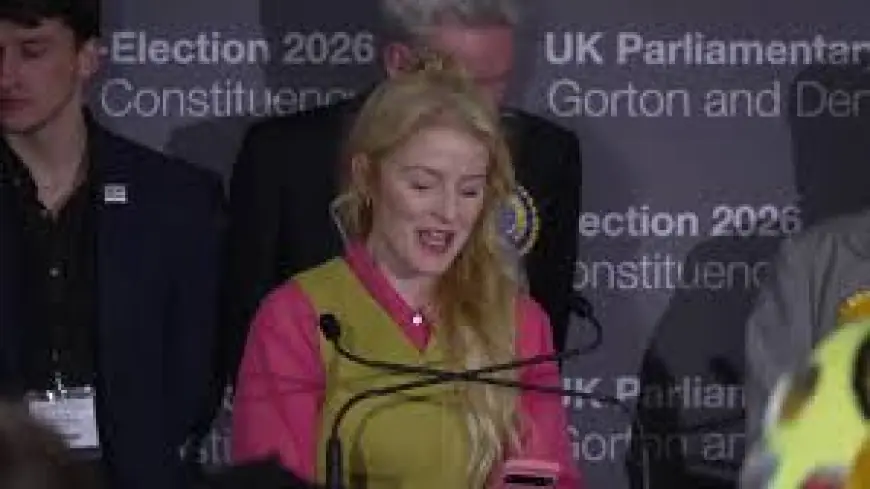
The Green Party’s recent local successes and a manifesto built around sustainable living have thrust Green Party Policies into the centre of political debate, provoking both a high‑profile pledge on housing and an outspoken backlash. The party, credited with ousting Labour in Gorton and Denton, has combined constituency‑level gains with national‑scale promises that opponents say will upend established politics.
Green Party Policies and Hannah Spencer’s pledge
Hannah Spencer, the newly elected MP for Gorton and Denton, announced a flagship commitment that crystallises her party’s priorities: an aim to build 150, 000 social homes a year and to achieve net‑zero emissions by 2040. Spencer framed the measures as core deliverables of a manifesto grounded in sustainable living, telling critics directly, “We want to build 150, 000 social homes a year and achieve net‑zero by 2040! And there’s nothing you can do to stop us!”
Gorton and Denton: Local wins reshape the landscape
Those local victories over Labour have been singled out by supporters as evidence that a sustainability‑focused platform can translate into electoral advancement. Opponents, however, have used the defeats to paint the Greens as a disruptive force: critics have described the party as “monsters” threatening the country and accused it of seeking to upend Britain’s democracy by prioritising the needs of constituents through a sustainable‑living manifesto.
Denys Finch Hatton’s critique
Political analyst Denys Finch Hatton delivered a sweeping rebuke of the Greens’ direction. He acknowledged that the party “want to look after the most vulnerable members of society and improve the environment, ” but framed those aims as alarming, calling them “absolutely sickening. ” Finch Hatton argued that the Greens’ agenda would punish wealthy fossil fuel interests—imagined as being “brutally crushed under their vegan leather jackboots”—and suggested that the party’s policies could be indifferent to other concerns, saying they seem content to leave certain groups “to perish. ”
He added that the Greens’ approach appeared to challenge a long‑standing political trajectory he characterised as a steady national decline, warning that if the Greens prevail the planet would not become an “inhospitable rock” and children might grow up without microplastics in their bloodstreams—a line he used to emphasise his distaste for environmental gains. Finch Hatton urged the public to coordinate their votes strategically, arguing that doing so is the only way to secure a country that is “even more hostile and divided, ” which he said should be the aim of “true patriots. ”
Social media aside: a brief intermission on Facebook
Amid the political back-and-forth, communications included an abrupt aside about social media: a notice stated, “We're temporarily off Facebook while we explain irony to a f**king algorithm. ” The message underscored the performative and contentious tone surrounding the party’s rise and the public conversation it has sparked online.
Tom Booker’s nostalgia provides a human counterpoint
Beyond politics, a separate human‑interest thread in the same coverage highlighted 43‑year‑old Tom Booker, who has been reflecting nostalgically on his twenties despite having spent that decade wishing they would end. Booker characterised his early adulthood as defined by “existential dread, financial anxiety and relationship turmoil, ” yet now views it as a comparatively hopeful period.
He described waiting for life to fall into place, lamenting a past in which his job and prospects felt poor and he lagged behind peers in relationships and homeownership. Booker said that, in hindsight, the lack of responsibility, better physical health and a less receding hairline make those years appear attractive. “My twenties really weren’t as terrible as I thought they were, ” he said, noting that current circumstances feel broadly the same but lack the optimism he once had.
Friend Martin Bishop offered a starkly different take: “Give it 20 years and Tom will be all wistful about his current situation, ” he said, adding bluntly that Booker’s life is “utter shit. ”
What makes this notable is the juxtaposition of large‑scale political promise with everyday personal anxieties: pledges such as 150, 000 homes a year and a 2040 net‑zero target are being debated at the same time as voters grapple with individual economic and emotional pressures. The timing matters because local seat gains have transformed policy proposals into immediate political challenges, forcing voters and rivals to weigh tangible pledges against a charged rhetorical backlash.