

























Nasa Astronaut Medical Emergency Prompts Historic Early Return for Crew-11

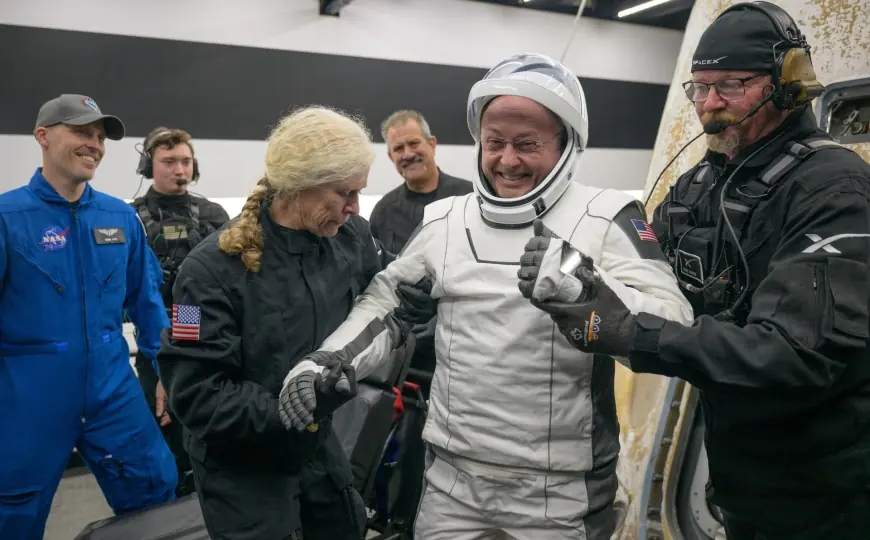
NASA released details at the request of astronaut Mike Fincke about a nasa astronaut medical emergency that occurred on Jan. 7 aboard the International Space Station and led to the early return of Crew-11. The decision halted some station activity but allowed access to advanced medical imaging on Earth and set in motion a coordinated recovery that concluded with a splashdown on Jan. 15.
Nasa Astronaut Medical Emergency, Crew-11 and Expedition 74
On Jan. 7, while aboard the ISS, Mike Fincke experienced a medical event that required immediate attention from his crewmates. Quick response by those on board, together with guidance from NASA flight surgeons, stabilized his condition on orbit. NASA determined that the safest course was an early return for Crew-11—not an emergency but a carefully coordinated plan to enable advanced medical imaging not available on the space station.
Fincke identified his fellow Crew-11 members as Zena Cardman, Kimiya Yui and Oleg Platonov. He also thanked his fellow Expedition 74 crewmembers—Zena Cardman, Kimiya Yui, Oleg Platonov, Chris Williams, Sergey Kud-Sverchkov and Sergei Mikayev—along with the NASA team, SpaceX and the medical professionals at Scripps Memorial Hospital La Jolla near San Diego for their roles in the response and recovery.
Jan. 7 Incident and On-Orbit Response
The initial in-orbit response centered on stabilizing Fincke's status through immediate assistance from crewmates and remote direction from flight surgeons. That stabilization made possible a deliberate plan to return Crew-11 to Earth so Fincke could receive diagnostic imaging that the ISS cannot provide. The statement released at Fincke's request emphasized that the plan was coordinated rather than an uncontrolled emergency.
Jan. 15 Splashdown Off the Coast of San Diego
Crew-11 splashed down on Jan. 15 off the coast of San Diego after an approximately five-and-a-half-month mission. Following recovery, medical professionals at Scripps Memorial Hospital La Jolla near San Diego took part in Fincke's immediate post-flight care. Fincke said he is doing very well and is continuing standard post-flight reconditioning at NASA's Johnson Space Center in Houston.
Operational Impact on the International Space Station
The episode prompted the first medical evacuation in the space station's 25-year history. The early departure of Crew-11 left only three crew members aboard the ISS—one American and two Russians—which led NASA to pause spacewalks and reduce research output while the station operated with a reduced complement. In February, four new astronauts joined the station and normal service resumed.
NASA administrator Jared Isaacman described the situation in orbit as a "serious situation, " and officials indicated the affected crew member had been safe and stable since the return. The sequence—on-orbit medical event, stabilizing treatment, early return to access Earth-based imaging, and subsequent operational pauses—illustrates how a single health incident can have cascading effects on station operations and research timelines.
Fincke's Condition, Gratitude and Agency Statement
Fincke expressed gratitude for the immediate help he received and reflected on the human dimension of spaceflight: "Spaceflight is an incredible privilege, and sometimes it reminds us just how human we are. " He explicitly thanked his Expedition 74 colleagues, NASA, SpaceX and Scripps Memorial Hospital La Jolla. NASA explored the decision with medical teams and emphasized that getting advanced imaging on Earth was the principal reason for the early return.
What makes this notable is that the coordinated exit for Crew-11 was both a medical and operational decision: the need for diagnostics not available on orbit directly caused a controlled evacuation that temporarily altered station staffing, paused extravehicular activities and reduced research until reinforcements arrived in February.
NASA's broader mission statement remains in place: the agency explores the unknown in air and space, innovates for the benefit of humanity, and inspires the world through discovery.