

























Nasa Astronaut Medical Emergency Prompts First-Ever ISS Evacuation, Agency Details and Crew Update

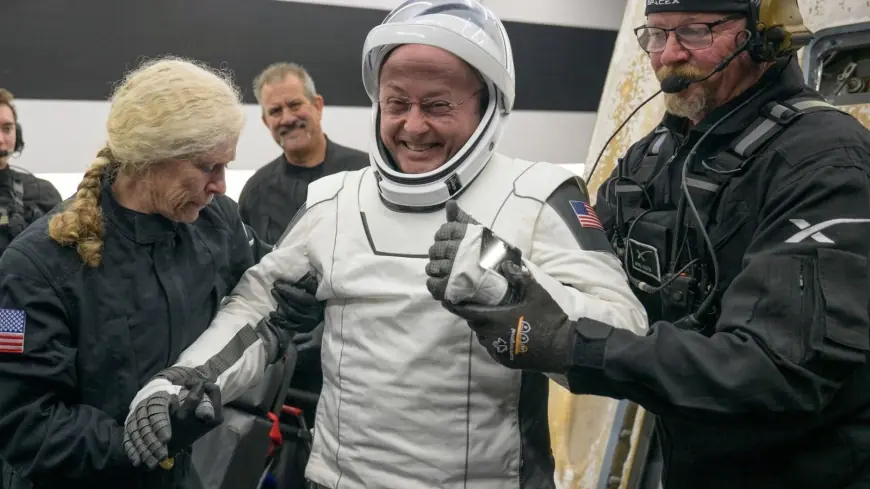
NASA has revealed new details about a nasa astronaut medical emergency that led to the first medical evacuation in the International Space Station's 25-year history. The agency says the event occurred on 7 January, prompted an early return for Crew-11, and culminated in a splashdown on 15 January after five and a half months in orbit.
Nasa Astronaut Medical Emergency: What NASA shared and how the decision was made
NASA is sharing information at the request of astronaut Mike Fincke. The agency published a statement that Fincke experienced a medical event on 7 January while aboard the space station that required immediate attention from his crewmates. Flight surgeons provided guidance that helped stabilize his condition, and further evaluation led NASA to determine the safest course was an early return for Crew-11 so Fincke could receive advanced medical imaging not available on the station. The return was described as not an emergency but a carefully coordinated plan.
Timeline: From in-orbit event to splashdown
- 7 January: Mike Fincke experienced a medical event aboard the International Space Station.
- Following initial stabilization and evaluation, NASA decided on an early return for Crew-11 to access advanced imaging capability on Earth.
- 15 January: Crew-11 splashed down off the coast of San Diego after completing five and a half months on the station.
Crew composition and acknowledgements
The crew returned as Crew-11 and is associated with Expedition 74. Named crew members include NASA astronaut Mike Fincke, NASA astronaut Zena Cardman, Japanese astronaut Kimiya Yui, and Russian cosmonaut Oleg Platonov. Fincke expressed deep gratitude to his fellow Expedition 74 members—Zena Cardman, Kimiya Yui, Oleg Platonov, Chris Williams, Sergey Kud-Sverchkov, and Sergei Mikayev—along with the agency’s teams, the commercial partner team, and the medical professionals at Scripps Memorial Hospital La Jolla near San Diego.
Operational impact aboard the station and recovery
The evacuation left only three crew members on board the station—one American and two Russians—and prompted the pause of space walks and a reduction in research output while the station operated with a reduced complement. Four new astronauts joined the station in February, and normal service has resumed following that reinforcement.
Medical follow-up and current status
Fincke has said his status quickly stabilized with the help of his crewmates and flight surgeons. After splashdown, he acknowledged the professional support of the flight and medical teams and noted he is doing very well and continuing standard post-flight reconditioning at NASA’s base in Houston. Additional wording from the briefing identifies the facility in Houston as the Johnson Space Center. The return plan included access to advanced medical imaging on Earth that was not available on the station.
Leadership reaction and next steps
Senior agency leadership described the situation in orbit as a serious situation, while indicating the crew member in question had been safe and stable since the return. The agency’s public disclosures emphasize that the early return was a coordinated decision to obtain advanced medical diagnostics rather than an uncontrolled emergency. Further details beyond those shared in the agency statement are unclear in the provided context and may evolve as follow-up evaluations continue.
Spaceflight is a human endeavor that can require rapid adaptation; the agency’s update highlights crew response, medical oversight, and the operational steps taken to bring the affected astronaut to Earth for evaluation and care.