

























Mortgage Rates Slip Below 6% — How the Shift Rewrites Refinancing and Buyer Calculus

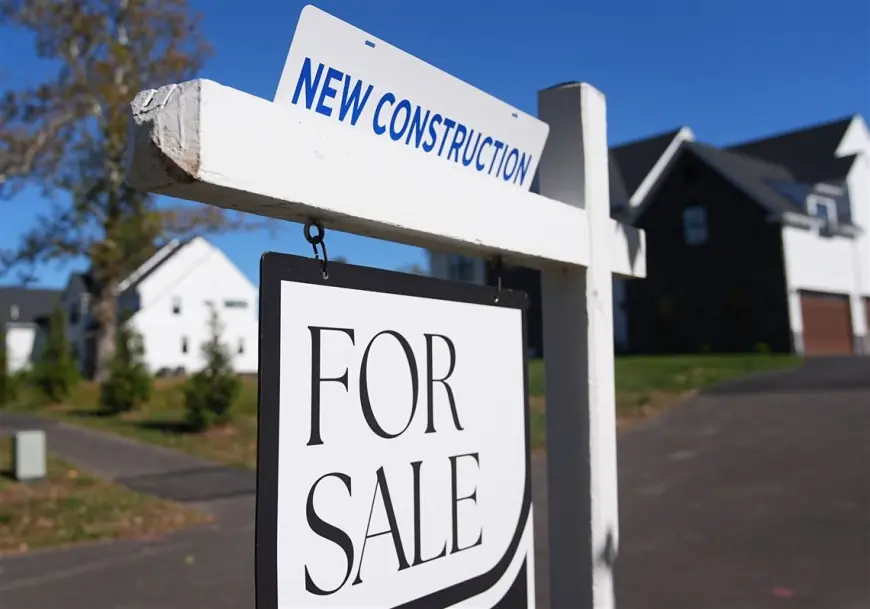
Why this matters now: Mortgage Rates moving under the 6% threshold changes incentives for both homeowners and prospective buyers. Homeowners who locked in at 7%–8% are showing up in large numbers to refinance, while new-home sales have stayed resilient despite prior rate pressure. The immediate consequence is a reallocation of demand that could influence inventory, price momentum and builder activity in the months ahead.
Mortgage Rates below 6% recalibrate decisions for owners and buyers
Here’s the part that matters: the dip under 6% is prompting a clear behavioral shift. Refinance applications have surged — up dramatically compared with last year and rising week-to-week — suggesting many homeowners see a near-term opportunity to cut monthly costs. At the same time, new-home sales remain above year-ago levels even after a small monthly decline, a sign that some buyers are moving forward rather than waiting for much deeper cuts.
Data and market signals behind the move
Market feeds show this is the first time mortgage borrowing costs have fallen below the 6% mark since 2022, and borrowing has reached its lowest point since February 2023. Quoted market data and prices may appear in real time or with a delay of at least 15 minutes; market pricing was supplied by a financial-data provider. The recent monthly snapshot contains a mix of cross-currents:
- New home sales dropped by 1. 7% in December, but annual sales still outpace 2024 levels by nearly 4%.
- Refinance applications are roughly 150% higher than the same week last year and up 4% from the prior week — a sharp jump in activity.
- The median price for a new build rose to $414, 400 last month.
- Housing supply stands at 7. 6 months; supply above six months typically leans toward buyers in negotiations.
Market commentary and on-the-ground differences
Analysts point to the erosion of the 'lock-in' effect that kept many owners from listing or moving when they held far lower fixed rates. Rising inventory in some markets has expanded choices and cooled price growth in places, even as others remain supply-constrained. Builders that sell directly to end users report steadier pipelines, because many custom projects start with a committed buyer already financed or paying cash — reducing speculative risk compared with national new-home sales data.
- Key takeaways:
- Implication: A renewed wave of refinancing could free monthly cash for homeowners and change where demand is concentrated.
- Affected groups: Recent buyers with 7%–8% mortgages, prospective new-home buyers evaluating higher sticker prices, and custom builders whose pipelines are tied to committed clients.
- Forward signal: Continued weekly growth in refinance applications alongside stable or rising new-home sales would confirm a durable behavioral shift; a reversal in either metric would suggest the dip remains marginal.
- Price dynamic: Faster-growing median new-build prices coexist with higher refinance activity — a sign that local market differences will matter more than a single national headline.
What changed, and what remains unclear
Mortgage Rates dropping below 6% is a concrete change, and early indicators show homeowners acting on it. However, whether this is the start of a sustained easing trend or a short-lived reprieve is unclear in the provided context. One political bulletin noted that a prominent national figure is pushing efforts to make homeownership more affordable; that item is developing and details may evolve.
For buyers, the real question now is whether cooler mortgage pricing will broaden into lower effective borrowing costs across all regions or remain a partial, uneven relief that mainly benefits those refinancing short-term.
Timeline snapshot: first dip under 6% since 2022; lowest point seen since February 2023; December new-home sales fell 1. 7% while annual sales outpace the prior year by nearly 4%.
What’s easy to miss is the divergence between stronger refinance demand and rising median new-build prices — a split that suggests winners and losers will be determined locally rather than by a single national trend.