

























Nvda’s Numbers Drive a Performance Split: Record Revenue and a $6B Guide That Left the Stock Flat

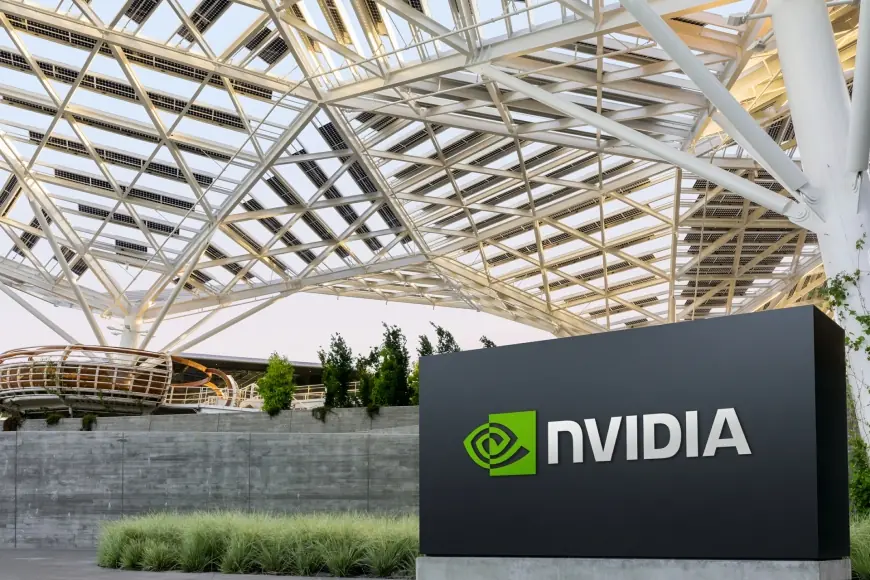
Why this matters now: nvda delivered record revenue and near–mid-70s gross margins that confirm sizable demand, yet investors paused after a guidance beat of roughly $6 billion. That tension — between accelerating scale and an apparently muted market response — will shape whether momentum resumes or the pause deepens into a longer consolidation.
Market momentum vs. fundamentals: who’s pricing growth?
Here’s the part that matters: the company posted outsized top-line growth and very high margins, but the stock was down in Thursday morning trading despite a guidance figure that outpaced consensus by roughly $6 billion. Market participants in live discussions debated whether the mid-70% gross margins and the strong fundamentals were already baked into the share price, and whether any fresh catalyst remains to drive a new leg higher.
Financial highlights and scale metrics
The company reported record revenue for the fourth quarter ended January 25, 2026, of $68. 1 billion — up 20% from the prior quarter and up 73% year-over-year. For fiscal 2026, revenue totaled $215. 9 billion, an increase of 65% from a year earlier. Quarterly GAAP and non-GAAP gross margins were 75. 0% and 75. 2%, respectively; for fiscal 2026, GAAP and non-GAAP gross margins were 71. 1% and 71. 3%.
On earnings, GAAP and non-GAAP diluted EPS for the quarter were $1. 76 and $1. 62. For fiscal 2026, GAAP and non-GAAP EPS were $4. 90 and $4. 77, respectively. The company also disclosed that during fiscal 2026 it returned $41. 1 billion to shareholders through share repurchases and cash dividends, and at the end of the fourth quarter it had $58. 5 billion remaining under its share repurchase authorization.
Nvda guidance and market reaction
The current-quarter outlook was guided roughly $6 billion above consensus estimates, yet the stock fell in Thursday trading. The company’s look-ahead set a quarterly guide in a range expressed as 77 to 79 billion while visible consensus sat at 72. 4 billion, and market commentators noted that gross margins staying in the mid-70s removed a potential incremental upside surprise.
Industry analysts and investors on a market panel debated the disconnect. Melissa Otto observed surprise at the muted share reaction to a guide that sits materially above consensus. Nancy Tengler pushed back, framing the selloff as reminiscent of a prior deep pullback that created buying opportunities; she emphasized strong earnings growth, cited a view of 60-plus percent earnings growth and a forward P below 25 times as arguments that valuation could still leave room for upside. She also flagged China and sovereign channels as areas with further runway and referenced a sovereign revenue figure of 30 billion that was roughly three times year-over-year.
Capital returns, tax posture and accounting changes
The next quarterly cash dividend is set at $0. 01 per share, payable April 1, 2026, to shareholders of record on March 11, 2026. Management said that beginning in the first quarter of fiscal 2027, stock-based compensation expense will be included in non-GAAP financial measures; the company characterized stock-based compensation as a foundational component of its program to attract and retain talent. For the full year fiscal 2027, GAAP and non-GAAP tax rates are expected to be between 17. 0% and 19. 0%, excluding discrete items and material tax-environment changes.
The company also continues to present non-GAAP measures and provided reconciliations that adjust GAAP results to exclude items such as stock-based compensation, acquisition-related and other costs, and certain other gains and losses. A conference call to discuss the results was scheduled for 2 p. m. Pacific time (5 p. m. Eastern time), with a webcast offered in listen-only mode and a recording available for replay until the next quarterly results call.
- Record quarterly revenue: $68. 1 billion for quarter ended January 25, 2026 (up 20% sequential, up 73% YoY).
- Fiscal 2026 revenue: $215. 9 billion (up 65% YoY).
- Quarter gross margins: GAAP 75. 0%, non-GAAP 75. 2%; fiscal gross margins: GAAP 71. 1%, non-GAAP 71. 3%.
- Quarter EPS: GAAP $1. 76, non-GAAP $1. 62; fiscal EPS: GAAP $4. 90, non-GAAP $4. 77.
- Shareholder returns: $41. 1 billion returned in fiscal 2026; $58. 5 billion remaining buyback authorization.
- Guidance beat: roughly $6 billion above consensus; Q1 guide range cited as 77 to 79 billion vs. consensus 72. 4 billion.
The real question now is whether the market’s pause is a buying window or the start of extended consolidation. Compute-driven demand language from management emphasized an inflection tied to so-called agentic AI and lower cost-per-token inference powered by specific product references, and investors will be watching whether the company’s upcoming execution and channel movements translate into renewed multiple expansion.
It’s easy to overlook, but the coexistence of a very small cash dividend, massive repurchases and a move to include stock-based compensation in non-GAAP metrics shifts how future non-GAAP margins will look — that accounting change will matter for comparisons.
What's more, market commentators on the panel — including Melissa Otto and Nancy Tengler alongside host Brian Sozzi — framed the immediate debate as whether mid-70s margins and rapid growth are already priced in, or if tangible capacity shortages among large cloud customers will continue to push revenues higher; one line used was “compute equals inference equals revenues, ” and the capacity shortfall argument was repeated as a demand-side driver.
Writer's aside: the scale of these numbers makes any short-term stock wobble possible, but cash returns and margin consistency are tangible anchors that investors will use to judge the next leg of performance.