






















Gibraltar: Spain to check gibraltar arrivals under post-Brexit deal


A draft post-Brexit treaty would allow Spanish border guards to check the passports of travellers to gibraltar and impose new second-line Schengen controls at the Rock's airport and port. The move is tied to Schengen changes due to come into force in April and the territory says it hopes to provisionally apply the deal from 10 April.
Spanish checks set for the airport and port in a 1, 000-page draft
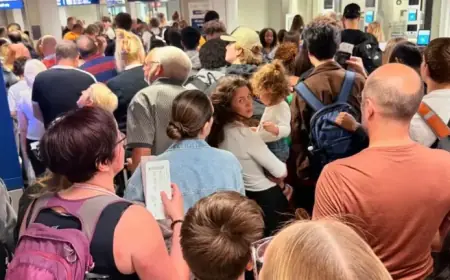
The agreement, contained in a 1, 000-page draft treaty published on Thursday, would let Spanish authorities carry out extra passport checks at Gibraltar's airport and at its port. The draft sets out that Spanish guards will operate as a "second line" of Schengen border controls after immigration checks carried out by Gibraltar officials, and that Spanish guards will have powers to arrest, search and interview travellers "where it is justified in the course of border control. " The UK government has likened the system to the arrangement at London's St Pancras, where passengers are checked by officials from both sides of a border.
No routine checks across the land border, but La Verja could go
The treaty would mean no routine passport checks at the Spain–Gibraltar land border for the 15, 000 people who cross it every day, while the system should eventually allow for the removal of 'La Verja', the 1. 2km (0. 7 mile) chain link fence along Gibraltar's land border with Spain. That fence is crossed every day by around half of the Rock's workforce. Spanish Foreign Minister José Manuel Albares welcomed the deal in a video clip, saying it would mean the disappearance of "the last wall in continental Europe. "
Dual checks for air and sea arrivals and tailored customs handling
For those arriving by air and sea, the draft treaty introduces dual border controls: one check by Gibraltarian officials and another by Spanish officials acting on behalf of the EU. The text says checks will apply to those arriving by air and, if needed, at ports. The draft also outlines a tailored customs model intended to "eliminate burdensome goods checks", a measure the UK government has highlighted as part of the arrangements for people and goods crossing the frontier.
Sovereignty, military facilities and customs alignment
The draft makes explicit that it does not affect sovereignty, stating that nothing signed "shall constitute the basis for any assertion or denial of sovereignty" over the Rock, and it protects UK autonomy of key military facilities. The deal would see the territory join the EU's customs union and align its import taxes to those applied by Spain. Gibraltar's airport is run by the Ministry of Defence and hosts an RAF base, and the overseas territory also has an important naval facility.
Timetable, reactions and travel rules
The agreement is intended to bring certainty to the British overseas territory nearly a decade after the Brexit vote threw its status into doubt. It is due to come into force in April, when stricter controls at the border of the passport-free Schengen zone are due to come fully into force. Gibraltar's government says it is hoping to provisionally apply the deal from 10 April, the date when the EU's new border system is scheduled to become fully operational after several previous setbacks.
Fabian Picardo, Gibraltar's chief minister, welcomed the draft, saying it delivers "the certainty our people and businesses need" and that the treaty protects the "British way of life" on the Rock while "unlocking new opportunities for growth". The UK has warned that Spain's plan to apply the EU's new automated border system from April, including biometric checks, would "devastate" Gibraltar's economy if no agreement were reached. The draft treaty was published on Thursday but still needs to be signed, ratified and implemented.
The draft builds on a June 2025 announcement that the UK, the EU, Spain and Gibraltar had agreed the core aspects of a future formal treaty. At that time, the then foreign secretary David Lammy confirmed that UK nationals who are not residents of Gibraltar would have their time in the territory counted as part of the time-limited allowance for short stays in the Schengen area. Citizens of countries outside the EU or Schengen, including the UK, can only spend 90 days in the Schengen area in any 180-day period. The territory's most recent tourism survey showed British nationals made up 86. 5% of all departures from its airport in 2024.