























S26 Ultra Signals a Market Shift: Samsung Raises Storage Baseline and Reprices the S26 Line

The headline change for buyers is structural: the s26 ultra sits inside a lineup that just moved its minimum storage to 256GB and reworked pricing across models. That shift—paired with a new internal chip and fresh AI features—changes the purchase calculus for shoppers who upgrade regularly, while Samsung keeps the premium S26 Ultra price steady amid broader adjustments.
S26 Ultra’s placement matters for competitiveness and consumer math
Here’s the part that matters: Samsung put the S26 Ultra at the center of a broader repositioning rather than using it purely as a spec race. The S26 Ultra keeps its $1, 299 starting price unchanged from last year’s Ultra model while the rest of the lineup now begins with larger base storage, signaling a move toward higher baseline value—but with higher entry prices for the non-Ultra phones.
What Samsung announced and when (models, chips and timing)
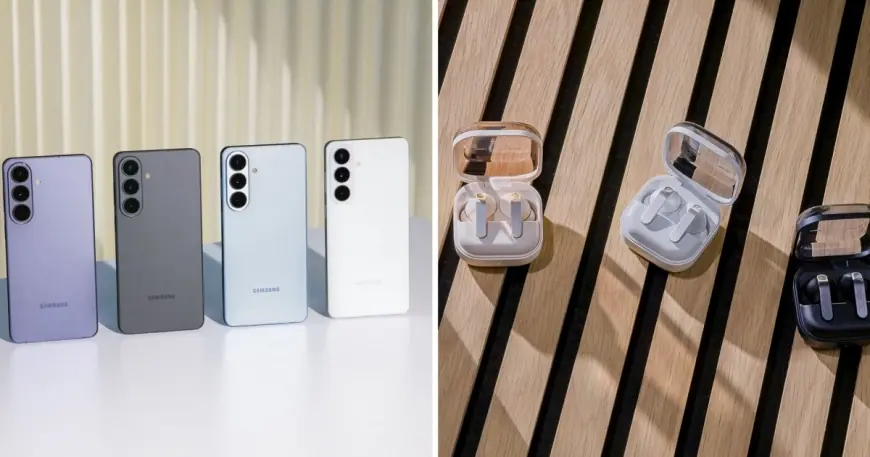
Samsung rolled out a full Galaxy S26 lineup: the Samsung Galaxy S26, Samsung Galaxy S26 Plus and Samsung Galaxy S26 Ultra. All three models now start at 256GB of storage, up from 128GB on last year’s S25 and S25 Plus. The phones include a new internal chip intended to deliver faster performance across tasks and support freshly added AI software features. Pre-orders opened today and the new hardware officially launches on March 11th.
Storage, batteries, charging and the $100 shift for standard models
The S26 and S26 Plus received incremental hardware updates: the S26 features a slightly larger battery—4, 300 mAh, up from 4, 000 mAh—while the S26 Plus benefits from slightly faster wireless charging. Both models now start at 256GB, and that baseline increase carries a price premium: the two phones are $100 more expensive than last year, with retail prices of $899 for the S26 and $1, 099 for the S26 Plus.
- S26 base storage: 256GB (up from 128GB on S25)
- S26 battery: 4, 300 mAh (up from 4, 000 mAh)
- S26 Plus: faster wireless charging; both models cost $100 more than last year
- S26 price points: $899 (S26), $1, 099 (S26 Plus), $1, 299 (S26 Ultra)
Earbuds and design: Buds 4 vs Buds 4 Pro
Samsung also introduced two new earbuds: the Galaxy Buds 4 and Galaxy Buds 4 Pro. Both models adopt a new look with smoother, rounded eartips, departing from the Buds 3’s sharp, triangular stem shape. The Buds 4 are positioned as the budget-friendly option with a semi-open ear design—no rubber eartips—and deliver up to six hours of battery life plus 30 additional hours from the charging case. The Buds 4 Pro use traditional rubber eartips and provide up to seven hours of listening per charge plus 30 more with the case.
Privacy screen, camera and charging upgrades on the Ultra
A standout feature across the phones is a built-in privacy screen that’s more customizable than traditional privacy filters: users can select which screen elements are dimmed to onlookers, including notifications and password fields. The S26 Ultra specifically gains improved cameras as well as faster wired and wireless charging while maintaining its $1, 299 entry price from last year’s Ultra model. The s26 ultra therefore combines iterative hardware gains with a steady premium price point.
Key takeaways:
- Minimum storage doubling to 256GB across the lineup resets expectations for base models and contributes to a $100 bump on non-Ultra phones.
- The S26 Ultra holds pricing steady while absorbing camera and charging upgrades, positioning it as the stable premium anchor.
- New AI-capable chip and a customizable privacy screen are central software and privacy plays that may matter more than raw megapixels for many users.
- New earbuds trade design and fit; battery numbers differ by model and case capacity.
If you’re wondering why this keeps coming up: Samsung has followed a February launch pattern for phones and earbuds for more than five years, and this cadence allows the company to separate phone updates from its summer product rollouts.
Edge models, summer plans and the Galaxy Ring uncertainty
Last year Samsung released the Galaxy S25 Edge, described as super-thin and super-light compared with other models. The brand did not mention an Edge variant during this S26 event, so it is unclear in the provided context whether a Galaxy S26 Edge will arrive. Samsung typically unveils Galaxy Watches, Z-Flip and Z-Fold devices in the summer and a second Galaxy Unpacked event is expected in that season for those updates.
The story around Samsung’s Galaxy Ring adds a different layer of uncertainty. The Galaxy Ring launched in the summer of 2024, and a maker of a competing smart ring filed a patent infringement lawsuit against Samsung. That plaintiff and Samsung have exchanged legal filings, including a counter suit from Samsung. This pattern of legal action is consistent with Samsung’s previous patent disputes with other smart ring makers such as Ultrahuman, RingConn and Zepp Health. As a result, the fate of the Galaxy Ring and the timing for any Galaxy Ring 2 are more uncertain than for the company’s other products; the timeline for a successor device is unclear in the provided context.
What’s easy to miss is how these product cadence and legal dynamics together shape which accessories and form factors a customer can reasonably expect in the near term. The reporter who covered this event has tracked Samsung and its competitors for years and covers technology and fitness, including stories on fitness trackers.