




















Ilhan Omar and Rashida Tlaib Clash With Trump, Prompting Legal, Financial and Political Fallout

ilhan omar and Rashida Tlaib interrupted President Donald Trump’s nearly two-hour State of the Union address, setting off a week of partisan recriminations, administrative moves and a federal court ruling. The exchanges matter now because they have produced immediate policy and enforcement consequences—ranging from a temporary hold on federal payments to a judge’s 15-day pause on a deportation policy decision—amid sharply polarized public comment.
Ilhan Omar and Rashida Tlaib shouted during State of the Union
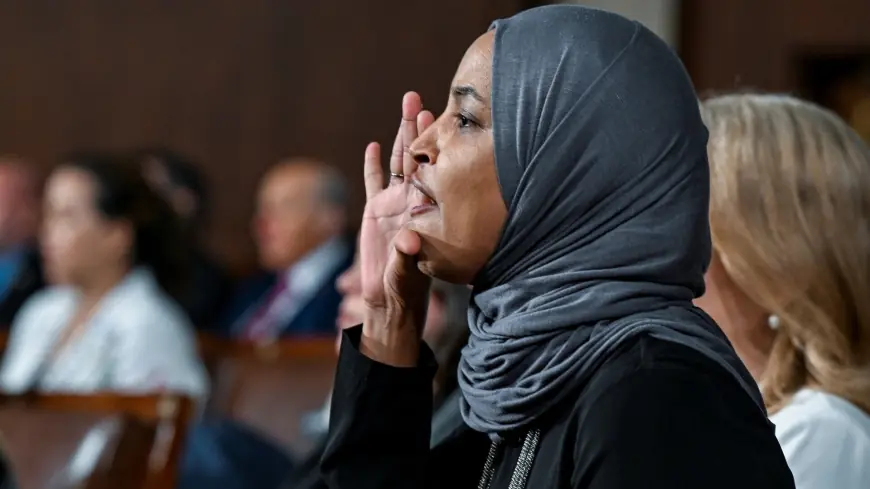
Omar, a Democratic congresswoman from Minnesota’s 5th Congressional District, and Tlaib, the first woman of Palestinian descent in the US Congress, were among a small group of Democrats who shouted during the address as Mr. Trump discussed immigration enforcement and called for an end to "sanctuary cities. " The two lawmakers interjected the phrase "You have killed Americans!" while the president was onstage, and Omar later wrote on social media that she had to remind the president that "his administration was responsible for killing two of my constituents. " Both women are US citizens; Omar is a member of Minnesota’s Somali American community and Tlaib is Palestinian American.
Trump’s Truth Social posts escalate tensions
President Trump used his Truth Social account late on Wednesday to lash out at the two congresswomen, calling them "Low IQ" and saying they should be sent "back from where they came from — as fast as possible. " He labelled them "crooked and corrupt politicians" and wrote that they behaved like "LUNATICS" who looked "mentally deranged and sick" and "should be institutionalised, " adding that "They can only damage the United States of America. " The posts intensified partisan backlash: Democrats accused the president of lying and failing to protect Americans, while Republicans framed the lawmakers’ refusal to stand as evidence of party weakness.
Chuck Schumer and JD Vance weigh in on the seating protest
Senate majority leader Chuck Schumer defended the decision by some Democrats to remain seated during the president’s call for the audience to stand for those who would protect US citizens over undocumented immigrants, saying Democrats were right to stay put when he spoke on. Republican commentator JD Vance called the refusal to rise "a shame" and a "sad commentary" on the Democratic party, underscoring how the moment deepened the partisan split.
Aliya Rahman arrest and Minnesota consequences
A guest of Omar, identified as Aliya Rahman, was arrested by Capitol Police during the State of the Union. Rahman is a US citizen and Minneapolis resident who in January was removed from her car and dragged by immigration agents amid the administration’s stepped-up arrests and deportation efforts; officers had been shouting at her to move. In response to the broader immigration crackdown, Senator Vance announced that the administration would temporarily halt more than a quarter of a billion dollars in Medicaid reimbursements to the state of Minnesota, an action described as an escalation of the administration’s "war on fraud. "
Federal judge Brian E Murphy pauses deportation policy ruling and other federal actions
A US district judge, Brian E Murphy in Massachusetts, found the administration’s policy of deporting immigrants to third countries to which they have no ties unlawful and ordered it set aside, but then agreed to suspend his decision for 15 days to allow the government time to appeal. Other federal developments this week included the nomination hearing for Casey Means, President Trump’s pick for surgeon general, who appeared before the Senate committee for health, labor and pensions on Wednesday after her initial confirmation hearing was postponed in October when she went into labor hours before she was due to testify. Separately, a top Senate Democrat alleged that FBI director Kash Patel’s personal travel and decision-making have undermined high-profile investigations, citing a whistleblower report.
A less central cultural dispute also surfaced: a source close to Mick Jagger cast doubt on a claim by Melania producer Marc Beckman that his team had been closely involved with the singer over the use of a Rolling Stones song in the film. More than a dozen st — unclear in the provided context.
What makes this notable is the clustering of political theater, social-media escalation and concrete institutional responses in a short time frame: a nearly two-hour address led directly to a high-profile arrest in the chamber, a federal funding pause exceeding $250 million, and a district judge’s 15-day suspension to allow appeal of a major immigration policy ruling. The timing matters because those moves landed as lawmakers and the public were still digesting the longest State of the Union in history, reinforcing how a single session can cascade into legal and fiscal consequences across agencies and courts.
ilhan omar’s public correction of the president and the ensuing social-media attacks have thus triggered immediate administrative and judicial steps while deepening partisan divisions on immigration and enforcement policy.