





Magic Vs Lakers — How a single pass and a 3-point risk rewired Orlando’s late-game trust

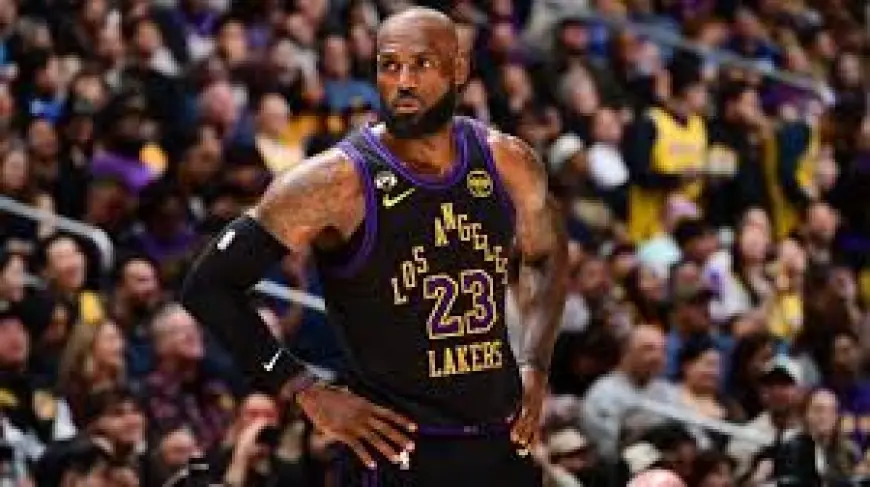
The connective tissue of a team is trust, and after the Magic Vs Lakers finish in Los Angeles that trust moved from fragile to functional. Paolo Banchero’s 36-point evening and a rebound off a missed LeBron James free throw with 42. 3 seconds left set the stage; his pass to Desmond Bane led to a go-ahead 3 with 35. 4 seconds on the clock. Here’s the part that matters: the play cemented belief in Orlando’s scheme, its rotation and the players asked to deliver.
Magic Vs Lakers — who felt the immediate impact on and off the floor
Orlando’s roster, the coaching staff and the bench first registered the swing in credibility. Banchero, the top pick in the 2022 draft, produced his most points in four weeks and his second-most of the season, which has ripple effects: teammates were given an invitation to act with confidence, and the coach’s decision-making around late-game lineups now looks validated. If you’re wondering why this keeps coming up for the Lakers, LeBron James and Luka Dončić were central figures in the final sequence, and the result will influence how that pairing is defended and how timeout choices are judged.
How the decisive sequence unfolded — embedded details, not a blow-by-blow
In Los Angeles, the Magic completed a 110-109 comeback win. After Orlando trailed by two, Banchero secured a rebound from a missed James free throw with 42. 3 seconds remaining. He used a screen from Wendell Carter Jr., got two feet into the paint, hesitated, read the defense — noting that Deandre Ayton was in front and that LeBron James had tagged Wendell — and passed out. Desmond Bane, who had missed six of his first seven 3-point attempts but is a 39 percent career shooter from deep, hit the go-ahead 3 off that pass with 35. 4 seconds left; the sequence also appears in the record as forcing a Lakers timeout with 34. 6 seconds left. The Lakers later ran a baseline out-of-bounds play in which Luka Dončić found a cutting LeBron James for a go-ahead dunk after Dončić had set up Rui Hachimura for a corner 3 that missed and was not rebounded by Orlando.
Rotation details, personnel choices and the coach’s late-game call
Coach Jamahl Mosley opted not to call a timeout with 26. 3 seconds left, preferring the live matchup he had on the floor — a unit that included Dončić, James and Reaves paired with Ayton and Hachimura (Hachimura was in instead of starter Marcus Smart). That lineup was described as defensively vulnerable, but Mosley wanted his team to finish the possession live. It’s easy to overlook, but the decision amplified trust in the players on the floor: the coach chose confidence in a specific personnel grouping rather than a drawn play.
Supporting actors and context that mattered in close moments
- Desmond Bane: knocked down the go-ahead 3 despite earlier misses and a 39 percent 3-point profile.
- Paolo Banchero: finished with 36 points and created the decisive opportunity after a key offensive rebound.
- Wendell Carter Jr.: set the screen that allowed Banchero to get into the paint.
- Anthony Black and Tristan da Silva: Black occupied the weak corner while Tristan da Silva — 3-of-5 from deep that night — kept Hachimura from wandering too far on the strong side.
- Late possession miscues: Orlando failed to rebound Dončić’s missed corner 3 before the out-of-bounds sequence that led to James’ dunk.
Short timeline and lingering threads
- Prior stretch: Orlando had been beaten on a double-overtime buzzer by Phoenix’s Jalen Green on Saturday night; then faced another late-game shot attempt from Bennedict Mathurin in the next game that failed to beat them.
- Final minute: Banchero’s rebound (42. 3 seconds), the pass to Bane and the go-ahead 3 (35. 4 seconds; timeout later recorded with 34. 6 seconds).
- Aftermath: Dončić’s missed corner 3 and subsequent baseline play led to a cutting LeBron dunk.
The real question now is how the Magic use this as forward momentum: the hit from Bane and Banchero’s assertiveness give Orlando a blueprint for late possessions, while the Lakers must examine how the defense rotated and whether timeout timing could have altered the look.
What’s easy to miss is the accumulation of near-miss finishes the Magic had endured—two razor-close outcomes the prior stretch—and how that pressure makes the trust established in this game more consequential than a single result. A social post reading "BIG TIME BANE" was shared on February 25, 2026, capturing the moment’s lift without obscuring how fragile that lift can be.
Photograph credit: Katelyn Mulcahy