













Rashida Tlaib, Ilhan Omar, And Independent Reactions After A Heated State Of The Union Moment

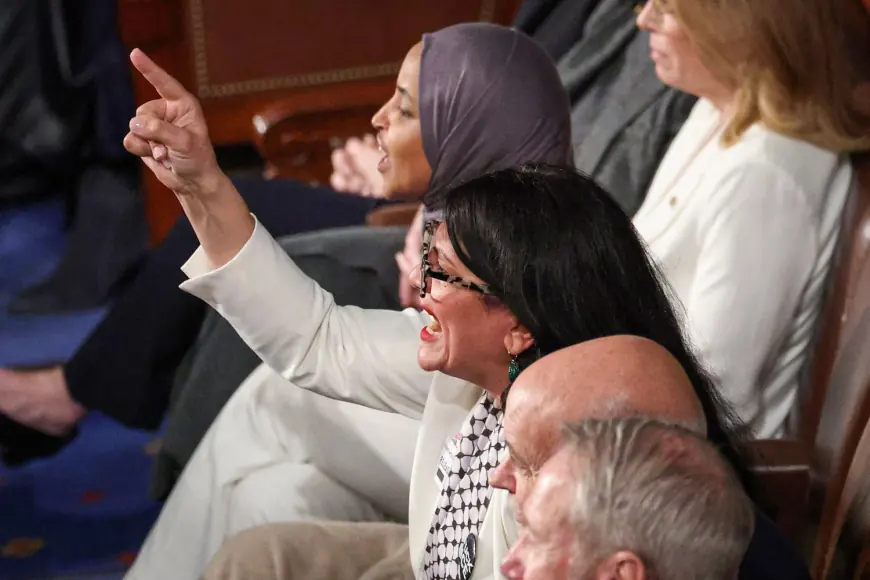
Rashida Tlaib and Ilhan Omar drew renewed national attention this week after a tense exchange during President Donald Trump’s State of the Union address on Tuesday, Feb. 24, 2026 (ET). The incident quickly moved beyond the chamber, triggering a wave of independent political commentary, rapid-fire social sharing, and a fresh round of debate over decorum, protest tactics, and the administration’s escalating rhetoric toward its critics. Omar, in particular, became a focal point in the hours that followed as clips and quotes from the night spread widely.
Rashida Tlaib And Ilhan Omar Inside The Chamber
Rashida Tlaib and Ilhan Omar attended the address while some Democrats chose to skip it. During a section focused on security and public safety, both lawmakers were seen and heard objecting, with the moment framed by supporters as direct protest and by critics as disruption. The exchange added to an already polarized atmosphere, with the chamber frequently splitting into visible blocks of applause and silence.
For Tlaib and Omar, the State of the Union appearance fit a familiar pattern: using high-visibility moments to communicate opposition, even when it invites backlash. For their opponents, the same moment became a way to argue that the pair embodies a confrontational style that plays well online but deepens institutional distrust.
Omar Responds And The Post-Speech Fallout Accelerates
Within hours, Omar publicly signaled she expected the confrontation to become a story, leaning into her view that the president’s claims demanded an immediate reply. The response became part of a larger post-speech cycle in which lawmakers raced to define the narrative: whether the bigger issue was the protest itself, or the policy agenda that prompted it.
The fallout intensified Wednesday, Feb. 25, 2026 (ET), when the president escalated his criticism of both Ilhan Omar and Rashida Tlaib in comments that drew condemnation from some lawmakers and applause from his allies. That escalation reshaped the discussion from “what happened on the floor” to “how far political language is being pushed,” and whether institutions are equipped to defuse it.
Independent Commentary Splits Over Protest Versus Process
The word “independent” has hovered over this story in two ways: independent voters watching a highly partisan moment, and independent analysis dissecting what it means for 2026 politics.
Some independent observers framed the protest as strategically risky, arguing that viral moments can harden opposition without persuading undecided voters. Others framed it as a necessary response in a climate where traditional norms have not slowed executive power or softened divisive messaging. The split often turns on a single question: is the goal to win an argument in the room, or to shift public opinion outside it?
That question matters because the political center is increasingly defined not by party registration, but by attention—what people remember, what gets clipped, and what becomes a shorthand symbol for broader anxieties.
Rashida Tlaib, Ilhan Omar, And The 2026 Campaign Context
The timing is not accidental. With the 2026 cycle taking shape, every high-profile moment is quickly processed through an electoral lens. For Tlaib, the dynamic includes both strong support at home and persistent national controversy. For Omar, it includes heightened scrutiny tied to past clashes with the president and continued visibility within the progressive wing.
Both lawmakers benefit from energized supporters and small-dollar fundraising dynamics that can spike after viral confrontations. At the same time, the same visibility can fuel attack ads and energize challengers who argue that Washington needs fewer flashpoints and more legislative quiet work.
Key Moments This Week (ET)
| Date (ET) | What Happened | Why It Mattered |
|---|---|---|
| Feb. 24, 2026 | Rashida Tlaib and Ilhan Omar protest during the State of the Union | Turned a policy segment into a live confrontation |
| Feb. 25, 2026 | President escalates rhetoric toward Omar and Tlaib | Shifted the debate to tone, boundaries, and political targeting |
| Feb. 25–26, 2026 | Independent reactions surge across political media and social feeds | Framed the moment as either principled dissent or damaging disruption |
What This Means For Omar, Tlaib, And The Broader Market Of Attention
The immediate consequence is a larger audience—supportive and hostile—locking onto Omar and Tlaib as symbols in a national argument about dissent. The longer consequence is subtler: political incentives increasingly reward moments that travel well on video, even when they produce little legislative movement.
For Ilhan Omar and Rashida Tlaib, the week’s events reinforce their role as lightning rods. For independent-minded voters, it becomes another test of what “representation” should look like—measured, confrontational, or something in between. And for the broader political system, it underlines a reality that keeps repeating: the State of the Union is no longer just a speech. It’s a stage where every gesture can become the headline.