

















mexico cartel news: el mencho killing triggers nationwide crackdown and fresh security warnings

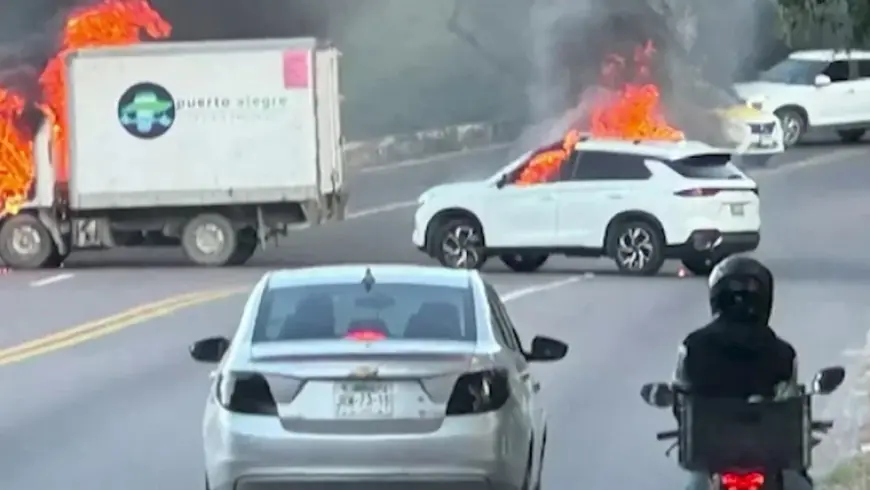
mexico cartel news is moving fast this week after the killing of Nemesio Rubén Oseguera Cervantes, widely known as “El Mencho,” set off retaliatory violence, road blockades, and a rapid federal response across western and central Mexico. By Thursday, February 26, 2026 (ET), security operations had expanded, travel disruptions were easing in some areas, and markets were watching for signs of a longer-term shift inside one of the country’s most powerful criminal organizations.
mexico cartel news: what happened after el mencho was killed
The sequence began on Sunday, February 22, 2026 (ET), when Mexican security forces carried out an operation in Jalisco state that ended with El Mencho dead after he was wounded and later died during transport. Within hours, coordinated acts of retaliation erupted: vehicles were set on fire, highways were blocked, and confrontations flared in multiple locations tied to cartel logistics routes.
The immediate impact was less about a single clash and more about the reach of coordinated disruption—aimed at paralyzing movement, pressuring authorities, and signaling control. For residents and visitors, the most visible effects were burning vehicles, impassable roads, and sudden lockdown-style conditions in pockets of Jalisco and nearby states.
mexico cartel news: troop deployments, raids, and the government’s next moves
In the days that followed, federal forces surged into affected corridors with a mix of patrols, checkpoints, and targeted raids. Officials framed the effort as both stabilization and prevention: stopping copycat attacks, reopening key routes, and deterring further escalation.
This type of response typically unfolds in phases. First comes rapid containment—clearing highways and restoring basic mobility. Next comes sustained pressure—searches for weapons caches, arrests of operational commanders, and efforts to disrupt financing and communications. The third phase is the hardest: holding territory long enough that the cartel cannot simply reconstitute roadblocks the moment patrols pull back.
For the short term, the key indicator is whether blockades and arson return in waves. For the medium term, the bigger question is whether leadership turbulence triggers infighting, splinter cells, or a quick succession plan that keeps operations steady.
mexico cartel news: how travel and tourism are being affected
mexico cartel news has also been shaped by the ripple effects on travel. Popular destinations in Jalisco and along nearby corridors saw temporary advisories, cancellations, and travelers sheltering in place when violence peaked. By midweek, some routes and services were returning, but uncertainty remained for visitors trying to judge what “normal” looks like day to day.
The risk pattern is uneven: cartel retaliation tends to concentrate near logistics choke points—highways, fuel access, and municipal entry routes—rather than blanket danger across an entire region. That said, sudden flare-ups can strand travelers quickly, especially when blockades cut off airport access roads or intercity transport.
With major international events on the calendar in 2026, Mexico is under heightened scrutiny to demonstrate rapid stabilization capacity: not only clearing incidents, but keeping them from recurring at the same predictable nodes.
mexico cartel news: what el mencho’s death means for cjng power dynamics
El Mencho built the Jalisco New Generation Cartel into a networked organization with strong regional commanders and diversified revenue streams. His death creates a classic cartel succession risk: either a designated inner circle consolidates quickly, or rivals test boundaries.
Two dynamics matter most:
-
Continuity of command: If the next leadership tier is already operationally embedded, day-to-day trafficking can continue with minimal disruption.
-
Internal competition: If succession is contested, violence can spike—not only against the state, but between factions fighting for routes, extortion rackets, and local control.
Neither outcome guarantees a decline in violence. In many past cases, leadership removals create a volatile transition period where groups seek to prove strength through high-visibility attacks.
mexico cartel news snapshot: key developments in the past 48 hours
| Timeframe (ET) | What changed | Why it matters |
|---|---|---|
| Sun, Feb 22–Mon, Feb 23, 2026 | Retaliatory blockades and arson events spread after El Mencho’s death | Demonstrates coordination and intent to disrupt mobility |
| Tue, Feb 24, 2026 | Expanded security operations and localized sweeps intensified in Jalisco-area corridors | Shifts from emergency response to sustained pressure |
| Wed, Feb 25, 2026 | Travel disruptions began easing in some areas while warnings persisted | Signals partial stabilization but not full normalization |
| Thu, Feb 26, 2026 | Focus turns to preventing renewed flare-ups and tracking leadership shifts | Determines whether this week becomes a turning point or a cycle |
mexico cartel news: what to watch next
Over the next several days, mexcio cartel news (and broader security headlines) will likely hinge on three measurable signals: whether highways stay open without recurring blockades, whether authorities announce high-level arrests tied to operational leadership, and whether violence migrates into new states as pressure increases in Jalisco.
A calmer surface can still hide a reorganizing network. If retaliation fades quickly, it may indicate leadership continuity. If violence splinters into scattered attacks, it may point to internal competition—or to efforts to distract authorities from key trafficking corridors. Either way, Mexico’s security posture is entering a decisive stretch as it tests whether a headline-grabbing takedown can translate into lasting disruption of cartel capability.