




















Western Power Struggles to Control Pole-Top Fires

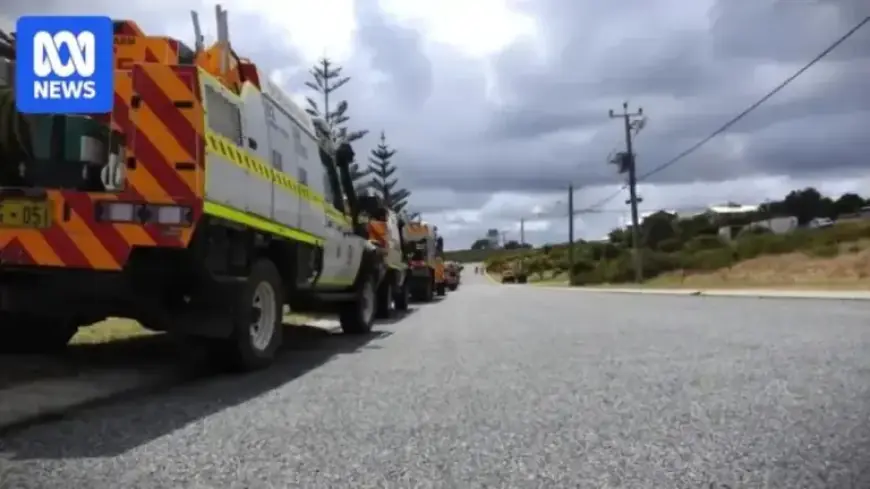
Communities in Western Australia are grappling with the escalating issue of pole-top fires. These incidents arise when light rain and dust accumulate on power pole insulators, resulting in arcing that ignites surrounding infrastructure. Unfortunately, emergency responders cannot act until Western Power has confirmed that power has been isolated from the affected area.
Challenges Faced by Volunteer Firefighters
The strain on volunteer firefighters has reached a breaking point, especially in the Gingin shire. Linda Balcombe, the shire’s president, raised concerns about the increasing number of pole-top fires. In early February alone, local crews responded to about 12 incidents. Balcombe noted the frustration within the community as volunteers often have to “babysit” these fires for prolonged periods.
Growing Pressure on Resources
- Volunteers are stretched thin during bushfire seasons.
- Some might abandon their firefighting roles due to heightened demands.
- The community feels Western Power is taking advantage of their commitment.
Matt Fanning, CEO of the Mingenew shire, echoed Balcombe’s sentiments at a recent Bushfire Awareness Committee meeting. He emphasized the conflict between increasing fire response duties and the everyday responsibilities of volunteers. This mounting pressure could lead to a decline in the number of active volunteers.
The Community’s Call for Action
Evan Lawrence, the chief bushfire control officer in Gingin, highlighted the fatigue among volunteers amid the busy bushfire season. He recounted instances where one volunteer monitored a fire for almost six hours. Meanwhile, another fire ignited nearby due to a different pole-top incident.
Karen Chappel, president of the WA Local Government Association, recognized the difficulties faced by local governments and firefighting brigades. She emphasized the need for collaborative measures to reduce the burden on these volunteers, advocating for better resource allocation to Western Power to improve prevention and response capabilities.
Western Power’s Standpoint
A spokesperson from Western Power acknowledged the challenges posed by the region’s extensive rural distribution network, which often exceeds 100 kilometers. They noted that the difficult terrain complicates timely responses. However, the spokesperson assured that Western Power values the support of volunteer brigades and is committed to monitoring weather conditions and investigating new technologies to prevent pole-top fires.
A Path Forward
As pole-top fires present ongoing challenges to local communities and volunteer firefighters, it is imperative that Western Power takes swift action. Enhanced resource allocation and effective communication between local leaders and the utility company are crucial for ensuring public safety and supporting volunteer firefighting efforts.