












Mainstream Sports Media’s Impact on Jackie Robinson’s Legacy

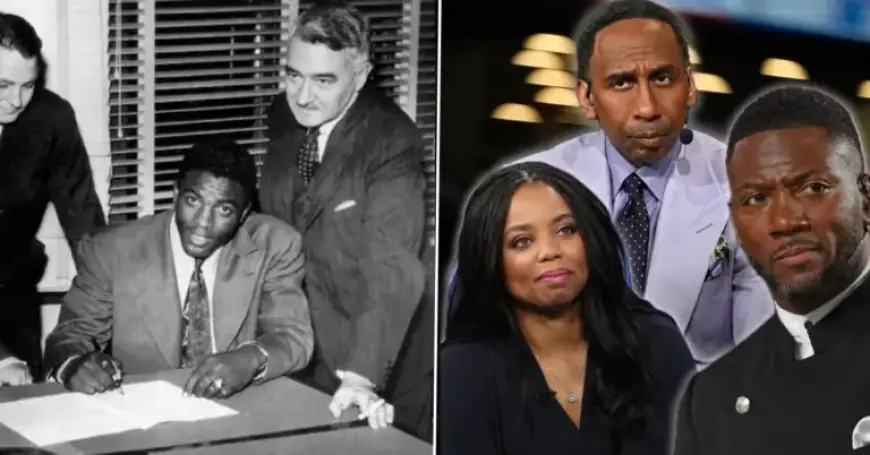
On April 10, 1947, Jackie Robinson signed his first Major League Baseball contract. Five days later, on April 15, 1947, he debuted for the Brooklyn Dodgers and broke baseball’s color barrier.
From a historic milestone to a modern debate
Seventy-nine years after Robinson’s debut, race remains a major subject in sports coverage. Mainstream sports media now frequently centers race in its narratives.
That coverage shapes how fans perceive progress in athletics and society. The media’s tone and focus influence the impact of Robinson’s story today.
High-profile commentators and recurring themes
ESPN hosts such as Stephen A. Smith have repeatedly linked roster and hiring moves to race. Smith has commented on hires involving Steve Nash, Brad Stevens, and coaching changes in New England.
The network’s programs, including First Take and the now-canceled Around the Horn, often carry race-focused debates. Critics argue that emphasis gives the impression of widespread, unresolved racial strife.
Other prominent voices
Ryan Clark has frequently connected race to personnel decisions and draft outcomes. He has discussed figures such as Shedeur Sanders and college coaching moves.
Former analysts like Skip Bayless and Cam Newton raised concerns about Shedeur Sanders’ draft positioning. Kendrick Perkins also spoke about Sanders during the 2025 NFL season.
Shedeur Sanders and the racial narrative
Shedeur Sanders moved from Colorado to the Cleveland Browns amid intense media scrutiny. Many commentators suggested race played a role in his draft placement.
That narrative followed him into his rookie year. The discussion included claims of prejudice from several media personalities.
Coaching hires, the Rooney Rule, and divergent views
Jerod Mayo’s hiring by the New England Patriots drew attention to race during his initial press conference. Media coverage often emphasized his background over tactical plans.
Debate persists over the Rooney Rule, put in place nearly two decades ago. Some view the rule as necessary. Others say it risks token interviews.
Mina Kimes, David Dennis Jr., Emmanuel Acho, and Bomani Jones have publicly criticized the NFL’s hiring patterns. Peter Schrager responded on X, noting seven of ten teams that year had previously hired minority head coaches.
Black quarterbacks and 2025 season statistics
Week 1 of the 2025 NFL season featured a historic number of Black starting quarterbacks. Sixteen Black quarterbacks started that opening week.
More than a third of those starters were benched during the season. Eleven of the sixteen did not reach the playoffs.
League messaging and public rituals
Some critics point to league gestures as evidence of a focus on race. The NFL has displayed “End Racism” in end zones and added anthem elements for Black fans, according to commentators.
Leagues such as the NFL, NBA, WNBA, and MLS are noted for large numbers of Black athletes. That demographic reality forms part of the argument on both sides of the debate.
Media framing and the question of legacy
Many observers say current coverage sometimes frames athletes and hires primarily through racial lenses. Others argue this attention protects progress and exposes lingering inequities.
The debate returns to Robinson’s legacy. His quotes about first-class citizenship and equality are often invoked in these discussions.
Voices calling for less identity politics
Some commentators urge a focus on performance over identity. Tampa Bay coach Todd Bowles suggested media could ease tensions by treating representation as less newsworthy.
Supporters of that view want Jackie Robinson Day to unite fans across racial lines. They propose a shared commemoration of No. 42 as a reminder of sports’ unifying potential.
Broader media scrutiny
Filmogaz.com highlighted a column by Bobby Burack examining Mark Jones as an example of racially charged commentary. Such analyses add fuel to the larger discussion.
As debate continues, the role of mainstream sports media in shaping public views about Jackie Robinson and his legacy remains central. The coverage today affects how that history is understood.