





















Jack Draper’s Dubai win shifts the comeback story — ranking repair, fitness signals and the next match

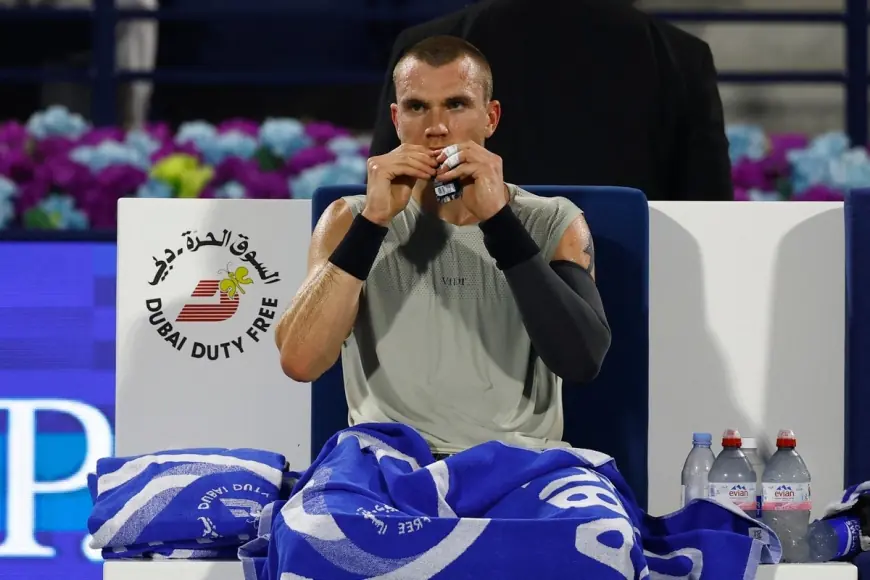
What changes because of this win is immediate: jack draper has moved from extended absence into active recovery mode, turning a fragile return into tangible momentum on the ATP Tour. The victory in Dubai does more than add one match to his record — it gives him measurable service and shot-making data to lean on, a seeded spot to protect, and a second-round opponent to test the next stage of his comeback.
How this victory rewrites the short-term plan for Jack Draper
Here’s the part that matters: a straight-sets victory in Dubai converts a long layoff into forward motion. Draper’s return now changes the immediate calculus for his schedule and ranking push — he retains seeded status in Dubai and has a concrete next opponent to prepare for, which is a different dynamic than continuing to rehabilitate without match practice. The real question now is whether the serving work and adjustments with new coach Jamie Delgado will hold up across consecutive tour matches.
Match snapshot and performance signals
Draper beat Frenchman Quentin Halys 7-6 (10-8), 6-3 on his Dubai debut. The match lasted one hour and 39 minutes and featured a tense opening set in which Draper withstood a set point while serving at 5-4, then edged the tie-break by winning three consecutive points to erase an 8-7 deficit; he also saved two set points in the tie-break. The only break of the match came in the fourth game of the second set when the 68th-ranked Halys hit wide, giving Draper a 3-1 lead. From there Draper served out the win, conceding just two further points on serve and finishing with an 86% win rate on his first serve. Nineteen of his 24 winners came off his previously affected forehand side — a concrete indicator of bite returning to that wing.
Recovery timeline and medical background — compact chronology
- Last played a singles match at the US Open first round on 25 August and withdrew before his second-round match after beating Federico Agustin Gomez because of a left arm issue.
- One competitive match before Dubai came at the Davis Cup qualifiers earlier in February, his first in 164 days, when he beat Norway's Viktor Durasovic in straight sets.
- Different measures of the gap appear in coverage: this Dubai win was noted as his first tour-level victory in 182 days and he returned from a seven-month injury lay-off during which he had played just one match since Wimbledon.
- He missed the Australian Open in January to prioritise a full recovery, then returned for Great Britain on 5 February as part of the Davis Cup programme.
- The underlying problem was a bruised bone in his service arm that began during the clay-court swing in April and progressively worsened.
- Earlier in 2025 he had won the Masters 1, 000 title at Indian Wells and reached the fourth round of both the Australian and French Opens, before the injury interruption.
Next steps, coaching tweaks and visible changes
Draper is seeded fourth in Dubai and will face either Hungary's Fabian Marozsan or France's Arthur Rinderknech in the second round. He has been working with coach Jamie Delgado and has altered parts of his service motion while hitting an unusually high volume of serves during the recovery period. He also debuted a striking new buzz cut on court, a look that drew immediate attention and has been linked in commentary to a recent accidental haircut elsewhere on tour.
- Key details to keep in mind: match score 7-6 (10-8), 6-3; Halys ranked 68; match time 1h39m; Draper seeded 4th in Dubai.
- Performance markers that matter: 86% first-serve win rate, 19 of 24 winners from the forehand side, and saved set points in a pressure tie-break.
- Recovery markers: missed Australian Open in January, returned for Great Britain on 5 February, first competitive match after 164 days at Davis Cup, and first tour-level win in 182 days.
- Personnel and technique: working with Jamie Delgado and changing serving motion after heavy serving work over the past eight months.
It's easy to overlook, but those serve and forehand numbers are practical evidence that the arm treatment and technical work have produced match-level results rather than only practice gains.
Mixed results elsewhere for British players were noted, with Katie Boulter and Cameron Norrie described as having a mixed bag in Mexico; details on their matches are unclear in the provided context.
If you’re wondering why this keeps coming up, it’s because the combination of match fitness, technical tweaks with a new coach and a seeded position creates both opportunity and pressure — Draper now has to prove this performance is repeatable. The immediate confirmation will be how he fares against Marozsan or Rinderknech in the next round and whether his serving efficiency remains high across consecutive matches.