













Alysa Liu Olympic Gold Medals: How a comeback and a liberated free skate changed the moment

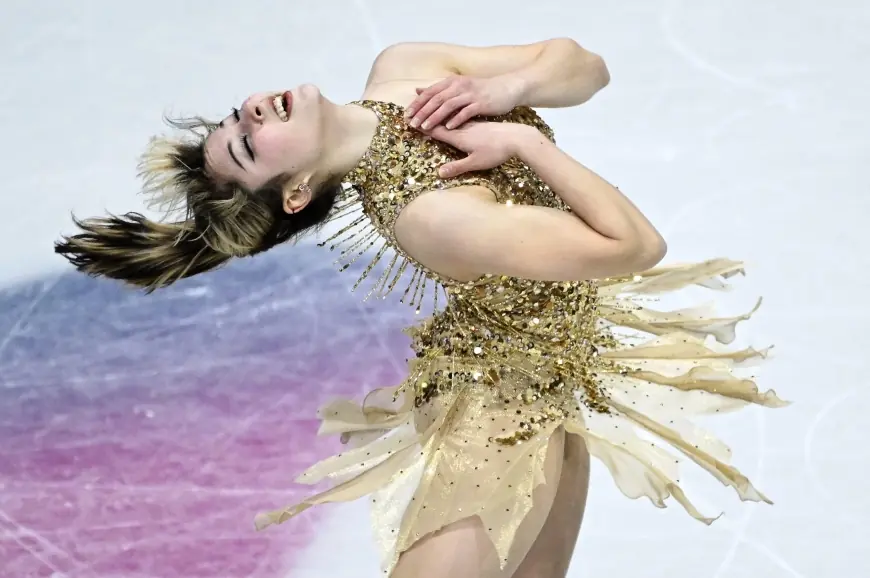
Why this matters now: Alysa Liu Olympic Gold Medals arrived not just as a tally on the podium but as the capstone of a comeback that has been about personal agency as much as victory. Liu’s showstopping free skate — performed in a sparkly gold dress to Donna Summer — followed a period of retirement and a short program that included errors, and it reframed what a winning Olympic moment could look like.
Why Liu’s return and choices reshaped expectations before the final replayed
Liu’s path to the gold was shaped by decisions made away from the scoreboard: she previously quit skating at 16 to prioritize her mental health and well-being, later returned despite a coach, Phillip DiGuglielmo, attempting to dissuade her, and insisted on directing elements of her own preparation, from routine choices to her schedule and diet. The wider Olympic moment had been saturated with viral episodes, but Liu’s approach — prioritizing presence over a pure outcome focus — made her performance feel like a deliberate corrective to the Games’ usual script.
What’s easy to miss is that this was as much a cultural moment as an athletic result: the performance was widely shared and discussed almost immediately after she won gold on Thursday, and observers framed it as a rejection of the Olympics’ zero-sum obsession with results.
Alysa Liu Olympic Gold Medals: the scores, the podium and the key placements
Liu, 20, scored 150. 20 for her free skate, which lifted her to an overall total of 226. 79 and the Olympic title. She entered the free skate in third place after making a couple of errors in the short program, including a triple lutz attempt where she failed to fully rotate the element. Kaori Sakamoto of Japan finished narrowly behind in silver; Ami Nakai, 17, took bronze. Sakamoto’s silver came in her final performance before retirement.
The rest of the final placements named in the event: Mone Chiba finished fourth, Amber Glenn climbed from 13th after the short program to finish fifth following an excellent free skate, and Adeliia Petrosian, the Russian champion, came sixth after a fall. The medals for Sakamoto, Liu and Nakai were presented by IOC president Kirsty Coventry. A full schedule including times of medal events was made available for the Games.
Moments in the arena and the wider Games context
Her free skate drew deafening cheers and a standing ovation from members of the crowd, including Ilia Malinin, whose collapse in the men’s event left Liu as the country’s only gold in singles figure skating at these Games. Observers noted Liu’s alt-girl aesthetic — iconic halo hair and a lip piercing — and the crowd reaction underscored how the routine registered beyond pure scoring. She acknowledged that family and friends were in the audience and said she felt she had to put on a show for them, adding that when she sees others smiling she can’t help but smile, and that she has no poker face.
Here’s the part that matters: Liu’s victory completed a comeback narrative — after missing out on a medal at Beijing 2022 she had stepped away, then returned and delivered an Olympic free skate that matched her stated priorities of presence and creative control.
Micro timeline and immediate signals to watch
- Retired from skating at age 16 following the Beijing 2022 result.
- Returned to competition despite a coach advising against it, taking responsibility for her routine, schedule and diet.
- Short program included errors and a problematic triple lutz; she entered the free skate in third place.
- Free skate score: 150. 20; overall total: 226. 79, securing gold on Thursday.
- Podium: gold Liu, silver Kaori Sakamoto (final performance), bronze Ami Nakai.
Forward signal: whether Liu maintains this creative control in future routines will be the clearest confirmation of a lasting shift in how elite athletes balance performance and personal agency.
What the reaction and opinion pieces added to the moment
Commentary around Liu emphasized a "liberation ethic, " arguing her performance and demeanor rejected an outcomes-only mentality in elite sport. The Games themselves had produced several viral scenes — a wolf-dog named Nazgul joining a cross-country team sprint, a Norwegian medalist using a victory interview to try to win back a partner, and a Japanese skier, Ikuma Horishima, losing control and crossing the finish line backward yet securing silver — but many commentators pointed to Liu’s free skate as the most resonant image from the closing days. Observers noted that she repeatedly framed her presence at the Games as prioritizing the experience over medals, saying she didn’t need a medal and needed to be present.
The real question now is how this gold will influence both Liu’s career choices and the wider conversation about athlete autonomy and performance culture.
It’s easy to overlook, but Sakamoto’s silver also marks the end of a stellar competitive run that concluded without an Olympic crown for her.
Note on incomplete material: a sentence fragment in the available commentary ends mid-thought—when asked what she wanted the takeaway of her Olym—unclear in the provided context.