



















Gorton And Denton: hard right high hopes meet a grassroots fightback

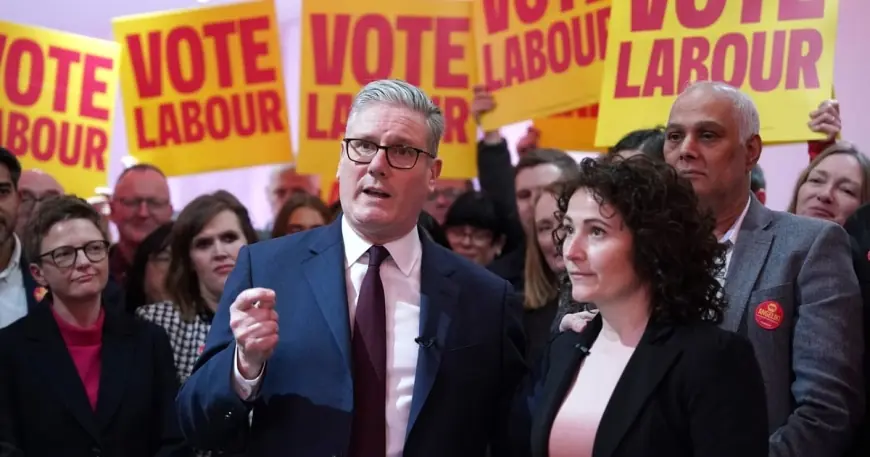
The by-election in gorton and denton has become a pivotal test of whether the hard right can break into Labour’s urban coalition and whether a local grassroots response can blunt that advance. Voters head to the polls on Thursday in a contest triggered by an existing Labour MP stepping down on health grounds.
Gorton And Denton cast as a referendum on the prime minister
Party strategists and campaigners alike describe the contest as a major test for an embattled British prime minister. Matt Goodwin, the Reform candidate, has been branding the campaign as a referendum on the PM, and the seat is being watched closely after Reform UK’s shock win in Runcorn and Helsby last May, where the party took the seat by six votes and led local election nights elsewhere in England. That recent success has fed a narrative that this is the prime minister’s biggest electoral test since then.
Local memory of Ahmed Iqbal Ullah and the 40th anniversary
For many residents, the by-election revives difficult memories. Selina Ullah talked about the national reaction to the murder of her brother, Ahmed Iqbal Ullah, in 1986 and the memorial campaign that followed in the same Greater Manchester constituency. Ahmed, described as a “bright, popular” boy from a British Bengali family, was 13 when he was stabbed by another 13‑year‑old, Darren Coulburn, in the playground of his high school in Burnage, a suburb on the southern boundary of the modern‑day constituency. A day earlier, Ahmed had intervened as Coulburn bullied another Asian boy. Coulbourn was jailed indefinitely, and a public inquiry concluded it was a racist murder, calling it a watershed moment for anti‑racism in education and community relations.
Ullah said: “I don’t want to talk about him, ” when asked about Matt Goodwin, and recalled the outpouring after Ahmed’s death: “There was revulsion... [National Union of Mineworkers’] representatives came to demos. An elderly miner from Newcastle gave me a badge and said: ‘Wear it with pride. ’” She warned that solidarity feels weaker now as people become “desensitised” to “Islamophobic, racist or homophobic comments, ” adding: “We’re not horrified that somebody can say these things any more... Given the rhetoric that’s around now, whether there would be the same reaction today, I can’t say. ” This year marks the 40th anniversary of Ahmed’s murder, and there are fears decades of progress could be undone.
Candidates on the right and the ideological split
Reform aims to split Labour’s diverse urban vote. Matt Goodwin, a GB News presenter standing for Reform in the contest, has argued that UK‑born people from minority ethnic backgrounds are not necessarily British and has warned of what he called “civilisational erasure” in Europe. That rhetoric sits alongside other right‑wing entries: the far‑right party Advance UK, led by Ben Habib—who suggested in a broadcast interview that some people travelling to the UK by boat should be left to drown—is fielding Nick Buckley, who grew up in the constituency and has courted controversy with comments about Black Lives Matter, women and trans people. The culturally conservative SDP, a different entity from the 1980s centrists, is also fielding a candidate; the name of their leader is unclear in the provided context.
At the same time, commentators note that while anti‑immigration views have long existed in Gorton and Denton, the seat would not historically have been characterised as a nationalist stronghold. Pollsters Electoral Calculus place the area—made up of postindustrial working‑class neighbourhoods and multicultural suburbs—at 291 out of 650 seats on a social conservatism scale measuring support for tradition, authority and the “dominant culture. ”
Why the result matters for Labour and internal party dynamics
Labour MPs are acutely aware of the stakes. Less than two years after a landslide general victory, the party is described as languishing in the polls, and in recent weeks the leader has lost key personnel, survived a call from Scottish Labour Leader Anas Sarwar to resign, and faced questions over the short‑lived appointment of Peter Mandelson as Britain’s ambassador in Washington despite Mandelson’s friendship with convicted sex offender Jeffrey Epstein. A Labour hold in this constituency, which the party won at the 2024 general election with 50. 8 percent of the vote and a majority of more than 13, 000 over second‑placed Reform UK, used to be taken for granted.
Last month, Labour top brass moved to block Greater Manchester mayor Andy Burnham from running as the party’s candidate; Starmer argued letting Burnham run would be a distraction from his day job in Manchester and divert party resources, while Burnham’s allies warned that blocking his return risks gifting Reform the seat. A Reform victory here would be a second parliamentary loss to Reform UK and would hand momentum to Nigel Farage’s movement; Labour losing a second constituency to Reform would be judged harshly by party figures, while any Labour hold would be greeted with a huge sigh of relief at No. 10 Downing Street.