

















Al Green’s ejection reshapes the State of the Union optics — who bears the immediate political cost

Why this matters now: al green’s removal minutes into the State of the Union instantly altered the night’s visuals and forced Democrats to choose optics over unified restraint. For rank-and-file members, for the president’s opponents, and for viewers watching the chamber, the moment became a focal point that cut through prepared messaging and shifted attention away from the address.
Immediate impact on party discipline and public optics
House Democratic leaders had made unusually direct pleas — urging members either to remain silent in the chamber or skip the address — because a spectacle could fracture the party and distract from the president’s message. One senior Democratic leader said he was not concerned anyone would defy those wishes. Instead, the removal put intra-party discipline under strain and handed Republicans a raw confrontation to display on the night’s feed.
Al Green’s protest and how the ejection unfolded
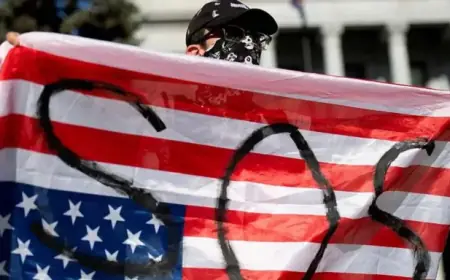
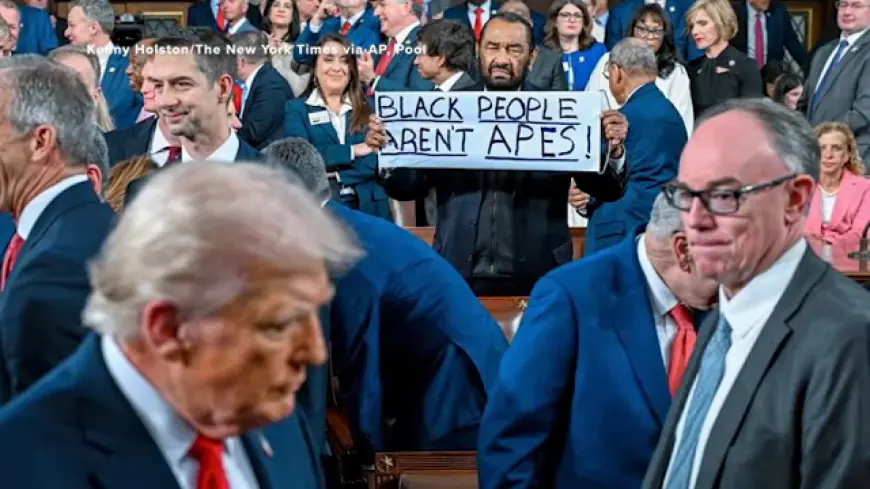
Minutes into the president’s State of the Union, Representative Al Green, a 78-year-old Texas Democrat, lingered in a center aisle holding a sign that read "Black people aren't apes!" He continued to hold the sign as he was escorted from the chamber. While leaving, Green clutched his walking stick and the sign remained visible to cameras even as several Republican representatives attempted to grab or block it. When he departed his seat remained empty, with a handwritten cardboard sign left behind that read "Al Green. " Shortly after being escorted out he told reporters that he wanted the president to see the sign and that he refused to tolerate racism.
Confrontations at the doorway and GOP reactions
As Green was escorted out there were acrimonious exchanges with some Republican members. Representative Troy Nehls was seen aggressively engaging with Green just before a staffer led him to the door, and Senator Markwayne Mullin approached menacingly. A group of Republicans began chanting "USA! USA!" while others tried to block the sign from view. The removal marked a repeat: Green had been forced out of the annual address the prior year after being ordered out by the House speaker for earlier shouting during the speech.
- Green’s action left an immediate visual imprint: an empty seat with a handwritten “Al Green” sign.
- Interruptions included physical grabs at his sign and direct confrontations from named Republican members.
- Green framed the act as a deliberate public rebuke of a racial depiction shared by the president earlier this month.
Democratic responses during the speech and who moved out
Several Democrats in the chamber sat solemnly rather than applauding as Republicans leapt to their feet at multiple points. Some Democrats chose to walk out early: one senator from Virginia said he "couldn't sit through an hour of the president's lies" and left while criticizing the president’s economic claims; a House member from Illinois said he counted "5 bald-faced lies" and departed less than an hour into the speech. Extra vocal responses came from Representative Rashida Tlaib, who, wearing a pin reading "release the files, " yelled about the killing of Alex Pretti, a Minneapolis nurse shot to death by federal agents; she told the chamber, "They saw the videos, Mr President. " Representative Ilhan Omar shouted that the president "should be ashamed" and repeatedly accused him of having "killed Americans. "
Background threads tied to the protest and Green’s record
The protest referenced a racist depiction of former first couple Barack and Michelle Obama that the president shared and then deleted earlier this month; the president declined to apologize and said he had not seen the final frames of that social media post. Representative Al Green has been among the president’s most persistent critics, including early calls for impeachment, and represents a predominantly African American district with a long civil-rights focus. He was also one week out from a difficult primary contest against a fellow member, a factor that Democratic colleagues had considered when anticipating possible public protest.
Here's the part that matters: the visual clash — the sign, the empty seat, the physical tussle — compressed complex political tensions into a single, easy-to-share image that will play into campaign narratives on both sides.
- Democratic leaders' instructions to remain quiet were explicit and aimed at preserving unity; that restraint was visibly breached.
- Stakeholders immediately affected: Democratic caucus cohesion, the president’s televised message, and voters in Green’s district headed into a member-on-member primary.
- Signals to watch in coming days: whether other Democrats follow with similar protests, whether Republican confrontations escalate, and whether the optics shift primary dynamics in Green’s district.
- Physical details that matter: Green's walking stick and the handwritten name-card amplified the personal and theatrical elements of the protest.
It's easy to overlook, but the repetition of this exact confrontation — an ejection at back-to-back annual addresses — says as much about individual strategy as it does about the chamber’s tolerance for disruption. The real question now is how party leaders, candidates, and voters interpret this episode going into the immediate primary cycle.