


















Warriors Vs Pelicans: Dejounte Murray’s comeback shifts the matchup’s immediate winners and losers

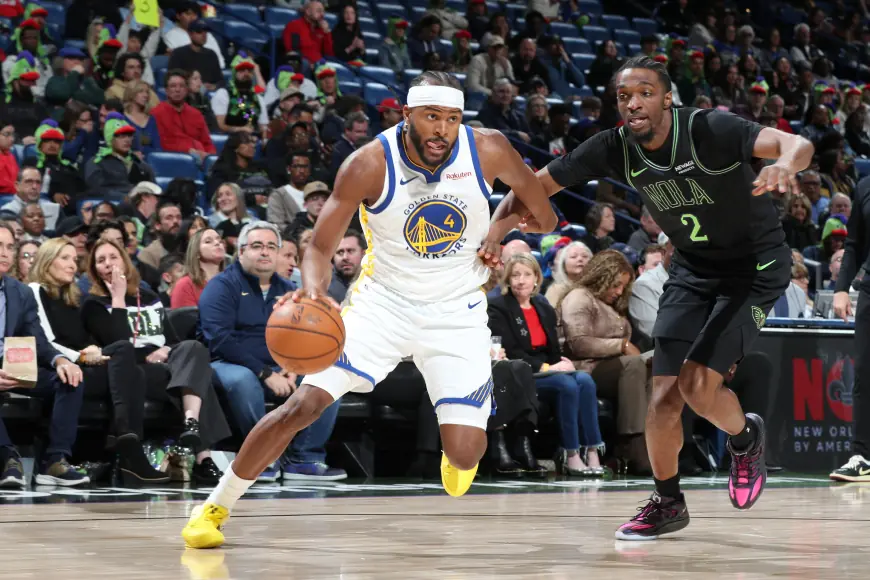
Why this matters now: the warriors vs pelicans matchup moved beyond a single box score because one player’s return after a year-long injury layoff altered rotation pressures on both teams. Dejounte Murray’s reappearance changed how New Orleans deployed depth and forced Golden State’s short-handed roster to lean on unexpected contributors, producing a tight 113-109 outcome and several performance revelations that matter for the next stretch of games.
Warriors Vs Pelicans — who felt the impact first and how rotations changed
The immediate impact landed on two groups: New Orleans’ rotation around Murray and Golden State’s depleted rotation. With Murray back after more than a year away due to injury, the Pelicans could tighten minutes and relieve some playmaking duties, while the Warriors — missing multiple regulars — had to lean on bench pieces to cover scoring and defensive responsibilities. Here’s the part that matters: Murray’s presence was framed as a net stabilizer for New Orleans even as the visiting team forced the game to the wire.
How the game unfolded (embedded detail, not a play-by-play)
The Warriors lost 113-109 to the New Orleans Pelicans in an odd Tuesday game that swung multiple ways. An ugly first half left Golden State struggling to score, then the team rallied in the second half to take the lead before losing rhythm late and surrendering control in the final moments. Observers noted it was unclear whether Golden State should have been favored before tipoff; the Pelicans were described as a very bad team in the context given, yet fairly healthy and bolstered by Murray’s return after more than a year on the sidelines.
Player grades and lines that explain the final margin
- Moses Moody — 34 minutes, 24 points, 5 rebounds, 3 assists, 1 turnover, 5 fouls, 7-for-13 shooting, 4-for-10 threes, 6-for-8 free throws, 72. 6% TS, +13. Grade: A. Moody drew eight free throws and provided the team’s best plus/minus while using his jump shot threat to attack.
- Gui Santos — 39 minutes, 15 points, 12 rebounds, 4 assists, 2 steals, 3 blocks, 6 turnovers, 5 fouls, 6-for-13 shooting, 1-for-4 threes, 2-for-2 free throws, 54. 0% TS, -7. Santos brought energy and five "stocks" in the stat line but also six turnovers and frequent fouls.
- Dray — 32 minutes, 11 points, 7 rebounds, 6 assists, 2 blocks, 1 turnover, 2 fouls, 5-for-11 shooting, 1-for-3 threes, 50. 0% TS, +8. Grade: B+. He defended Zion Williamson, who finished with 26 points on 21 shots and five free throws, while contributing in playmaking and passing.
- De’Anthony Melton — 28 minutes, 28 points, 4 rebounds, 3 assists, 1 steal, 3 turnovers, 4 fouls, 8-for-21 shooting, 3-for-10 threes, 9-for-11 free throws, 54. 2% TS, +9. Melton was often the only consistent scorer for Golden State in stretches and carried offensive load early.
Note on efficiency: true-shooting percentage (TS) accounts for threes and free throws; the league average entering Tuesday’s games was 57. 9%.
Dejounte Murray’s return and the personal arc behind it
After more than a year away due to injury, Dejounte Murray is back with a fresh perspective on life. Murray described feeling a heavy, "dark cloud" that made "everything... just dark. " The timeline in the provided context traces a difficult stretch: in June 2024 he was traded from the Atlanta Hawks to New Orleans; he flew home to Seattle when his mother suffered a stroke a week before his first game of the 2024-25 season, and she could barely speak and was helpless in the hospital. He then broke his left hand in the first game, underwent surgery and missed 17 games, and in January 2025 suffered a season-ending ruptured right Achilles tendon. He was originally drafted at the end of the first round by the Spurs in 2016, and earlier earned an All-Star nod after a breakout with San Antonio before being traded to Atlanta in June 2022 — a move meant to pair him with Trae Young.
He called a period after joining New Orleans "literally the worst three months of my professional career on and off the floor" and said, "I was never able to focus on basketball. " He later allowed himself to unload his grief and embarked on a year-long rehab from one of the toughest injuries in sports. Emerging from that darkness — in New Orleans, where even a medical professional questioned his ability to bounce back at all — he was described as finally ready to play. Murray is probable to return Tuesday for the Pelicans’ game against the Golden S; the opponent name is unclear in the provided context.
It’s easy to overlook, but Murray’s life story in the context provided includes growing up in a tough Seattle neighborhood, operating like an adult at age 11, and the observation that "I've been going through obstacles since I was like 5 years old, " which frames why resilience is central to his return.
What changed for Golden State and signals to watch moving forward
The Warriors played without Steph Curry, Jimmy Butler III, Kristaps Porziņģis, and Al Horford, forcing younger and role players into extended minutes and high-leverage situations. They also faced an opponent that welcomed back a veteran playmaker after a long injury layoff; that combination produced a tight final result and a set of performance takeaways that will influence rotation decisions.
- Murray’s presence immediately alters New Orleans’ playmaking distribution and minute allocations.
- Golden State’s dependability on bench scorers like Melton and Moody will shape short-term game plans while primary veterans are absent.
- Turnover and foul rates from extended-minute contributors are the clearest near-term risks for the Warriors’ margin of defeat or victory.
- A prolonged Murray comeback and how he absorbs minutes after a year-long rehab will confirm whether New Orleans truly gains a stabilizing influence.
The real question now is whether Murray’s return sustains New Orleans’ edge in late-game control and whether Golden State’s younger rotation can reduce turnovers and foul trouble. What’s easy to miss is how much of the narrative hinges on personal recovery timelines as much as single-game adjustments.