























Supreme Court tariff ruling jolts tariffs landscape as Trump tariffs pivot to Section 122; stock market today watches Dow Jones, S&P 500, Nasdaq

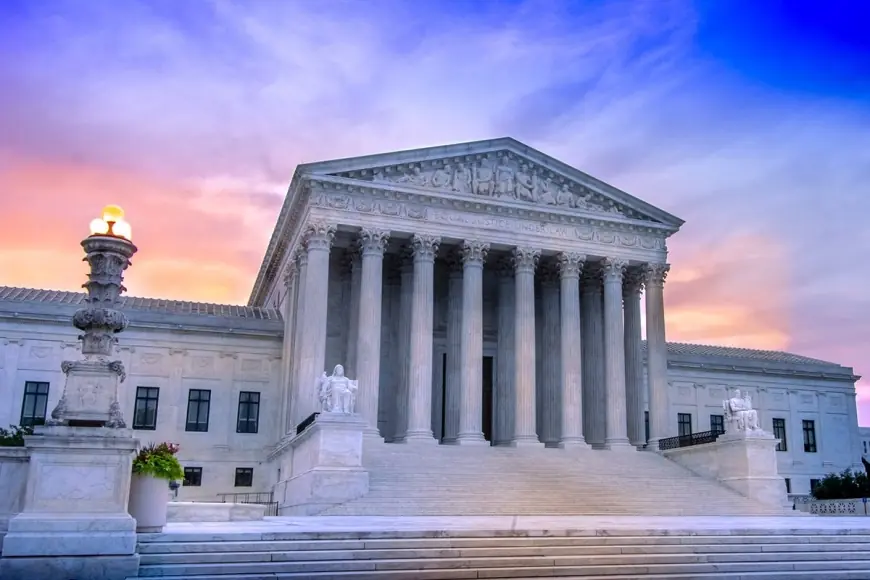
The Supreme Court delivered a sweeping rebuke to the legal foundation behind Trump tariffs, ruling 6–3 that the president overreached by using IEEPA to impose broad import duties. The supreme court tariff ruling has forced an immediate policy scramble in Washington, pushed trade lawyers and importers into refund calculations, and injected fresh volatility into stock market today as investors try to price a new tariff regime that is still shifting hour by hour.
Supreme court tariff ruling: SCOTUS limits IEEPA tariffs power in 6–3 decision
In the core holding, SCOTUS said the International Emergency Economic Powers Act (IEEPA) does not authorize a president to levy sweeping tariffs simply by declaring an economic emergency. Chief Justice John Roberts wrote for the majority, joined by Justices Elena Kagan, Sonia Sotomayor, Ketanji Brown Jackson, Neil Gorsuch, and Amy Coney Barrett. The dissent came from Justices Clarence Thomas, Samuel Alito, and Brett Kavanaugh.
The decision, issued Friday, Feb. 20 (ET), effectively ended the administration’s broad emergency-tariff framework that had been used to build a large portion of the tariff wall around U.S. imports.
Trump tariffs pivot: Section 122 tariffs replace IEEPA tariffs, with 10% now and 15% debated
Within hours of the ruling, the White House moved to keep tariff collections flowing by turning to Section 122 of the Trade Act of 1974. Under section 122, the president can impose a temporary import surcharge of up to 15% for a limited period (up to 150 days unless Congress acts).
A temporary tariff rate of 10% began being collected Tuesday (ET), while officials said work is underway to raise the temporary rate to 15%—a shift that has created confusion for importers planning shipments and pricing goods already in transit.
Tariff news: refunds, “state refund” chatter, and why Neal Katyal matters
The court fight featured major advocates on both sides, including Neal Katyal for challengers in a companion case, and the ruling has now opened a new front: potential refunds of duties already paid. Analysts tracking the post-decision landscape have highlighted that more than $175 billion in tariff collections could be exposed to refund claims, triggering a wave of litigation strategy sessions for companies that imported under the invalidated regime.
That’s where “state refund” chatter enters: even if federal refunds become available, downstream disputes may emerge over who ultimately bore the cost—importers, retailers, suppliers, or consumers—raising the odds of messy pass-through arguments in courts and contracts.
Scott Bessent message: tariff revenue “unchanged,” even as the legal basis shifts
Treasury Secretary Scott Bessent has been trying to project continuity, arguing that a mix of authorities—Section 122 plus other tariff tools—can keep overall tariff revenue roughly steady despite the collapse of the IEEPA tariffs structure. The pitch is meant to calm markets and signal that the administration can preserve leverage without relying on the statute the court rejected.
The complication is credibility: revenue stability is not the same thing as policy stability, and businesses still need clarity on rates, product coverage, exemptions, and timelines.
Stock market: Dow Jones, S&P 500, Nasdaq Composite react to tariffs uncertainty
Markets initially treated the ruling as a relief event, with risk assets bouncing on the idea that the broadest emergency tariffs were off the table. But the rebound has quickly run into a new reality: tariffs aren’t disappearing—they’re being re-papered under different statutes, with rate uncertainty still high.
Market snapshot (ET):
| Item | Latest reading referenced in coverage | Why it matters |
|---|---|---|
| Dow Jones close (Tue, Feb. 24) | 49,174.50 | Investors bought the rebound while watching tariff mechanics reset |
| Nasdaq Composite close (Tue, Feb. 24) | 22,863.68 | Tech optimism offset tariff anxiety for now |
| S&P 500 futures (early Wed, Feb. 25) | up ~0.1% | Premarket tone suggests investors are waiting for clarity, not panicking |
The next catalyst is not only economic data—it’s administrative paperwork. Traders are watching for the formal step that would move the temporary surcharge from 10% to 15%, and for signals on how long the section 122 tariffs will run before Congress or courts weigh in again.