
























Court Allows Trump White House Ballroom Construction to Continue Temporarily

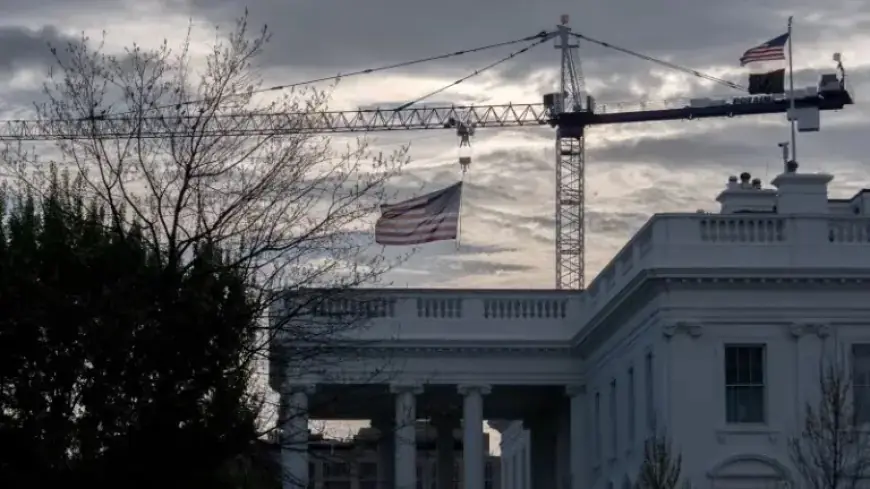
A recent ruling from a federal appeals court has temporarily allowed President Donald Trump to continue construction of a new ballroom at the White House. This decision comes amidst ongoing legal disputes regarding the project’s legitimacy.
Court Decision Overview
On Saturday, the DC Circuit Court of Appeals issued a 2-1 ruling permitting construction to proceed until at least April 17. This ruling is seen as a provisional victory for Trump amid a drawn-out battle concerning his authority to build the ballroom on the site of the former East Wing.
Legal Context
- The case highlights a notable disagreement about the necessity of congressional approval for such construction projects.
- Judges emphasized the need for further examination regarding national security and safety issues tied to the project.
- The majority of judges noted uncertainty surrounding the importance of the ballroom for national security upgrades.
Judicial Background
The two judges supporting the ruling were appointed by former Presidents Barack Obama and Joe Biden. In contrast, the dissenting judge was appointed by Trump. This dynamic features prominently in the legal narrative regarding the project.
Historical Preservation Concerns
In an earlier ruling, Senior US District Judge Richard Leon sided with the National Trust for Historic Preservation. He found that proceeding without congressional approval was unlawful.
National Trust’s Arguments
- The National Trust argued that ongoing construction required legislative blessings.
- They stated that the project should not continue until it fully complies with existing laws.
Project Specifications
The ballroom project aims to create a substantial event space, approximately 89,000 square feet in size. This contrasts with the existing Executive Mansion, which is only 55,000 square feet.
Safety and Security Features
The project includes advanced materials designed for national security, such as missile-resistant steel and bulletproof glass. These features have been presented as critical for the safety of the White House occupants.
Future Outlook
Despite the current ruling, significant opposition remains. Many experts believe the ballroom will not fundamentally alter presidential operations. Critics argue that the absence of such a ballroom has not hampered other presidents in hosting events.
Projected Completion
Trump has stated that the ballroom will be completed by summer 2028, aiming to coincide with the end of his current term in office.
This legal controversy surrounding the White House ballroom underscores ongoing tensions between executive authority and the need for accountability. It continues to be a focal point in discussions about presidential powers and historic preservation.