













Abigail Spanberger — why abigail spanberger should rethink the State of the Union response

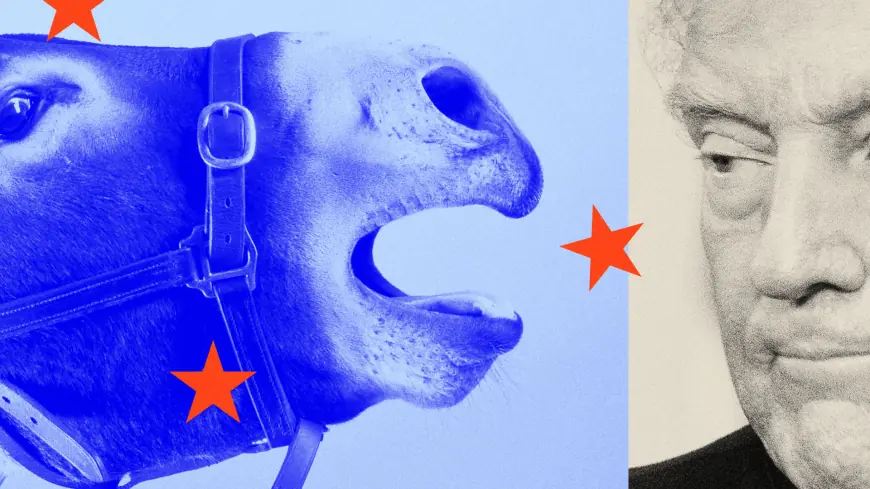
abigail spanberger, the Virginia governor who is giving the Democrats’ English-language response to the president’s State of the Union, steps into a ritual that rarely functions as a real rebuttal. The opposition party’s reply has drifted from a smart television-era adaptation into a predictable recital that too often leaves viewers unmoved.
The ritual has eclipsed rebuttal: prewritten monologues and the "rising star" teleprompter
The State of the Union response once adapted well to television, but now it almost never responds to anything the president has just said. Instead of a rebuttal, audiences usually get a prewritten monologue delivered in a quiet room by a "rising star" staring into a teleprompter and reciting safe contrasts that sound like every other speech voters have heard.
That approach has produced political comfort food: bland, predictable and instantly forgotten. Over time the response has become less about the speech the country just heard and more of a national audition and a test of message discipline for the next generation of party leadership.
How a live, picture-in-picture setup would change the dynamic
Rather than a studio set and a teleprompter, one proposal would show Spanberger watching the address live, revealing her facial expression and body language in a small picture-in-picture in the lower- or upper-third corner of the shot. In that setup she is taking notes, conferring with her staff and absorbing and reacting to what she observes and hears from the president.
That sequence — watch, confer, react — would foreground spontaneous response over a memorized recital and make the exchange feel more immediate.
Abigail Spanberger's unscripted alternative: step forward, speak, take questions
The suggested format calls for Spanberger to step in front of the cameras when the president concludes, deliver a concise, organic statement and then take questions from reporters. Authenticity, under this model, would come from unscripted moments when reactions are raw and conviction shows in tone and posture.
That contrasts sharply with the typical solo responder, who appears alone in a sterile setting reciting a script written days earlier. None of the solo responders in the modern era has ever become president, and what has become routine instead is awkwardness, overproduction and viral mishaps that overshadow substantive message.
No script, no teleprompter: matching form to a live political fight
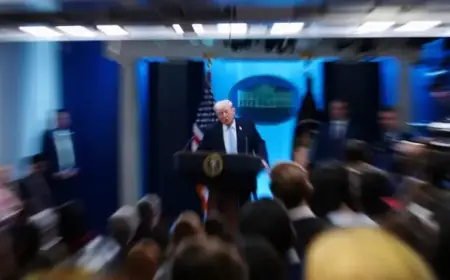
Proponents of an unscripted approach call for no script, no artificial staging, no theatrical gloom, no overacting and, most importantly, no teleprompter. The argument invokes the president’s live performance — he speaks before Congress, surrounded by ceremony, applause and history — and contrasts that with the manufactured feel of a solo response.
The context also invokes the opposing speaker: Trump is described as the most skilled television and media politician of his generation, a belligerent master of live performance, spectacle and driving the news agenda. The idea behind ditching the teleprompter is bluntly summed up: you don’t bring a teleprompter to a street fight.
From audition to answer: what Democrats could regain
If Democrats want to break through amid attention scarcity and voter cynicism, the argument goes, they should stop staging national auditions and start demonstrating real-time political skills — think on their feet, debate live, answer questions and hold each other accountable. On one of the biggest political nights, those same skills are often treated as if they don’t matter.
The prescription is narrow and concrete: replace a sterile recital with a responsive, human performance that watches, reacts, speaks and engages directly. For a Democrat giving the English-language response, the hope is to trade predictable comfort food for something unscripted, something human, something real.