























Smart glasses and a new smart-detection app warn nearby diners

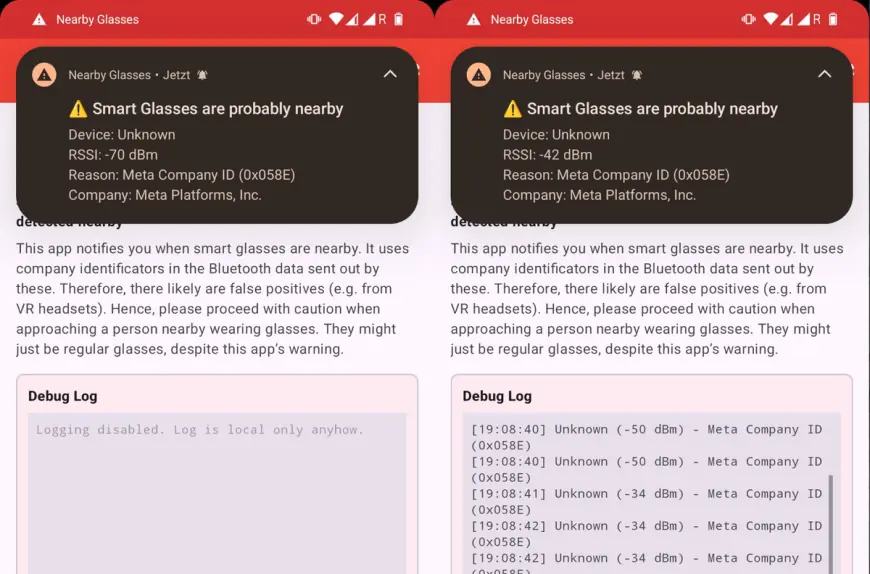
A hobbyist-developed app now warns when people nearby may be wearing smart glasses, and advocates say the tool matters as AI features are added to eyewear. The app scans for distinctive Bluetooth signatures from glasses and sends a push alert if it detects a potential pair in the local area, a developer said.
How the Smart app detects smart devices
The app looks for Bluetooth identifiers associated with smart glasses. When a matching signature appears within Bluetooth range, the app generates a push notification to nearby users. The developer framed the tool as a way to alert people who might otherwise be unaware that recording-capable eyewear is present in a shared space.
Dinner may be recorded silently
The creation of the app follows coverage noting that stalkers and harassers have repeatedly used smart glasses to film people without their knowledge or consent. Those privacy concerns are compounded by recent coverage that said a company is working on adding facial recognition features, a capability described by its reported name, which would let wearers identify people and access information from a connected AI assistant.
Signs someone is recording
Users of the detection app are advised to treat alerts as a prompt to check their surroundings. The app is designed to flag the possible presence of recording-capable eyewear rather than definitively prove recording is taking place; the detection is based on Bluetooth presence and distinctive device signatures, not on visual confirmation. Where the alert appears, ordinary steps such as asking about recording, changing seating, or moving to a different location can reduce exposure to unwanted filming.
- App scans Bluetooth signatures and sends push alerts when a potential device is nearby.
- Instances of covert filming with smart glasses have been cited as a motivation for the tool.
- If facial-recognition features are added to eyewear, demand for detection tools may rise.
Analysis and forward look: the app represents a grassroots response to identified privacy risks tied to wearable cameras. If manufacturers add more AI-driven identification features to glasses, detection and notification tools may see greater interest from people concerned about being recorded without consent. The app’s alerts are limited to detecting Bluetooth signatures in range, so alerts should be treated as indicative rather than conclusive; the developer and observers have described the tool as one layer in a broader set of personal privacy measures.