





















Abigail Spanberger pushes back on tariffs and ICE raids in Democratic State of the Union response

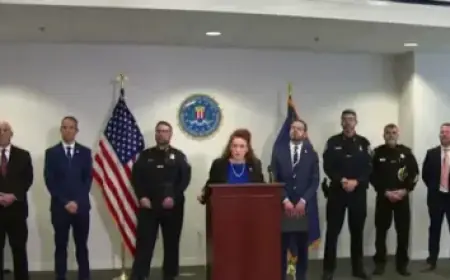
abigail spanberger, the newly elected Virginia governor, delivered the Democrats’ response to the State of the Union and used the rebuttal to attack President Donald Trump’s immigration enforcement and economic policies, arguing they have made life harder and more expensive for Americans.
Rebuttal came moments after the president’s address
Spanberger spoke just moments after Trump finished his remarks on Capitol Hill, taking up a tradition that began in 1966 with a rising star from the opposing party. The 46-year-old governor, elected in November after serving in Congress and working as a CIA officer, framed her remarks with three questions she wanted Americans to ask: is the president working to make life more affordable, is the president working to keep America safe at home and abroad, and is the president working for you. She said the answer to all three is no.
She named ICE raids and Minneapolis operations by federal agents
Spanberger criticized Immigration and Customs Enforcement raids in Democrat-led cities and applauded resistance in Minneapolis. She accused the administration of sending "poorly trained federal agents into our cities where they have arrested and detained American citizens and people who aspire to be Americans, " and of acting "without a warrant. " She added: "They have killed American citizens in our streets. And they have done it all with their faces masked from accountability. "
The speech cited two deaths during immigration enforcement operations in Minneapolis: federal agents shot and killed Alex Pretti and Renee Good last month. The administration, the speech said, replaced the top official and withdrew agents from the city following an outcry after the deaths.
Tariffs, costs and the political math Spanberger put forward
On economic issues, Spanberger described the president’s tariff policy as "reckless, " saying the Supreme Court had ruled against the tariff policy but that "the damage to the American people has already been done. " She claimed those policies have cost American families $1, 700 (1, 260£) each and criticized Republicans in Congress for failing to oppose the president: "They're making your life harder. They're making your life more expensive. " The governor also attacked rising costs of housing and healthcare in her remarks.
Why Spanberger was chosen and what critics want instead
The choice of Spanberger to deliver the Democratic rebuttal was framed as low risk: she was elected a few months ago, cannot run for re-election because Virginia has a one-term limit, and she has a recent record of winning competitive races. In the speech she noted past success in Congress, saying, "In my case, I was the first Democrat elected in 50 years, swinging our district17 points, " and suggested Democrats could be well positioned to win seats in Congress in November's midterm elections.
Commentary on the response criticized the traditional format as bland and forgettable. The critique called the response a lifeless ritual that often amounts to a prewritten monologue delivered in a quiet room, with the responder staring at a teleprompter. It urged a different approach for the Democrats’ English-language response: show the responder watching the address in a small picture-in-picture window, taking notes, conferring with staff, then stepping in front of cameras to deliver a concise, organic statement and take questions from reporters — in short, no teleprompter and something unscripted that feels more human. The critique repeated the line: "It is political comfort food: bland, predictable and instantly forgotten. "
Spanberger opened her rebuttal with an explicit rebuke: "Tonight the president did what he always does, " she said. "He lied, he scapegoated, and he distracted, and he offered no real solutions to our nation's pressing challenges, so many of which he is actively making worse. "
Spanberger’s selection and the debate over how to deliver the response come ahead of November's midterm elections, which she invoked as the next major contest for congressional control and for which she suggested Democrats could gain seats.