















Cuba worker describes hellish conditions in cuba, appeals to US workers to force an end to embargo

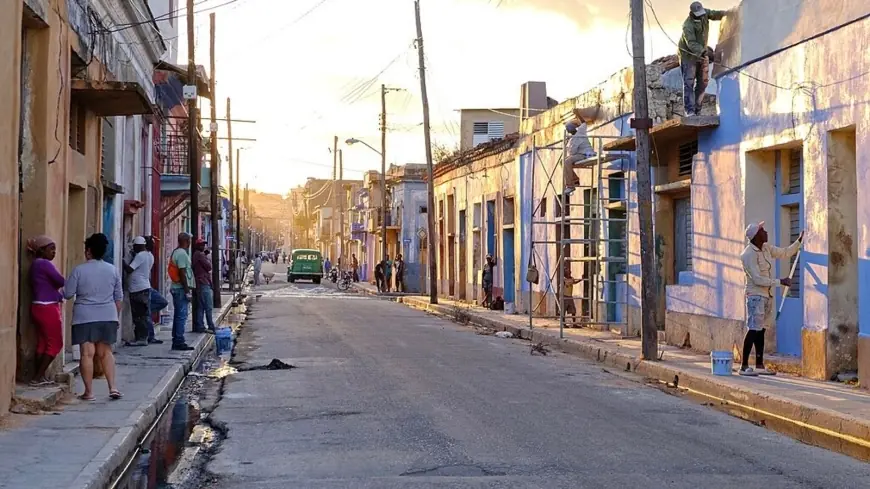
A 32-year-old Cuban worker and single mother from Matanzas has described hellish conditions on the island and appealed to US workers to force an end to the embargo. Her testimony traces a catastrophic decline in the humanitarian situation in cuba in the three weeks following a January 29 executive order that declared the island a "national security threat" and threatened tariffs on any nation supplying it with oil.
Conditions in Cuba deepen
The worker, identified as María (a pseudonym used to protect her identity), said Washington has effectively turned a long-standing embargo into "an overt attempt to starve the population into submission. " She said US officials are discussing allowing only "small quantities" of fuel to prevent total infrastructure collapse and that the White House last week demanded "very dramatic changes. " She also noted the US Supreme Court is considering cases demanding Havana pay billions in compensation to US corporations like ExxonMobil for key ports, plantations and other infrastructure expropriated six decades ago.
Daily life and shortages
María described basic necessities like cooking gas as having vanished entirely; many now rely on increasingly expensive charcoal or even broken furniture for firewood. She said running water is frequently unavailable for days at a time, and the black market for imported medicines charges unaffordable prices. She works two jobs as an editor and librarian, and those jobs "barely cover the cost of a carton of eggs. " On the streets she sees almost no cars: "There are hardly any cars on the streets, the country is at a standstill, inflation is skyrocketing, " she said. "This place is hell. "
Power, fuel and public services
Electrical outages, she said, last between 20 and 30 hours, with power available for only two hours or less. Fuel shortages frequently paralyze public transport and basic services, while police patrols continue to operate, a disparity another Cuban in a widely circulating video criticized with the line: "There is no oil to collect the garbage, there is none for the hospitals, there is no oil for the work buses, but there is oil for the PNR. " That witness added: "They rise and mount without asking, they're treating us like the narcos in Mexico, " referencing the fall of 'El Mencho, ' leader of the Jalisco New Generation cartel.
Prices and purchasing power
María said the Cuban peso is totally devalued, with 1 USD equaling 500 pesos. Another witness noted basic products have soared in price: a tube of toothpaste can reach as high as 600 Cuban pesos (CUP) and a package of salt can cost up to 700 CUP, while the average state salary hovers around 4, 000 to 5, 000 CUP per month, making those figures difficult for workers and retirees to manage. Complaints about garbage accumulation, lack of medications in hospitals, prolonged blackouts and fuel shortages have become common in public conversation and on digital platforms.
Hunger, filth, and need
Hunger has become widespread, including among children. María confirmed that most families cannot afford three meals a day and survive on low-quality food with almost no protein. She said often a child’s only breakfast is an instant soft drink, and even bread has become scarce. Another Cuban summed up the current situation in three words: "Hunger, filth, and need. "
Voices of desperation and uncertainty
A young Cuban identified as @yissi_glez shared a tearful video in which she urged a decision about the island's future: "I have never posted a video like this, but you really should make a decision about what you are going to do with Cuba. " She described the situation as "inhuman" because of the lack of clarity: "Cuba is in a bad situation, everything is on hold. No one knows what to expect. We don't know if things will continue the same, if it will come to an end, or if they will remove those people. "
She added: "If things are bad and are going to stay bad, you look for options and solutions. But you don’t know anything. Uncertainty is the worst. " In an emotional appeal she said: "They should just make a decision and say whether they are going to step in and do it, or if they are not going and will just stay as is... but at least let us know what to expect. " The video generated numerous reactions of support and debate among users inside and outside the island and has been read as reflecting accumulated fatigue from years of economic crisis, prolonged blackouts, food shortages and a political situation that leaves a large part of the population in constant uncertainty.
María also put responsibility on the Cuban government while condemning external pressure; she described Trump’s policies as "asphyxiating, " and said the country has been on a road to disaster for years. "I am 32 years old, " she said. "I belong to a generation that went to university with enthusiasm and professional ambitions. The Cuban people are tired of being censored, without freedom of expression, afraid to speak freely about the fact that we live in a failed state. " She added: "Our friends and colleagues are political prisoners for peacefully disagreeing. The country has been on the road to disaster for years. This did not start with Trump, although it has worsened under him. … Nobody wants to stay here, " and she noted the sector of society that still trusts in the government is tiny and unrepresentative.
On the proximity of total collapse she said: "Here, no one has any idea how long it will be before everything collapses. We often feel that it is close, but nothing ever happens. Although no one remembers things ever being worse than they are now. " The text of one report about malnutrition ends mid-sentence with the fragment "This malnutrition is com" — unclear in the provided context.
A team of journalists committed to reporting on Cuban current affairs and topics of global interest has helped circulate these testimonies.
Closing: The combined testimonies paint a picture of deepening shortages, mounting hunger, prolonged blackouts and pervasive uncertainty across the island, with workers and families struggling to meet basic needs while calling for decisions and an end to the measures they say are exacerbating the crisis.