













West Brom Vs Charlton: Winless Streak Hits 10 as Result Heightens Relegation Risk

Why this matters now: the west brom vs charlton stalemate didn’t just hand Charlton a point — it tightened the margin for error for West Bromwich Albion and intensified immediate questions about the squad’s capacity to convert territorial dominance into wins. With the head coach eight matches into his tenure and the club hovering a single point above the relegation zone, the match amplifies short-term risk more than it settles any long-term debate.
Risk and uncertainty: who faces the immediate pressure
West Bromwich Albion’s extended winless run — now 10 matches in the Championship — pushes the club into a precarious position. The Baggies sit 21st, just one point clear of the relegation zone, and that narrow cushion shifts pressure onto the playing group and the head coach, Eric Ramsay, who has been in charge for the last eight matches. From here, small margins matter: missed chances, late concessions and squad decisions will shape whether this stretch is a temporary blip or a deeper slide.
West Brom Vs Charlton — match snapshot and turning points
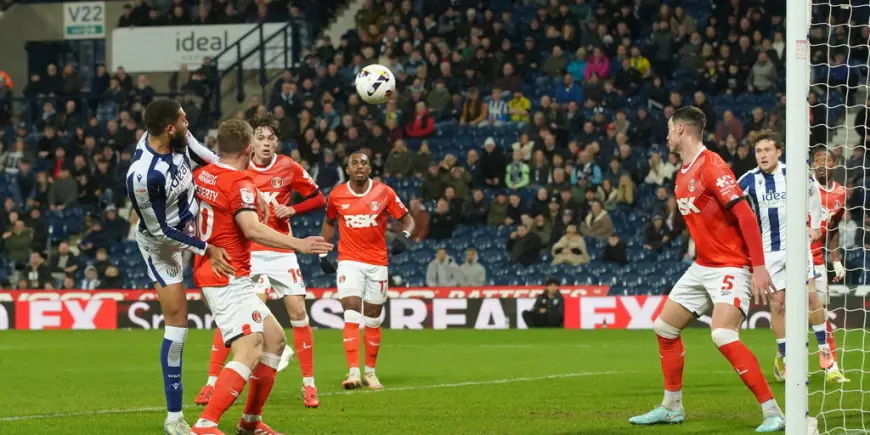
The game at The Hawthorns finished 1-1. George Campbell opened the scoring for the hosts, climbing highest at the back post to head in Alex Mowatt’s corner in first-half stoppage time; that goal capped a dominant first half in which West Brom enjoyed more than 60% possession and registered six shots to Charlton’s one. Charlton equalised on 70 minutes when Lyndon Dykes ran on to Kayne Ramsay’s pass and finished between Max O’Leary’s legs — Dykes’ second goal for the club.
Key chances that shifted the game: Josh Maja was sent through one-on-one by a Mowatt through ball in the 52nd minute but slid wide; Isaac Price blazed over from inside the area after a Jayson Molumby pass in the 69th minute, and a minute later Charlton punished the hosts. Late attempts by Alex Mowatt and substitute Jamaldeen Jimoh-Aloba went close, but a winner did not arrive.
Team news, line-ups and tactical notes
Charlton made two changes to their starting XI from the side that had drawn at the weekend: Harry Clarke and Miles Leaburn returned to the line-up, replacing Collins Sichenje and Tyreece Campbell on the bench. The match kicked off at 7. 45pm GMT. Charlton set up with Kayne Ramsay, Lloyd Jones and Amari’i Bell expected in a back three in front of Thomas Kaminski; Clarke and Luke Chambers operated as wing-backs with Conor Coady, Greg Docherty (captain) and Sonny Carey in midfield behind Leaburn and Lyndon Dykes.
West Brom (starting XI): Max O’Leary; George Campbell (Imray 84), Nat Phillips, Charlie Taylor, Styles, Diakite (Wallace 74); Alex Mowatt, Jayson Molumby, Isaac Price (Jimoh-Aloba); Josh Maja (Heggebø 65), Johnston. Substitutes include Wallis, Bielik, Gilchrist, Bostock and Dike.
Standings, next fixtures and managerial reaction
The draw is Charlton’s 11th of the season, leaving them 17th on 41 points from 34 games. West Brom remain 21st. West Brom’s next fixture is away at fellow strugglers Oxford United on Saturday; Charlton are at home to play-off prospects Wrexham on the same day. The result leaves little breathing room for rapid recovery.
Eric Ramsay reflected that this was a match his side should have won, noting they created good chances in open play, dominated territory around the opposition box and had positivity at half-time about the game’s direction. He also said the team failed to convert enough from open play beyond a set-piece goal and that a lapse in defensive decisiveness left them exposed when Charlton struck.
- Possession and chances: West Brom >60% possession and six shots to Charlton’s one in the first half.
- Goal timeline: Campbell (stoppage-time, first half) — Dykes.
- Standings impact: West Brom 21st; Charlton 17th, 41 points from 34 games.
- Next matches: West Brom at Oxford United (Saturday); Charlton vs Wrexham (home, Saturday).
Here’s the part that matters: the match underlined a recurring pattern — control and chances without a killer finish — and that pattern now carries concrete consequences for selection and urgency over the coming fixtures. Lyndon Dykes spoke to local radio after the game; further comments were given by the head coach in the post-match reaction.
It’s easy to overlook, but the bigger signal here is the timing of the goal concession — coming immediately after a missed chance — which compounds questions about concentration and game management rather than pure attacking quality. The real test will be whether the manager and squad convert possession into decisive results in the short run.