




















Connor Hellebuyck Wife: Olympic Goaltender Flies to White House After 41-Save Gold Performance

Connor Hellebuyck Wife is a phrase that appears amid the extensive coverage as the U. S. men’s hockey goaltender returned to Washington with his teammates after delivering a 41-save performance that helped secure Olympic gold. The visit to the White House, scheduled ahead of the President’s State of the Union address, underscored the immediate spotlight on a team that ended a 46-year Olympic gold drought for the United States.
Development details
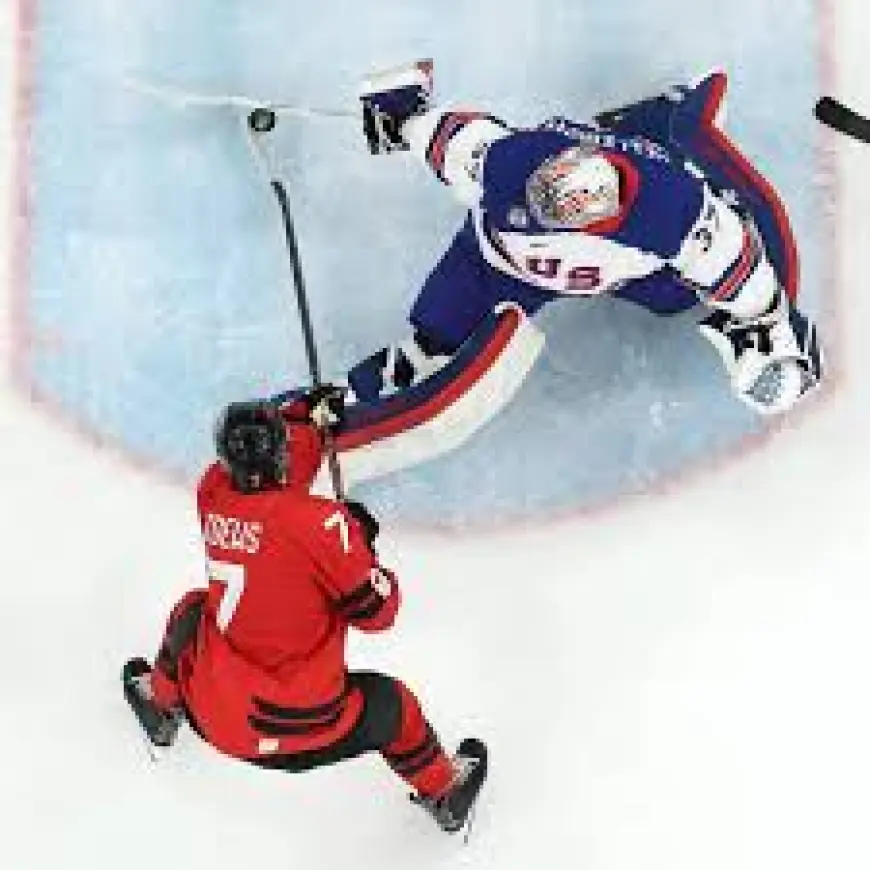
On Feb. 22, 2026, Team USA defeated Canada 2-1 in overtime to win the Olympic gold medal. Connor Hellebuyck made 41 saves in that gold-medal game, including a now-iconic stick save on Devon Toews late in the third period that preserved a 1-1 score and set the stage for Jack Hughes’ overtime winner. The U. S. became the first men’s team since the 1980 "Miracle on Ice" squad to capture Olympic gold.
Following the win, Hellebuyck and many teammates boarded an Air Force plane to the nation’s capital and arrived at Joint Base Andrews, where they paused to photograph and let members of the military pose with their gold medals. The delegation then made a scheduled visit to the Oval Office to meet President Donald Trump ahead of his State of the Union address.
On the flight, teammate Dylan Larkin shared an image of Hellebuyck holding a light-blue plaque bearing a bald eagle and the words "Secretary of Defense, " a nickname that gained traction after social posts highlighted Hellebuyck’s late-game heroics. Hellebuyck held his gold medal in front of that plaque while smiling for the photo. Commenters on social platforms and public figures celebrated the moment, with Pete Hegseth among those amplifying the "Secretary of Defense" tag.
Context and escalation
Hellebuyck’s rise to this moment traces back to an unlikely starting point: Odessa, Texas. As a teenager he played for the Odessa Jackalopes, a team that in 2011 shifted from the professional Central Hockey League to the junior North American Hockey League after financial losses. Joe Clark, the Jackalopes’ general manager and position coach, told teammates the young goaltender would reach the NHL, and Odessa scout Craig Sarner—himself a leading scorer on a past U. S. Olympic team—spotted Hellebuyck outperforming high-level prospects at a Michigan tournament.
Despite not being selected in NAHL or USHL drafts initially, Hellebuyck was taken in the 2012 NHL draft by the Winnipeg Jets in the fifth round, 130th overall, and later played two seasons at UMass-Lowell. Lee Scheide, the sports editor who covered the Jackalopes, recalled Hellebuyck’s imposing 6-foot-4 frame and consistent ability to make both routine and spectacular saves during the 2011-12 season—signs that foreshadowed his Olympic performance.
What makes this notable is the contrast between Hellebuyck’s West Texas beginnings—where Jackalopes crowds peaked around 4, 000 compared with regional football crowds of 20, 000—and his emergence on sport’s biggest Olympic stage, a trajectory traced by scouts and coaches who moved him from local rinks to collegiate and professional opportunities.
Immediate impact
Hellebuyck’s 41-save game directly affected the outcome: his late-period stick save on Devon Toews prevented Canada from taking the lead, enabling overtime and the eventual gold-deciding goal from Jack Hughes. Canada squandered other high-quality chances in the third period, including an open-net miss by assistant captain Nathan MacKinnon, which magnified the importance of Hellebuyck’s performance.
The team’s arrival in Washington produced immediate ceremonial moments: photographs with military personnel at Joint Base Andrews and a White House Oval Office visit with the President. The U. S. women’s hockey team, which also won Olympic gold days earlier, declined a similar invitation to the State of the Union because of scheduling conflicts, underscoring differing post-victory plans across the U. S. programs.
Forward outlook
The next confirmed milestone is the team’s White House meeting timed ahead of the President’s address to Congress. There are no additional scheduled events detailed beyond that engagement, but the sequence—gold-medal game on Feb. 22, a military photo stop at Joint Base Andrews, and the Oval Office visit—frames the immediate post-Olympic itinerary for Hellebuyck and his teammates.
Officials and teammates have emphasized the game-saving nature of Hellebuyck’s performance and the historic significance of the victory. Hellebuyck himself described the experience as a dream come true after the final buzzer, noting the team’s effort and collective battle on the ice. The plaque and plaque nickname on the flight to Washington added a symbolic capstone to a run that began far from traditional hockey hotbeds and culminated in a gold medal and a high-profile visit to the nation’s capital.