


















Ellen Hughes and Her Sons Push Back on Us Mens Hockey Controversy After Locker-Room Call with Trump

The postgame video of President Donald Trump calling Team USA's men's hockey locker room has become the focal point of the ongoing us mens hockey controversy, drawing criticism and sparking public explanations from Ellen Hughes and her sons, Jack and Quinn. Their comments come as the U. S. women’s team declines a State of the Union invitation and scrutiny grows over who was in the dressing room when the call was made.
Ellen Hughes on unity and the Milan Cortina Winter Olympics
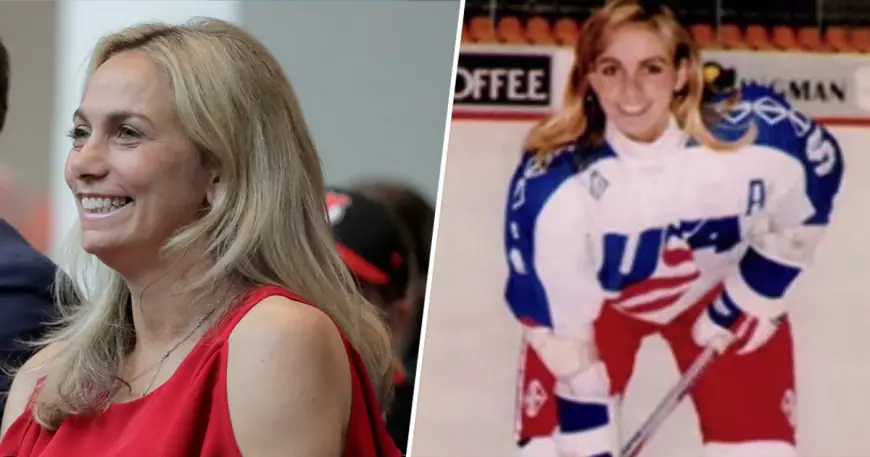
Ellen Hughes, who serves as a player development consultant for Team USA women’s ice hockey and who played for the national team at the 1992 Women’s World Championship, described both Olympic squads as unifying forces after the Milan Cortina Winter Olympics. She said both the men’s and women’s teams went undefeated at the Games and that the two squads shared dorms, halls and celebrations, creating camaraderie and “synergy” inside the Olympic village. Ellen called the double gold-medal run “a story” that brought people together and said she still finds the results surreal.
Jack Hughes, the 2-1 gold-medal game and a historic victory
Jack Hughes scored the game-winning goal in the men’s 2-1 victory over Canada in the gold-medal game, ending a U. S. drought in men's Olympic hockey that had not seen gold since 1980. The win followed the U. S. women's overtime victory over Canada that completed a 7-0 run through the tournament. Ellen and her sons underscored that both teams beat Canada to claim gold.
Us Mens Hockey Controversy: the locker-room call and public backlash
The controversy centers on a video that surfaced on social media showing a postgame phone call in the men’s locker room with President Trump. On the call, Trump told the men's team, "We're going to have to bring the women's team, you do know that. I do believe I probably would be impeached, " a line that drew laughter in the room. The cadence of the comment and the players’ reaction prompted criticism: some observers read the remark as grudging, and others saw the men’s response as disrespectful to a women’s squad that had produced a more dominant tournament run.
Jack and Quinn Hughes respond to criticism and describe celebrations
Jack Hughes acknowledged what he called “backlash, ” saying outside a Miami nightclub that people are “so negative” and looking to make an issue out of almost nothing. He insisted the locker room knows how much the men support the women and that the teams celebrated together late into the night—he said both teams were in the cafeteria at about 3: 30 a. m. after the men’s victory. Quinn Hughes, speaking on Good Morning America, said the brothers and teammates were “excited” about the invitation to the State of the Union and “really happy” for the women, noting summers of joint training and familiarity with many of the female players.
USA Hockey, State of the Union invitation and scheduling constraints
Day after the locker-room video circulated on Feb. 22, the U. S. women’s team declined an invitation to the State of the Union. A USA Hockey spokesperson said on Feb. 23 the athletes were “sincerely grateful” for the invitation but were unable to participate because of timing and previously scheduled academic and professional commitments following the Games; the spokesperson added that the athletes were honored to be included and grateful for the acknowledgment. The men had been invited to both the State of the Union and a White House event one day before the NHL resumed its regular season, though whether that White House event was formally scheduled is unclear in the provided context.
Kash Patel, the FBI director’s involvement and other institutional questions
The call was placed from the dressing room by FBI director Kash Patel, who later came under fire for flying to Italy and partying with the men’s team after the win. Patel’s presence in the locker room and his role in placing the call have become points of contention. The NHL deputy commissioner, Bill Daly, was reported to have commented on player decisions, but the rest of that statement is unclear in the provided context. The Professional Women’s Hockey League, which fields 16 American players who were on the U. S. Olympic team across five of its eight rosters, planned to resume its season on Thursday; the U. S. Olympic roster also included seven NCAA players some of whom had games scheduled on Friday.
What makes this notable is how a single, circulated video reshaped public attention around celebrations that teammates describe as unified, generating administrative responses, scheduling explanations and reputational questions for individuals present in the dressing room. The us mens hockey controversy has therefore become not only about a line uttered on a phone call but also about team relations, external perceptions and the logistics that followed the Games.
Several timing details remain unresolved: whether the White House visit was finalized is unclear in the provided context, and a truncated public schedule reference left other State of the Union timing details unclear as well.