

























Stephen Miller: Trump's "Hammer" Expands Power Far Beyond Immigration

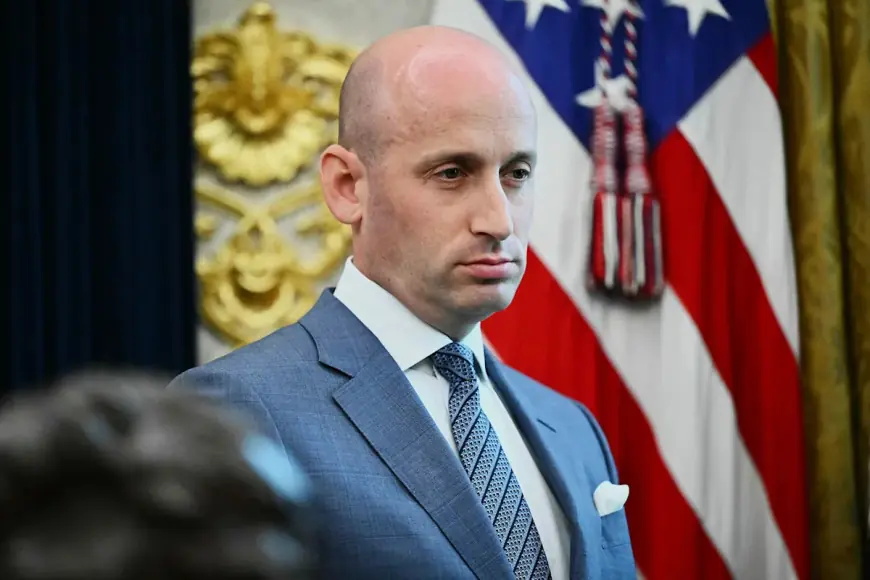
Stephen Miller, White House Deputy Chief of Staff and Homeland Security Adviser, has emerged as arguably the most powerful unelected official in Washington — a singular force whose reach inside the Trump administration now spans immigration, foreign policy, education, and even the physical appearance of the nation's capital.
Stephen Miller's Expanding Role Inside the White House
Miller, 40, holds the title of Deputy Chief of Staff for Policy, but his actual portfolio defies any single label. A given day might find him pressing federal and city officials to repair broken security cameras on Washington's streets, revive malfunctioning public fountains across the capital, or personally driving Trump's campaign to strip what the administration calls entrenched liberal ideology from elite university campuses. He runs a daily 10 a.m. meeting with senior federal officials where discussions range from counter-narcotics operations to suspicious maritime activity in the Caribbean.
Defense Secretary Pete Hegseth has joked that Miller is the official most likely to call with late-night emergencies. Former White House chief strategist Steve Bannon once called him "the hammer" — the operative tasked with turning Trump's promises into reality. One former White House official said the wave of executive orders signed in the first days and weeks of Trump's second term were selected, drafted, reviewed, and shepherded through the process largely by Miller.
The Architect of Trump's Immigration Crackdown
No policy is more closely identified with Stephen Miller than the administration's sweeping deportation push. As the principal architect of Trump's immigration enforcement agenda, Miller runs a command-and-control operation that touches every corner of the federal government. He calls Homeland Security Secretary Kristi Noem multiple times daily to monitor execution of the agenda. He is deeply involved in the Justice Department's day-to-day immigration operations, including legal strategy and public messaging.
His reach extends to state capitals as well. A "Immigration 2026" legislative package currently advancing in Tennessee was developed in coordination with Miller, and includes bills that would penalize local governments for refusing to cooperate with ICE, require schools to track students' immigration status, and cut state funding for sanctuary jurisdictions.
| Miller's Policy Portfolio | Details |
|---|---|
| Immigration enforcement | Daily oversight of ICE, CBP, DOJ operations nationwide |
| Foreign policy | Key role in Venezuela operation, Greenland strategy |
| Higher education | Driving Trump's crackdown on "woke" university culture |
| DC infrastructure | Chairs meetings on beautification and public safety |
| State legislation | Co-architect of "Immigration 2026" state-level bills |
Miller and the Minneapolis Controversy
Miller's standing was tested in January 2026 after federal agents fatally shot Alex Pretti, a 37-year-old ICU nurse, during an immigration enforcement operation in Minneapolis. Miller immediately posted on X calling Pretti a "would-be assassin" and a "domestic terrorist" — labels that were rapidly contradicted by video showing Pretti filming officers and helping a fallen protester. He was also shut out of a key closed-door White House meeting convened in the aftermath of the incident, a rare sign of internal friction.
However, Miller survived the backlash. The White House rallied around him. Sen. Ted Cruz praised him as "a great American." Press Secretary Karoline Leavitt stated he brings "all corners of the government together to ensure every single policy is implemented at record speed." Within weeks, coverage of Miller's influence was back to characterizing him as indispensable.
Why Stephen Miller Has Outlasted Everyone
Miller is one of the last original figures from Trump's 2016 campaign still operating at the highest levels of the administration. He has served at Trump's side for eleven consecutive years — through campaign, first term, political wilderness, and now a more powerful second term. Many who started with Trump in 2016 have since become peripheral or been exiled. Miller remains.
Analysts point to several factors behind his durability: his complete ideological alignment with Trump's instincts on immigration and nationalism, his encyclopedic knowledge of the federal bureaucracy and how to move it, and the sheer longevity that has made him one of the few figures Trump trusts without reservation. As Sen. Lindsey Graham put it, removing Miller would effectively mean rejecting the ideological DNA of the entire MAGA movement itself.
Stephen Miller and the Road Ahead
With the Trump administration's immigration crackdown producing both record deportation numbers and a wave of litigation in federal courts — testing the Fourth, Fifth, and Tenth Amendments in cases across the country — Miller shows no signs of pulling back. His critics argue his policies have gone too far and cost innocent lives. His defenders argue the results speak for themselves. Either way, Stephen Miller in 2026 is not a background figure. He is, by nearly every account inside and outside the White House, the engine of Trump's second-term agenda.