















Experts Tighten 2026 Board as Combine Nears, Shaping the Nfl Draft Order

College analysts and a prominent draft evaluator have sharpened their evaluations in the run-up to the nfl draft, releasing first-round mock selections and an updated top-50 list as on-field testing and interviews approach in Indianapolis. The moves matter now because the NFL Scouting Combine, which begins Feb. 26, will subject more than 300 prospects to formal testing that could confirm or rearrange that emerging order.
Development details — Nfl Draft
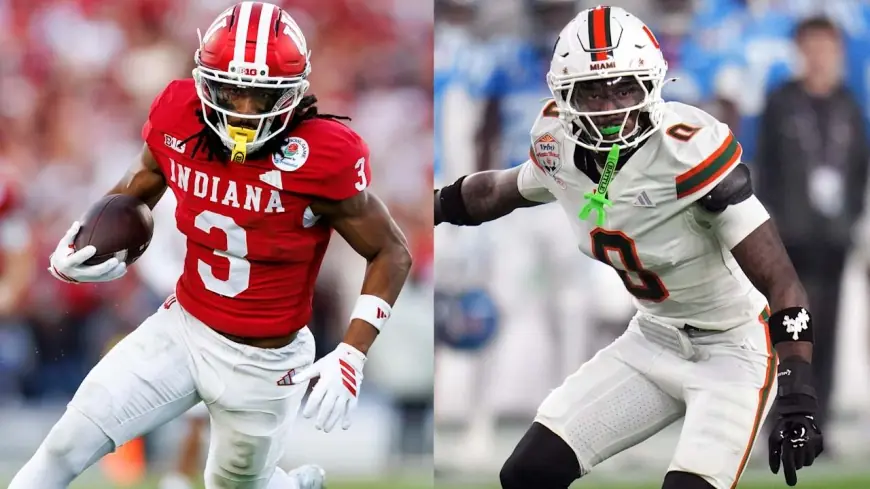
Nine members of a college football staff completed a mock first round in which no trades were permitted, producing a consensus board that highlighted positional standouts and framed team needs. Among the specific projections: a quarterback identified as Mendoza was placed in a slot tied to Las Vegas, a Miami defender Rueben Bain was noted for a resurgence with 9. 5 sacks in 16 games — five of those sacks coming during Miami’s four-game College Football Playoff run — and Ohio State’s Jalen Reese was slotted as a top non-quarterback option after extensive deployment across linebacker and edge roles.
Individually, Daniel Jeremiah updated his top-50 rankings ahead of the on-field events and workouts at the 2026 NFL Scouting Combine and offered fresh scouting notes on multiple prospects. Jeremiah described Mendoza as an accurate thrower with size and toughness, praised running/receiving versatility in a prospect named Love, labeled Bailey an "ultra-explosive" edge rusher, and characterized Reese as a fluid, explosive athlete best projected as an edge rusher. Downs was listed with a physical measurement of 6 feet and 205 pounds in mock-round discussion, and a top receiver projection finished his most recent season with 875 yards and nine touchdowns.
Context and escalation
The timing of these board adjustments tracks with weeks of college all-star games, tape study and impending on-site measurements. The combine’s promise of measurable data — from 40 times to position drills and interviews — has prompted evaluators to refine rankings and mock boards so teams and agents know where prospects currently stand. The Daniel Jeremiah update explicitly ties its timing to the on-field workouts and the prospect evaluations that precede them.
Analysts also emphasized team-specific needs shaping selections: one projection pegged an offensive lineman, Fano, as a prime fit for a franchise needing help up front, while another recommended a safety who could anchor a secondary despite size comparisons with recent high picks. Those position-by-position judgments reflect both performance metrics and intangibles scouts use when projecting pro transitions.
Immediate impact
Prospects, front offices and coaching staffs are the immediate beneficiaries and stakeholders. For example, a projected high pick for Miami’s Bain underscores how late-season playoff performance can lift a player’s draft stock — 9. 5 sacks across 16 games, with a concentrated burst of five in postseason play. Teams seeking playmakers figure into these mock outcomes: Arizona was cited as needing line help and tied to a top offensive lineman, Tennessee was connected to a versatile Ohio State defender, and a Cleveland projection prioritized a receiver who led a major conference in deep catches.
What makes this notable is the convergence of subjective scouting and objective testing: evaluators have already placed players on boards using game tape and season production, and the combine’s controlled measurements will either validate those placements or force rapid recalibration before the draft order finalizes.
Forward outlook
The immediate calendar is concrete. The NFL Scouting Combine’s on-field components and interviews kick off beginning Feb. 26, with more than 300 prospects scheduled to attend Indianapolis for testing. Coverage plans are set to follow the events closely, and evaluators have signaled that the combine’s results will be folded into further rankings and projections. Teams and agents will monitor measured drills, 40 times and interpersonal interviews as confirmed signals that could alter draft-day strategy.
Between now and the draft, the interaction of measured workout results and the evaluators’ tape-driven boards will generate the next wave of consensus projections. For players who produced notable seasons — whether through quantified sack totals, season yardage and touchdown counts, or versatile tape at multiple positions — the combine presents the next decisive checkpoint in this draft cycle.