























Travel Ban Massachusetts Prompts Boston University to Extend Closure After Historic Blizzard

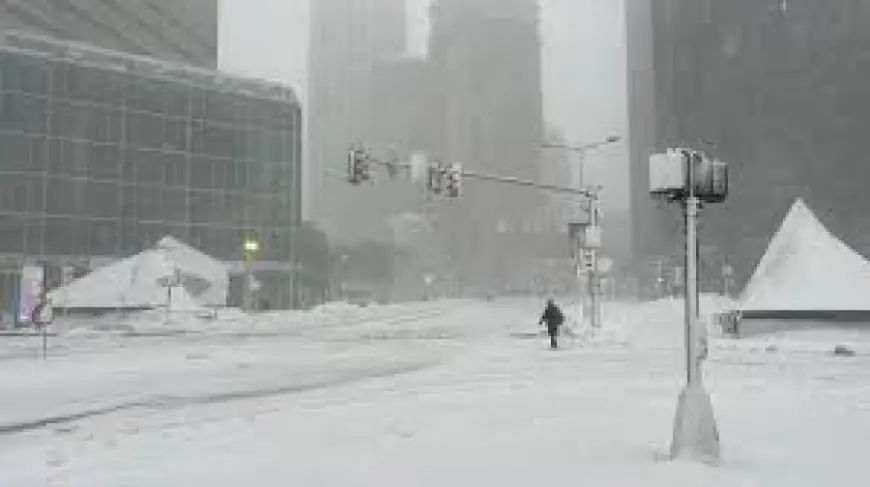
A travel ban massachusetts was one of several factors that led Boston University to keep its Charles River, Fenway and Medical campuses closed on Tuesday, Feb. 24, with a planned resumption of normal operations on Wednesday, Feb. 25. The decision suspended classes and virtual meetings and left only essential services operating as Greater Boston recovered from a historic blizzard that buried the area under upwards of two feet of snow.
Travel Ban Massachusetts and the Decision to Close BU
University leaders cited a constellation of immediate obstacles when announcing the second day of closure: widespread service changes to MBTA and Commuter Rail schedules, the unavailability of BU Shuttle buses, scattered power outages across surrounding cities and towns, and a travel ban issued by Governor Maura Healey. The university’s emergency notice framed those disruptions as the direct cause of continued campus suspension on Feb. 24, with normal operations scheduled to resume on Feb. 25.
Charles River, Fenway and Medical Campuses Remain Closed
Boston University specified that its Charles River, Fenway and Medical Campuses would remain closed on Tuesday, offering only limited services. The closure applied to both in-person and virtual classes under BU policy for a declared snow day; employees were not expected to work except where managers had designated emergency exceptions or staff were deemed essential.
Operational Impacts: MBTA, Commuter Rail and Power Outages
The blizzard paralyzed much of Greater Boston and produced upwards of two feet of snow, forcing transit agencies to change schedules and complicating commutes for students and staff. Those service interruptions, coupled with scattered power outages in the region, were listed by university officials as reasons the campus could not safely reopen on the first business day after the storm.
Essential Services and Medical Campus Requirements
Boston University named the categories of employees required to report despite the snow day. On-campus essential services include University Police, Residential Safety, Residence Life, Dining Services, Student Health Services, Facilities Management & Operations, Environmental Health & Safety, Mail Services, and Network Services. Additional essential functions on the Medical Campus include Public Safety, Emergency Patient Treatment, and Occupational & Environmental Medicine.
The Medical Campus was identified as encompassing the Chobanian & Avedisian School of Medicine, the Henry M. Goldman School of Dental Medicine (GSDM) and its Patient Treatment Centers, and the School of Public Health. Medical, PA, and Graduate Medical Sciences students assigned to inpatient services or clinics were expected to be present if possible. Instructions for students assigned to outpatient services, including GSDM students, are unclear in the provided context.
Derek Howe, Gloria Waters and University Policy on Snow Days
Derek Howe, BU’s senior vice president for operations, said the scale of the storm made a second day of closure necessary and praised the essential workforce for supporting all three campuses. University Provost Gloria Waters, the chief academic officer, emphasized that the safety of faculty, staff and students who do not live on campus remained paramount and acknowledged the difficulty of canceling two days of classes at this point in the semester.
Under BU policy, a declared snow day cancels classes and virtual meetings and relieves most employees of their work expectation except for those deemed essential or given emergency exceptions by managers. The policy lists the specific campus functions that must continue operating to support safety, residential life, clinical care and network and mail services.
The Patriot Ledger noted on its site that it has built its platform to take advantage of the latest web technology and that older browsers are not supported, advising readers to update or download a modern browser for the best experience.
What makes this notable is the convergence of factors—heavy snowfall measured in feet, transit and shuttle failures, power outages and an issued travel ban—that extended the disruption beyond a single day and forced a major university to shift operations and triage essential services. The timing matters because the university said it will use the extra day to give community members time to attend to homes and families and to assess lessons for future weather events.