
























How Much Snow Did Boston Get as Northeast Dig Out From Record Blizzard

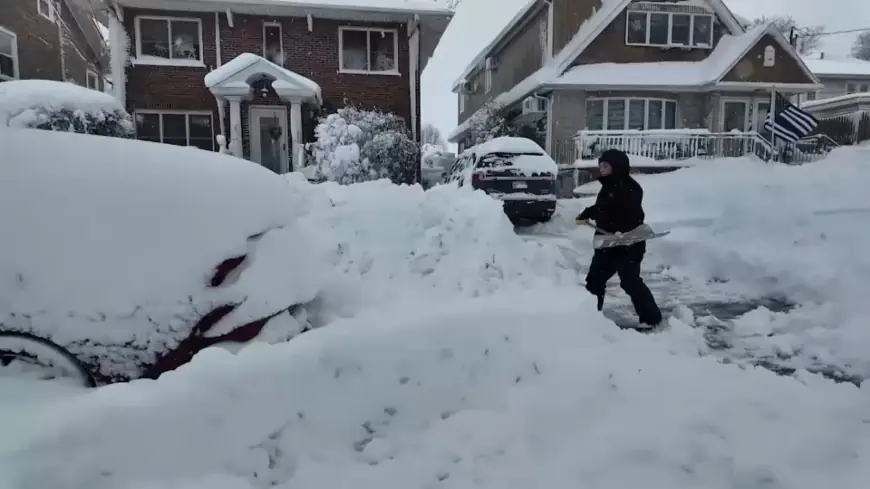
Questions about how much snow did boston get are central to recovery after a blizzard that left more than 40 million people under warnings and hammered the Northeast with heavy snow and hurricane-force winds. Cities and states from New Jersey to Maine are measuring record totals, enforcing travel bans and keeping public services closed while crews work to clear roads.
How Much Snow Did Boston Get: measured totals and record highs
Measurements across the region varied: parts of Rhode Island and Massachusetts were reported to have seen nearly 37 inches of snow, and Providence received figures listed at both 36 inches and 32. 8 inches at T. F. Green International Airport outside of Providence. The T. F. Green count of 32. 8 inches was noted as surpassing the prior single-storm record of 28. 6 inches set in February 1978, a storm that led to 100 fatalities; forecasters cautioned the Monday total was likely to rise as further measurements were taken. New York City's Central Park saw more than 19 inches in some readings, and other spots registered up to 3 feet of snow in parts of New Jersey, Rhode Island and Long Island.
Rhode Island and Massachusetts declarations, closures and travel bans
State-level responses were wide-ranging. Rhode Island declared a state of emergency and imposed a travel ban so plow crews could continue clearing roads overnight; the situation was set to be reassessed on Tuesday morning and state offices were ordered to remain closed on Tuesday. Later in the day, Massachusetts Governor Maura Healey imposed a travel ban and urged residents not to travel, saying that white-out conditions were making travel extremely dangerous and that if people got stuck, help would have difficulty reaching them. A white-out was described as a condition when snow significantly reduces visibility.
Providence’s exceptional totals, and the broader state emergency, coincided with municipal moves: Boston Public Schools were announced closed for Tuesday, February 24, citing an ongoing snow emergency. The region’s print press was also affected; one major Boston newspaper said it would not go to print for Tuesday morning for the first time in its 153-year history because of the storm.
New York City decisions, school reopenings and local pushback
New York City public schools reopened for in-person learning even as officials and residents debated safety. Mayor Zohran Mamdani announced the reopening and quipped, "You can still pelt me with snowballs when you see me. " He said students may be excused for up to two hours for weather- and transportation-related delays on Tuesday morning. The city had been under a blizzard warning on Sunday and Monday for the first time in nearly a decade, and Mayor Mamdani said most parts of the city received 16 to 19 inches of snow while parts of Eastern Staten Island reported over 24 inches.
The move to reopen drew criticism: more than 169, 000 New Yorkers signed an online petition asking for remote learning on Tuesday, citing hazardous roads and transit, and Staten Island President Vito Fossella described many roads as still impassible. Local officials and parents voiced safety concerns: a parent named Michelle Thomas said there was nowhere safe to walk and asked how children would reach school if sidewalks were blocked; another parent, James Lecce Sr., said, "It's very bad out here. It's slippery. It's a mess. " Tottenville High School saw 180 faculty absent and only 614 students attend of a reported student body of 3, 754.
Flights, outages and the geographic scope of disruption
The storm caused thousands of flight cancellations nationwide, with more than 5, 000 flights canceled as the U. S. east coast dug out. Weather warnings stretched from North Carolina to northern Maine and into parts of eastern Canada as the nor'easter moved away from the U. S. but left strong winds in its wake. Power outages were widespread: one count put at least 500, 000 customers without power as of early Monday evening, another assessment listed more than 600, 000 properties across the U. S. east coast enduring outages, and in Massachusetts nearly 300, 000 customers were reported without power, including 85% of customers in Barnstable County on Cape Cod.
Satellite imagery, city sanitation rules and next steps for clearing streets
Satellite imagery captured the February 22-23, 2026 blizzard from the GOES East satellite and was shared with a 9: 25 a. m. timestamp, illustrating the storm's size. In New York City, the local Sanitation Department announced the city's official storm designation ended at 4: 30 p. m. on Monday; that change required property owners to clear sidewalks by 8: 30 p. m., including a four-foot path for wheelchairs and strollers and clearing around curb ramps, fire hydrants and unsheltered bus stops. Officials in several states warned that travel restrictions and emergency declarations would remain in force while crews continued clearing roads and reassessing conditions the following morning.