

























Chris Bryant’s Rebuke and Commons Vote Put Government, Royal Office and Security Oversight Under Pressure

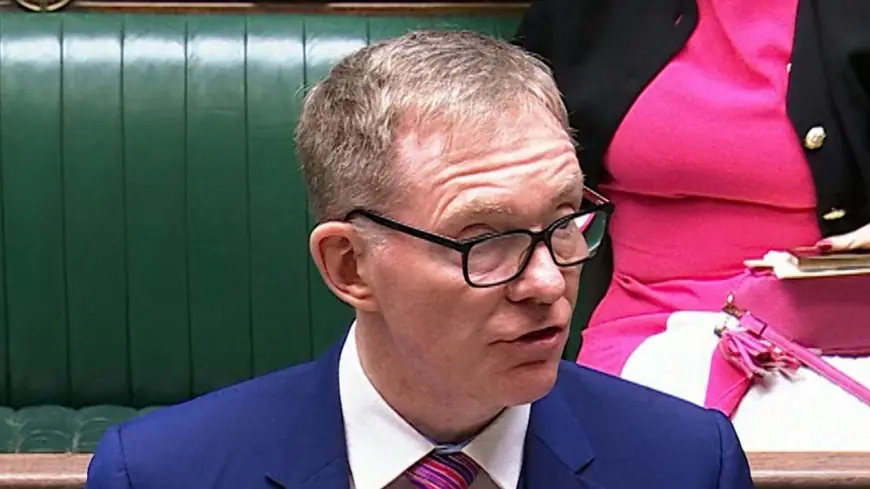
The immediate impact lands on government transparency, parliamentary oversight and the office-holder whose past role is now under renewed scrutiny. Trade minister chris bryant’s blunt comments have focused attention on how files tied to a 2001 trade envoy appointment will be handled, who gets sight of internal vetting material, and how an active police inquiry could limit public disclosure.
Chris Bryant’s warning and who feels the effect first
Chris Bryant used unusually direct language in the Commons, describing Andrew Mountbatten-Windsor with words that underscored political and reputational risk. Here’s the part that matters: ministers, civil servants and present trade envoys face immediate procedural pressure — requests for internal advice, minutes and electronic communications must now be processed while an investigation continues. chris bryant’s remarks make clear the executive branch will be judged on how quickly and carefully it complies.
What the Commons motion demands and where the documents sit
MPs passed a Liberal Democrat humble address motion without a division, obliging the government to lay before the House all papers relating to the creation of the special representative for trade and investment role and Andrew Mountbatten-Windsor’s appointment. The motion specifically reaches for documents held by:
- UK Trade and Investment
- British Trade International (BTI) and its successors
- the Foreign, Commonwealth and Development Office
- the Cabinet Office
- the prime minister’s office
It seeks any advice from, or provided to, the group chief executive of BTI, Peter Mandelson, the Cabinet Office and the prime minister on suitability for the appointment; the due diligence and vetting conducted; and minutes of meetings and electronic communications relating to that vetting. What’s easy to miss is the motion’s explicit reach into internal electronic records as well as formal minutes — that complicates compliance and legal review.
Andrew Mountbatten-Windsor’s trade envoy role, allegations and legal status
Andrew Mountbatten-Windsor held the trade envoy role for 10 years, giving him privileged access to senior government and business contacts around the world. He faces allegations that, while in that role, he shared sensitive information with Jeffrey Epstein, who is a convicted sex offender. He was arrested last week on suspicion of misconduct in public office and was later released under investigation. Andrew has not responded to requests for comment on specific allegations which emerged after the release of so-called Epstein files by the US in January; he has previously denied any wrongdoing in relation to Epstein.
- Appointment year cited in debate: 2001.
- Tenure in the role: 10 years.
Parliamentary security and the cryptocurrency ask
Separately, Parliament’s joint committee on the national security strategy has urged a temporary ban on political parties accepting cryptocurrency donations. The committee’s chair, Matt Western, wrote to Steve Reed — who, in his role as housing, communities and local government secretary, is responsible for electoral law — asking for the ban to be legislated in the representation of the people bill. The letter argues tighter rules are needed because the threat of foreign states interfering in UK politics is growing, and it notes the US administration has ambitions to shape political discourse in allied countries.
The letter acknowledged expert disagreement on a ban but recommended the bill (primarily about votes at 16) include a temporary prohibition on crypto donations until the Electoral Commission issues new statutory guidance. In the meantime, the committee asked the Commission to issue more comprehensive interim guidance. The committee did not single out particular parties by name in the letter, although it pointed out that Reform UK is the only main party actively soliciting crypto donations. The Electoral Commission has already complained that the bill does not do enough to tighten rules designed to prevent foreign influence.
Debate dynamics, procedure and immediate government responses
The Commons debate lasted almost three hours in a relatively empty chamber before MPs passed the Lib Dem motion demanding release of the files without a division taking place. Trade minister Chris Bryant said the government will comply "as soon as practicable and possible within law", but warned that disclosure could be constrained by the ongoing police investigation into Andrew Mountbatten-Windsor. He also praised the work of present trade envoys, noting they are accountable through the minister of trade and the relevant department, and framed the controversy as one of influence rather than power: the minister said this wasn't about power, it was about influence and influence can be just as pernicious.
The real question now is how quickly legal teams can review records from multiple departments and whether contested material will be withheld while the investigation continues. The government also says it is working at pace on legislation to remove Andrew from the line of succession, but it was not able to commit to a specific date for bringing that measure forward.
Edited by Alex Smith and Emily McGarvey, with Brian Wheeler reporting from the House of Commons.
- Key takeaway: the Commons motion creates a formal obligation to disclose vetting and suitability documents tied to a 2001 appointment.
- Key takeaway: investigation constraints mean some material may be redacted or delayed; accountability optics matter for ministers and civil servants.
- Key takeaway: calls to curb crypto donations have been fast-tracked into the representation of the people bill, with the Electoral Commission asked for interim guidance.
- Key takeaway: signals that will confirm the next turn include the timetable for document release, any formal legal challenges to disclosure, and whether new statutory guidance on crypto appears before the next election cycle.
It’s easy to overlook, but the inclusion of minutes and electronic communications — and the motion’s sweep across multiple departments — raises practical challenges that will test how swiftly the government can balance transparency with an active police inquiry.