





















Lirr riders among commuters still digging out after historic bomb cyclone as more snow looms

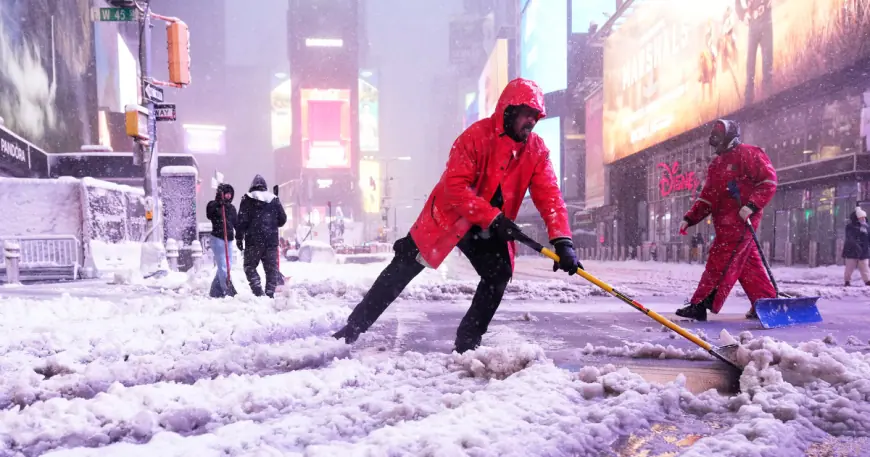
Communities from New York to New England are in recovery mode after a bomb cyclone that dropped more than two feet in places and produced widespread disruption — and the immediate impacts are still being felt by commuters, students and utility crews. If you’re checking lirr status or other transit updates, expect ongoing uncertainty: roads and mass transit are only partly back, power has been restored in some hard-hit areas, and forecasters are tracking another system that could add inches later this week.
Who is feeling the strain now — and why Lirr searches matter
Neighbors, government workers and a powerful railroad snow‑clearing machine nicknamed “Darth Vader” scrambled to clear streets and tracks across the northeastern United States after a brutal, in some places record‑breaking, storm. Commuters who rely on regional rail and city transit are among those most immediately affected as mass transportation came back online in some cities but not uniformly. lirr updates are likely one of many transit checks riders will be making as service returns unevenly.
How communities are digging out and the state of services
By Tuesday, roads were beginning to reopen and some mass transit was restarting. Power had returned for some of the hundreds of thousands who had lost electricity in Massachusetts, New Jersey, Delaware and Rhode Island. Neighbors and municipal crews focused on clearing sidewalks piled with snow — a visible reminder of how disruptive the storm remained even as activity resumed.
Schools, labor leaders and city officials clash over reopening
School schedules diverged across the region. New York City canceled classes on Monday, and the mayor announced in-person learning would resume Tuesday, a decision met with skepticism given snow-clogged sidewalks. Staten Island’s borough president urged schools to stay closed, and the leader of the largest teachers’ union characterized the situation as a big mess. Spokespeople for the mayor did not respond to an email seeking comment; the city’s schools chief posted on social media that they were confident in the decision to reopen. Philadelphia moved to online learning Monday and Tuesday, while districts on Long Island and in other suburban areas canceled again on Tuesday.
The weather picture: additional systems, regional differences and expected accumulations
The National Weather Service is tracking another storm that could bring more snow later this week. Forecasts indicated that the areas just hard hit by the bomb cyclone would likely see only light amounts — a dusting to about 3 inches possible — but even a few extra inches on top of huge piles could complicate cleanup. A clipper system was expected to move from the Upper Midwest into the Northeast over the next 24 hours, with several inches forecast for the Upper Peninsula of Michigan, the Tug Hill Plateau and parts of the Appalachians. Another system on Thursday was expected to bring rain to the Southeast and mid‑Atlantic and a mix of rain and snow to the Northeast; that Thursday system was not expected to produce additional snowfall accumulation.
Scale of the storm and travel fallout
Meteorologists described Monday’s event as a classic bomb cyclone and nor’easter off the Northeast coast — a storm whose pressure drops significantly within 24 hours when cold Arctic air collides with warmer temperatures. At least 20 locations met official blizzard criteria on Monday, and 39 locations recorded more than 30 inches of snow. Travel disruption was severe: more than 2, 000 flights in and out of the United States were canceled on Tuesday, with most cancellations involving airports in New York, New Jersey and Boston.
- What’s easy to miss is how quickly cleanup complexity rises: a seemingly small additional accumulation can slow plows, stall crews and delay power restoration.
- Immediate groups affected include commuters dependent on regional rail and city transit, students and school staff, municipal snow crews and residents without power.
- Next signals that would indicate easing: sustained reopening of mass transit across multiple cities, a drop in flight cancellations, and forecast models showing no additional accumulation over the hardest-hit zones.
Here’s the part that matters for residents: the storm has left pockets of severe impact even as broad recovery begins. If you’re wondering why this keeps coming up, it’s because the meteorological setup that produced the bomb cyclone also makes follow-up systems more likely to clip the region, complicating cleanup and operations.
Micro timeline (based on the current recovery brief):
- Monday: Bomb cyclone/nor’easter produced record snowfall in parts of the Northeast; at least 20 locations hit blizzard criteria.
- Tuesday: Snow moved northward and tapered off in many areas; roads began to reopen, and some mass transit came back online.
- Next 24 hours through Thursday: A clipper system will traverse from the Upper Midwest to the Northeast, with a separate system Thursday bringing rain to southern areas and mixed precipitation to the Northeast; no additional accumulation expected from the Thursday system.
The real test will be whether follow-up systems add measurable accumulation over areas still buried; even light additional snow could stretch crews and delay a full return to normal service.